The Baltic is becoming one of the most exposed bodies of water in Europe. Dense ship traffic, critical infrastructure and the activity of the Russian "shadow fleet" are increasing the risk of serious accidents, oil spills and hybrid threats right at Poland's borders.
The Baltic is teeming with dangerous situations. Dense traffic and critical above- and underwater infrastructure, such as cables, pipelines and offshore turbines, increase the risk. The Russian shadow fleet, transporting oil from ports such as Primorsk or Ust-Luga, carries the threat of oil spills and sabotage.
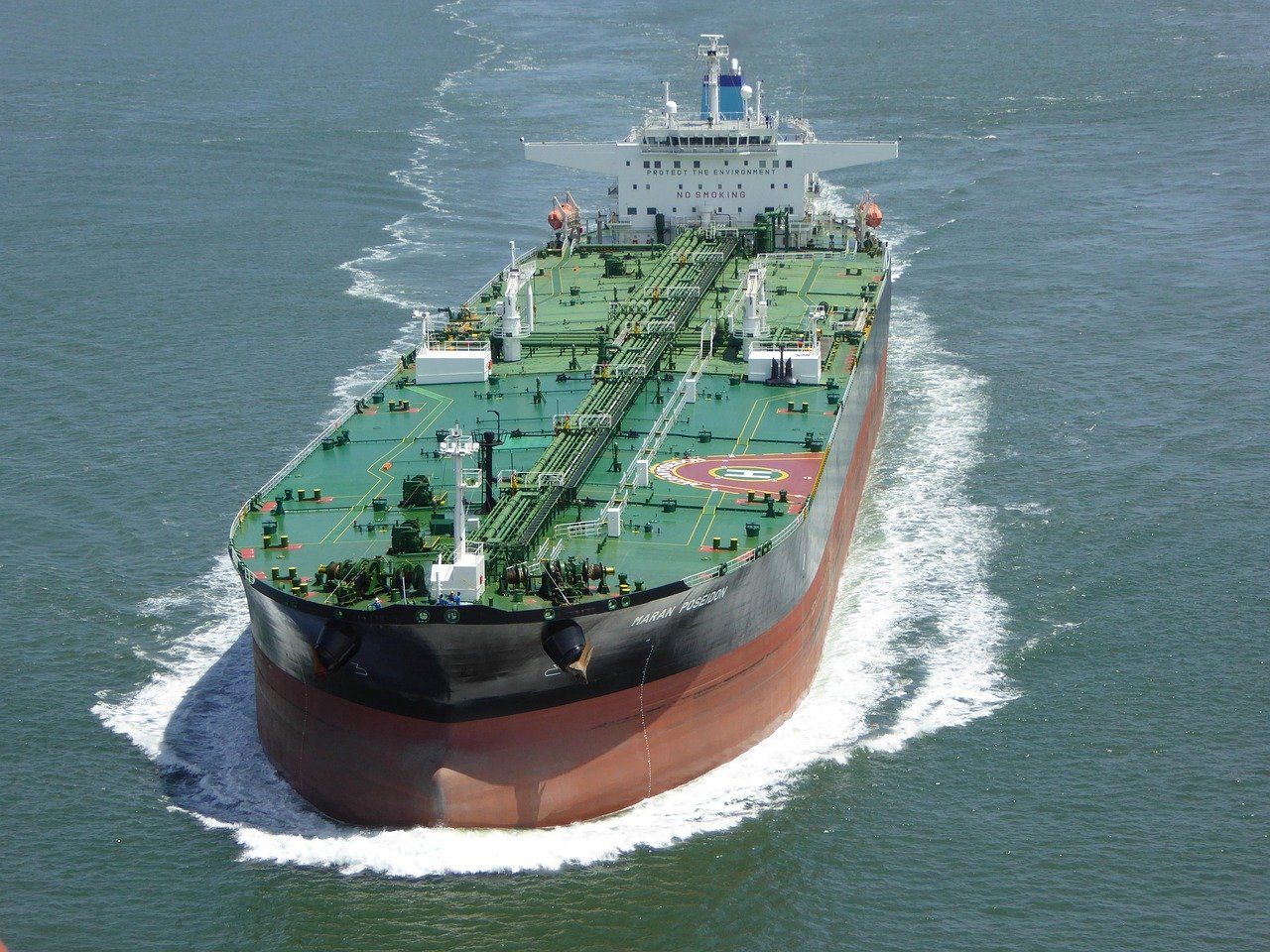
Incidents such as the breakdown of the ship EVENTIN near Rügen show how close to Poland these dangerous situations are playing out. In February 2024 the Russian tanker EVENTIN, loaded with around 100 thousand tonnes of crude oil and belonging to the so-called shadow fleet transporting oil of Russian origin, lost control and its manoeuvring capability off Sassnitz on Rügen, which created a crisis situation. A few months later, in December 2024, a more serious accident occurred in the Black Sea, when the Russian tankers WOLGONEFT 212 and WOLGONEFT 239 collided, causing considerable oil spills. What would happen if a similar accident were to take place in the ecologically sensitive Baltic?
An accident involving an Aframax-class tanker with an average capacity of 100 thousand tonnes of oil would probably affect the entire Baltic and its coasts to an enormous degree. To understand the potential scale of the contamination, it is worth recalling the example of the sinking of the ship PRESTIGE in 2002 off the Spanish Atlantic coast: 77 thousand tonnes of oil contaminated more than 2 thousand kilometres of coastline, killing between 250 and 300 thousand seabirds, damaging the development of marine organisms for years, causing massive losses in fisheries and tourism, and the costs of the clean-up and disposal work alone were estimated at 2.5 billion euros. The total economic damage amounted to around 5 billion euros. In the Baltic such a catastrophe would be even worse, because there is almost no exchange of water with the oceans here, which usually mitigates the effects.
Despite these risks, on account of the global sanctions regimes, more and more actors in the global economy are using outdated, poorly maintained and deliberately opaquely controlled ships, ignoring international safety and environmental standards in order to circumvent sanctions. In this form they qualify as substandard shipping. In December 2024 alone, 5.5 million tonnes of petroleum products were transported through Russian Baltic ports, which constitutes close to 50 percent of the total volume of Russian oil exports in that period.
In order to avoid oil catastrophes, such as those caused by the ERIKA in 1999, the EXXON VALDEZ in 1989 or the TORREY CANYON in 1967, high safety standards generally apply to global shipping. These standards primarily encompass regular maintenance and repair, reliable insurance cover and the employment of a well-trained and capable crew.
Despite these established norms, in recent years a global trade and transport network for oil has emerged that bypasses the standard rules and structures. In recent years, in response to the sanctions imposed on Russia after the invasion of Ukraine in 2022, a shadow fleet has emerged, consisting of hundreds of tankers that transport Russian oil to countries that have not joined the sanctions, such as India or China. These ships are often old, poorly maintained, registered under the flags of countries with lax regulations, and their owners hide behind complex corporate structures.
Substandard shipping is characterised by a deliberate disregard for international conventions, such as SOLAS, MARPOL or STCW, which leads to an increased risk of accidents, contamination and even acts of terrorism or hybrid attacks.