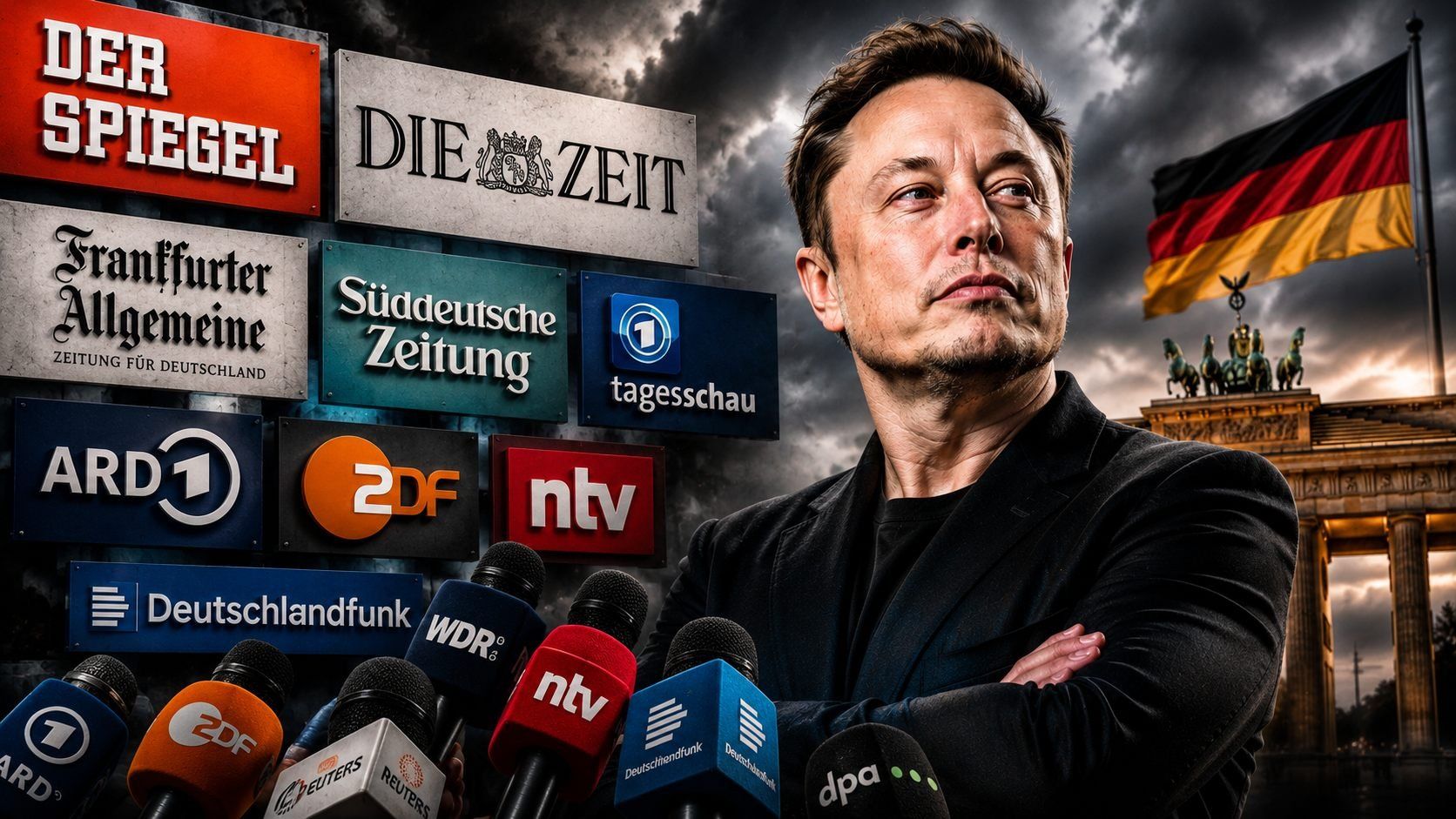
The conflict erupted over coverage of the protests in the United Kingdom and Northern Ireland, where a presenter on the state broadcaster ZDF directly linked Musk's activity on the platform X, and the actions of the British activist Tommy Robinson, to the incitement of violence against migrants. The situation is all the more incendiary because it concerns emotionally charged events, including reports of knife attacks, which the network interpreted in a manner that raised doubts about its journalistic integrity.
The credibility crisis at ZDF and ARD is nothing new; in recent years these broadcasters have repeatedly been caught manipulating coverage and publishing false information. Among the most flagrant cases is the use of artificial intelligence to produce fabricated, anti-Trump footage that was aired as authentic visual material. These outlets have also lost court cases, including one concerning false reports of alleged secret meetings of the right wing said to be planning the mass deportation of German citizens of foreign descent.
The deeper structural problem of Germany's public media appears to be its heavy politicization and the poor professional standards of its staff. Sitting on ZDF's supervisory board are active politicians such as Manuela Schwesig, the Minister-President of Mecklenburg-Vorpommern, whose political career is burdened by controversies surrounding the Nord Stream 2 project and by accusations of acting in Russian interests. Such close ties between the apparatus of power and the public broadcaster weigh on the objectivity of its reporting.
The journalistic profession's reaction to ZDF's latest conduct shows that a critical mass has been crossed. Even correspondents at other major outlets, such as Die Welt, as well as staff at the rival NDR, have publicly distanced themselves from the standards on display at ZDF, noting the absence of evidence and quotations to substantiate the accusations against Musk.
The intervention of the owner of the platform X may become the catalyst forcing a far-reaching reform of a system that for years went unpunished thanks to state funding and market dominance. Vetting the competence of each individual journalist, and purging the institutions of political influence, appears to be the only path to restoring integrity to the German media landscape.
Elon Musk's clashes with ZDF expose the systemic flaws of Germany's public media, from problems with the reliability of information to a profound dependence on the world of politics. A string of lost lawsuits and the use of artificial intelligence to create fake news sketch the portrait of an institution in deep ethical crisis. The outcome of this legal battle with a global entrepreneur may prove pivotal for the future standards of journalism and for the oversight of publicly funded media in Germany.