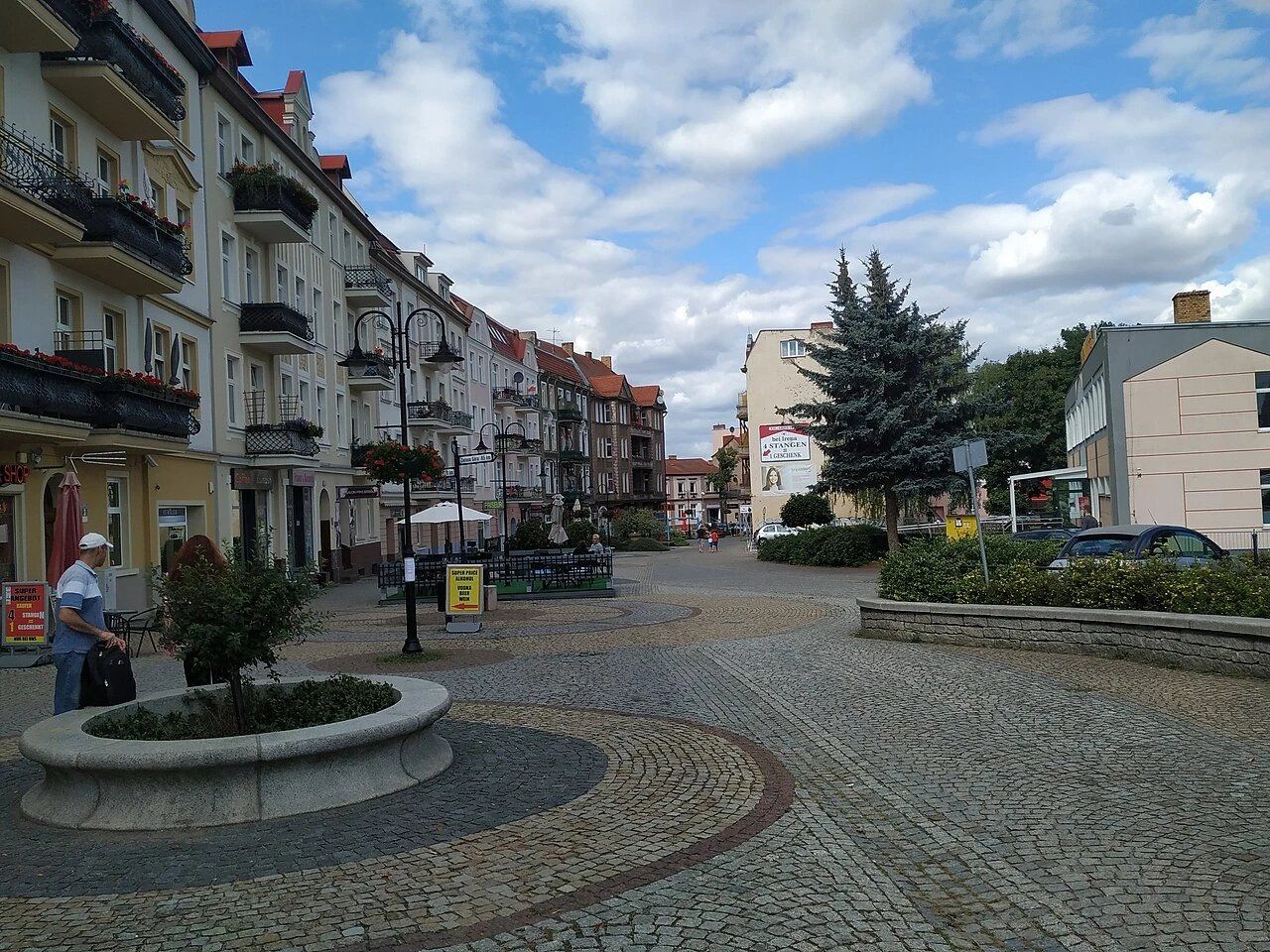
The decision by the Słubice City Council to transfer 75,000 euros, the equivalent of around 300,000 zlotys, to cover part of the deficit of the German bus line no. 983 has stirred justified unease among the residents of the Polish town. As reported by the German press on 20 June 2026, and as reflected in numerous comments from residents on social media, local councilors decided to hand the money of Słubice's residents over to the German Frankfurt (Oder).
The official pretext is that the German carrier Stadtverkehrsgesellschaft mbH Frankfurt (Oder), SVF, is earning less from ticket sales than it had assumed in its business plan. The city council decided that it was necessary to "help" and extend the operation of the bus line, which reaches the bus station in Słubice.
The Chairman of the Słubice City Council, Grzegorz Cholewczyński, former Mayor Mariusz Olejniczak, and Councilor Agnieszka Pakulska believe that the bus line serves the people of Słubice commuting to work, schools, kindergartens, and the railway station in Frankfurt. Without funding, it would be discontinued.
"This is not only a matter of transport, but also of the daily functioning of residents and the economic development of both towns," emphasizes the Mayor of Słubice, Marzena Słodownik.
However, when we examine the matter through the lens of economics and law, the picture becomes considerably more troubling.
From an economic point of view, the decision raises doubts about the efficiency of spending public funds. Słubice is a small border municipality. 300,000 zlotys is a large sum that, in the local budget, could cover concrete, tangible needs of residents, such as modernizing street lighting, minor repairs of residential roads, additional extracurricular activities, or support for families in difficult situations. Instead, the money goes to a foreign operator. SVF has been the operator of line 983 since its opening in 2012 and is, albeit indirectly, 100% owned by the city of Frankfurt (Oder). The company submits detailed and complete business data only to its owner, the city of Frankfurt (Oder). On 23 April 2026, the Mayor of Frankfurt, Axel Strasser, presented only aggregated data, explaining that the bus line carries 420 000-436 000 passengers per year and that the annual operating costs of the line amount to around 418 000 €, so SVF is said to generate a deficit on the order of around 200 000-212 000 € per year.
"In the years 2022-2025, the total deficit was around 869 000 €, borne exclusively by Frankfurt," said Strasser.
However, Grzegorz Cholewczyński clearly criticized in April the lack of detailed cost breakdowns and the lack of alternatives. When asked why the German carrier generates such high deficits, the German side did not respond by providing a cost estimate and documentation. Available information indicates that line 983 is to be "secured for the long term" through a body governed by public law with legal personality, namely the European Grouping of Territorial Cooperation (EGTC), but for now an ad hoc solution has been chosen, one that is to consist of transferring Polish money to the Germans. The German side argues that without the subsidy the line would be unprofitable. However, the actual share of Słubice's residents in ticket revenue has not been disclosed.
Residents point out on social media an alternative to the operator SVF that apparently was not considered. Many residents of Słubice would prefer to announce a tender for the operation of line 983, or a section of it, by a Polish carrier. The Lubusz Voivodeship is home to dynamic transport companies that successfully replace the former PKS bus services. A Polish operator could offer lower fuel costs by refueling on the Polish side of the border, the employment of Polish drivers, which means taxes, ZUS social security contributions, a newer or better-suited fleet, and greater price flexibility on a short cross-border route.
Instead, the easiest solution was chosen, subsidizing the existing German operating model. This is a classic example of a failure to think in terms of opportunity costs. Money that could remain in Słubice and work for the benefit of the local community flows across the Oder, supporting jobs and profits for a German company.
In addition, as residents note on forums and on social media, tickets for such a short route are too expensive, with an ordinary ticket costing 2.70 euros, or about 10 zlotys. The decision also raises objections from a formal and legal standpoint. Under the Act on Municipal Self-Government, the council may adopt resolutions on property matters, but expenditures must be purposeful, rational, and serve the implementation of the municipality's own tasks. Is subsidizing a German transport company one of Słubice's own tasks?
In a cross-border context, EU regulations are key, above all Regulation (EC) No 1370/2007 on public passenger transport services. It allows for the direct award of services in certain cases, but this concerns the relationship between a contracting authority and an operator within a given area. Here, a Polish municipality is subsidizing a service carried out largely on German territory by a German entity. The question arises as to compliance with the rules on state aid under Article 107 of the Treaty on the Functioning of the EU (TFEU).
The principle of transparency and public participation requires that residents have genuine access to information before the city council votes, and this was lacking. Numerous comments from the town's residents suggest that some councilors may have voted on the resolution without full awareness of its content and consequences. If the documentation did not contain a full analysis of alternative options, including the option of a Polish carrier, and the debate was mainly emotional in character, then the decision may be challenged as to the integrity of the decision-making process. In Polish law there are oversight mechanisms, such as the Regionalna Izba Obrachunkowa (Regional Chamber of Audit), which examines the legality and purposefulness of municipal expenditures. Residents may also exercise the right to public information and, in extreme cases, initiate referendum procedures or complaints.