Amid growing anxiety over the safety of nuclear power, Germans are demanding ever more loudly the shutdown of the Swiss nuclear power plants (AKW) located close to the border. Studies and reports underline the enormous dangers to Baden-Württemberg and all of Southern Germany in the event of an accident.
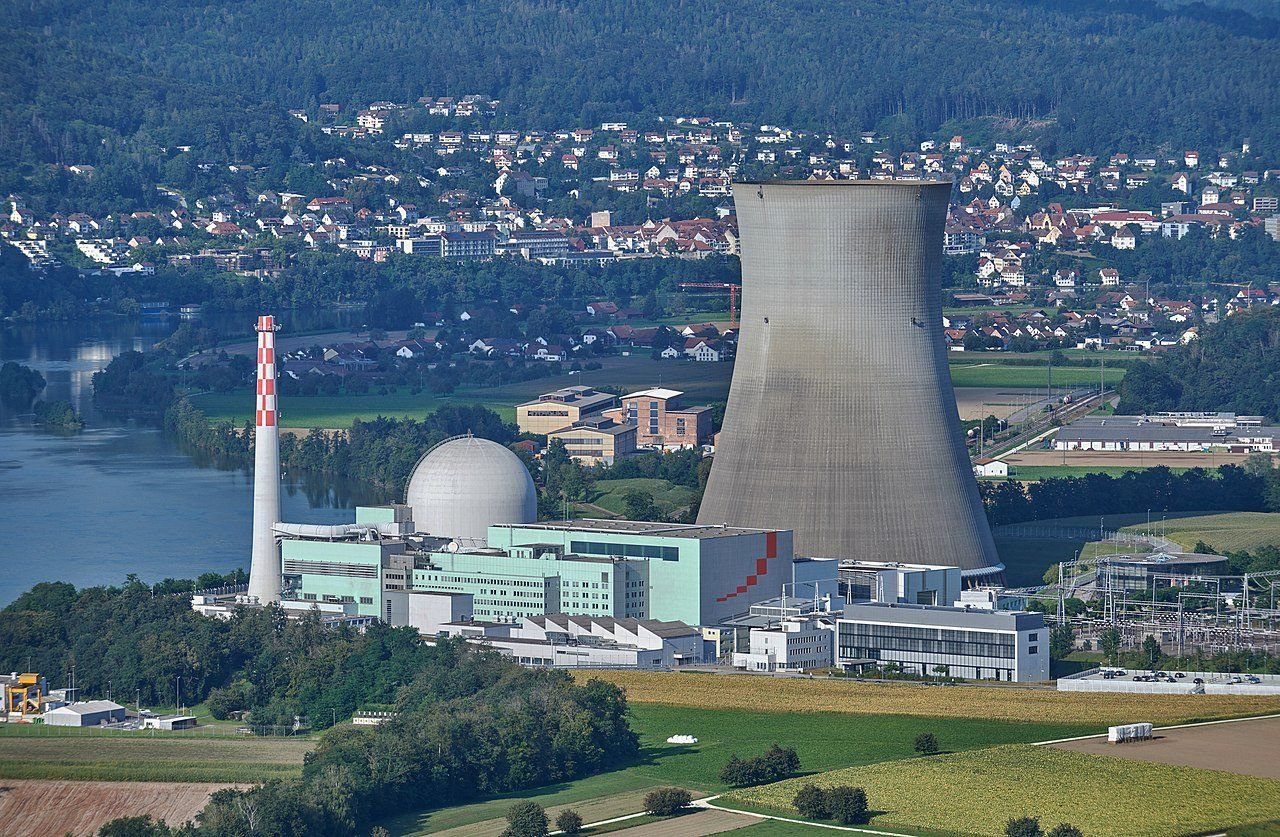
Switzerland's nuclear power plants are among the oldest in the world and operate on the legal basis of open-ended licences. According to German organisations, none of them meets contemporary safety standards. The four active reactors - Beznau 1 and 2, Gösgen and Leibstadt - are located in the immediate vicinity of the German border. Leibstadt, for example, which was commissioned 41 years ago, lies directly opposite Waldshut-Tiengen in Baden-Württemberg. The TRAS report "Grenzenloses Risiko: Gefährdung Deutschlands durch schwere Unfälle in Schweizer Atomkraftwerken" stresses that their proximity and the weather conditions mean that, in the event of a serious accident, it would be Germany that would suffer the principal radiation damage.
The report's authors warn of a lack of public information. Studies simulating accidents based on real weather data show that a radioactive cloud could cover wide areas of southern Germany.
The TRAS report analyses scenarios of a possible accident, based on the models of ENSI (the Swiss nuclear oversight body), GRS, flexRISK, the Öko-Institut and the Institut Biosphère. In one of the scenarios, for instance one involving the release of radioactive iodine and caesium, it would be necessary to evacuate large parts of Baden-Württemberg, and even Bavaria. Cities such as Freiburg, Karlsruhe, Stuttgart, Mannheim, Heidelberg, Reutlingen, Heilbronn, Ulm, Nuremberg, Augsburg and Munich would be affected. In extreme cases - the entire Upper Rhine.
According to the report, under favourable winds (from the north-east), the Germany-Switzerland-France triangle could require a complete evacuation from Waldshut-Tiengen to Freiburg and Basel. In a third of Germany, people would have to remain indoors, ideally in cellars without windows. The radiation could lead to thousands of deaths and cases of cancer, the report warns.
This threat, in the activists' view, also extends to drinking water. Radioactive rain could contaminate Lake Constance, which is used by millions in Baden-Württemberg, or the Rhine.
German environmental organisations, such as BUND Hochrhein, are demanding immediate action from Switzerland. Martina Matt, the head of BUND:
- We demand that politicians finally pay attention to the problems. And then become active. Take responsibility and exert pressure on Switzerland to close [the nuclear power plants] in the near future.
The TRAS report, presented in Waldshut, aims to "stimulate public and political debate in Germany and Switzerland". The authors highlight the shortcomings in the emergency plans and the fact that the German environment ministry has no access to the Swiss simulations. Germany, following its own exit from nuclear power in 2023, argues that the old Swiss reactors threaten its safety. TRAS calls for a renewed risk assessment, one that takes account of drone attacks or armed conflicts in Europe.
Switzerland defends itself, maintaining that its reactors meet the standards.