Germany increased imports of key technological raw materials by 4.9 percent, but dependence on China remains high. A similar situation applies to the entire European Union.
Rare earths are a group of 17 chemical elements of critical importance to the modern economy. They are essential for the production of batteries, semiconductors, neodymium magnets used in electric vehicle motors, wind turbines, and also in consumer electronics, medical equipment, and defense. Although Europe declares its commitment to a green transition and digital sovereignty, the extraction and processing of these raw materials within its territory remain minimal. Germany and the European Union are overwhelmingly dependent on imports.
According to the latest statistical data published on April 14, 2026 by Destatis, in 2025 Germany imported 5,500 tonnes of rare earths. That is 4.9 percent more than in 2024, when 5,200 tonnes were brought in. The value of imports rose even more sharply, from 64.5 million euros to 77.6 million euros. The price increases and larger volume reflect the growing demand of German industry for these strategic metals.
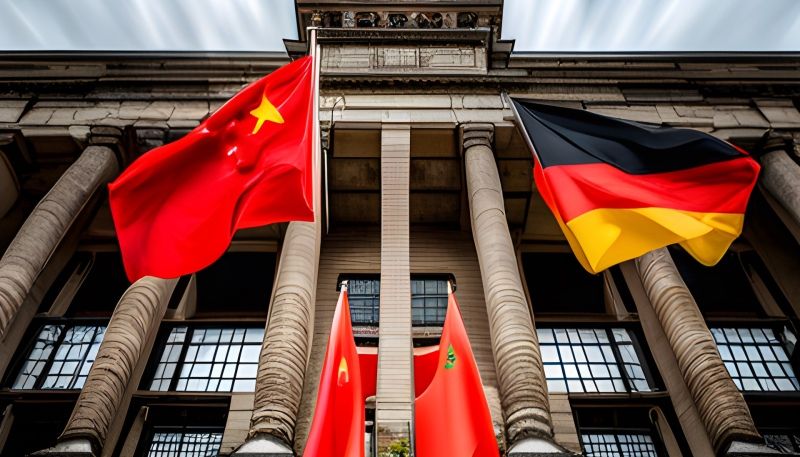
China remained the largest supplier. In 2025, 55.4 percent of all imported volume, or 3,000 tonnes, came from the Middle Kingdom. This is a clear decline compared with 2024, when China's share was as high as 65.4 percent. The second-largest supplier was Austria, with 20 percent (1,100 tonnes), and the third was Estonia, with 10.9 percent (600 tonnes). As statisticians point out, Austria and Estonia are not original producers of rare earths; the raw materials reach them from other countries (mostly outside the EU) and are then further processed and re-exported. For this reason, the original origin (e.g., China, Russia, or Malaysia) is no longer visible in German statistics.
For comparison, it is worth recalling that 2025 did not break the import volume record of the past decade. The highest level was recorded in 2018, when Germany imported as much as 9,700 tonnes of rare earths (worth 38.3 million euros). The current level is therefore significantly lower than the historical peak, which may indicate a partial diversification of supply or optimization of consumption in industry.
According to Eurostat data, in 2025 a total of 15,100 tonnes of rare earths worth 124.9 million euros were imported into the EU. As much as 46.8 percent of this volume (7,100 tonnes) came from China. Russia took second place with 25.9 percent (3,900 tonnes), and Malaysia third with 23.1 percent (3,500 tonnes). Dependence on China is particularly dramatic in the case of certain specific compounds. An example is lanthanum compounds (Lanthanverbindungen): of the 3,800 tonnes imported into the EU, as much as 3,700 tonnes, or 97.3 percent, came precisely from China.
These figures illustrate Europe's strategic weakness in the supply chain of critical raw materials. Rare earths are not extracted in significant quantities within the EU, and their processing is concentrated in a handful of Asian countries. Germany, as the largest economy in the Union and one of the technology leaders, feels this dependence particularly strongly. Growing demand for electric vehicles, renewable energy sources, and advanced electronics means that imports of these raw materials are likely to grow rather than decline in the coming years.
Dependence on China for rare earths is not a new phenomenon, but in the context of geopolitical tensions and the growing US-China technological rivalry, it takes on particular significance. Beijing has for years controlled more than 80 percent of the global processing of these raw materials and has not hesitated in the past to use this as a tool of pressure (the embargo on exports to Japan in 2010).
Germany's automotive industry (Volkswagen, BMW, Mercedes), electronics manufacturers, and the wind and photovoltaic energy sector are particularly vulnerable to supply disruptions. Even a small price increase or restriction of exports from China could translate into higher production costs and delays in achieving EU climate targets.