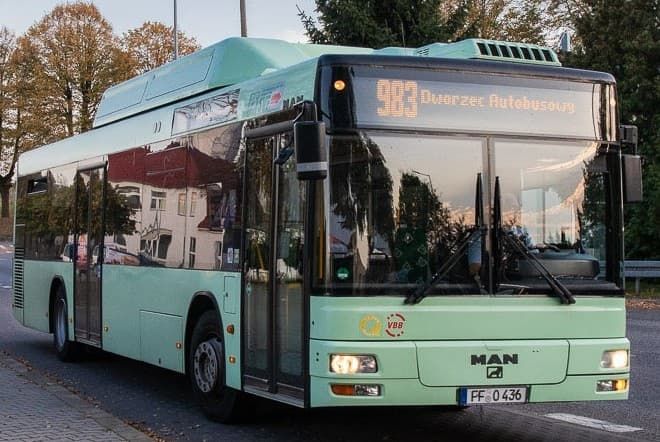
Frankfurt (Oder), struggling with a gaping budget hole, has suddenly realised that it no longer wants to cover the deficit of this connection on its own. Most tellingly, local councillors have begun pushing a "joint financing model." In practice, this means one thing: Słubice would start paying for German mistakes, neglect and mismanagement [source: Słubice24].
It is hard to escape the impression that this is a proposal bordering on political absurdity. Expecting the Polish side to cover 50 percent of the deficit of a line that is 100 percent owned by the German operator - Stadtverkehrsgesellschaft mbH Frankfurt (Oder) (SVF) - and is run with German vehicles, sounds like a grim joke. All the more so because ridership remains negligible, and the costs generated by the Frankfurt transport authority may raise serious questions.
Słubice is already making a gesture of goodwill by making its bus stops available, which in itself is a convenience for the German company. Yet Frankfurt is now reaching into the pocket of the Polish taxpayer to rescue its wobbling myth of being a "leader of cross-border integration."
If no agreement is reached by mid-July 2026, Germany is threatening to cut the number of runs in half and, ultimately, to close the line entirely by the end of the year [source: Słubice24]. And perhaps this would be the most reasonable solution to this artificially sustained problem.
Polish residents will manage just fine without these "ghost buses." In practice, it is enough to return to the tried-and-tested model: reach the bridge, walk across to the other side and transfer to more efficient transport. There is no rational reason whatsoever for Słubice to finance German buses.