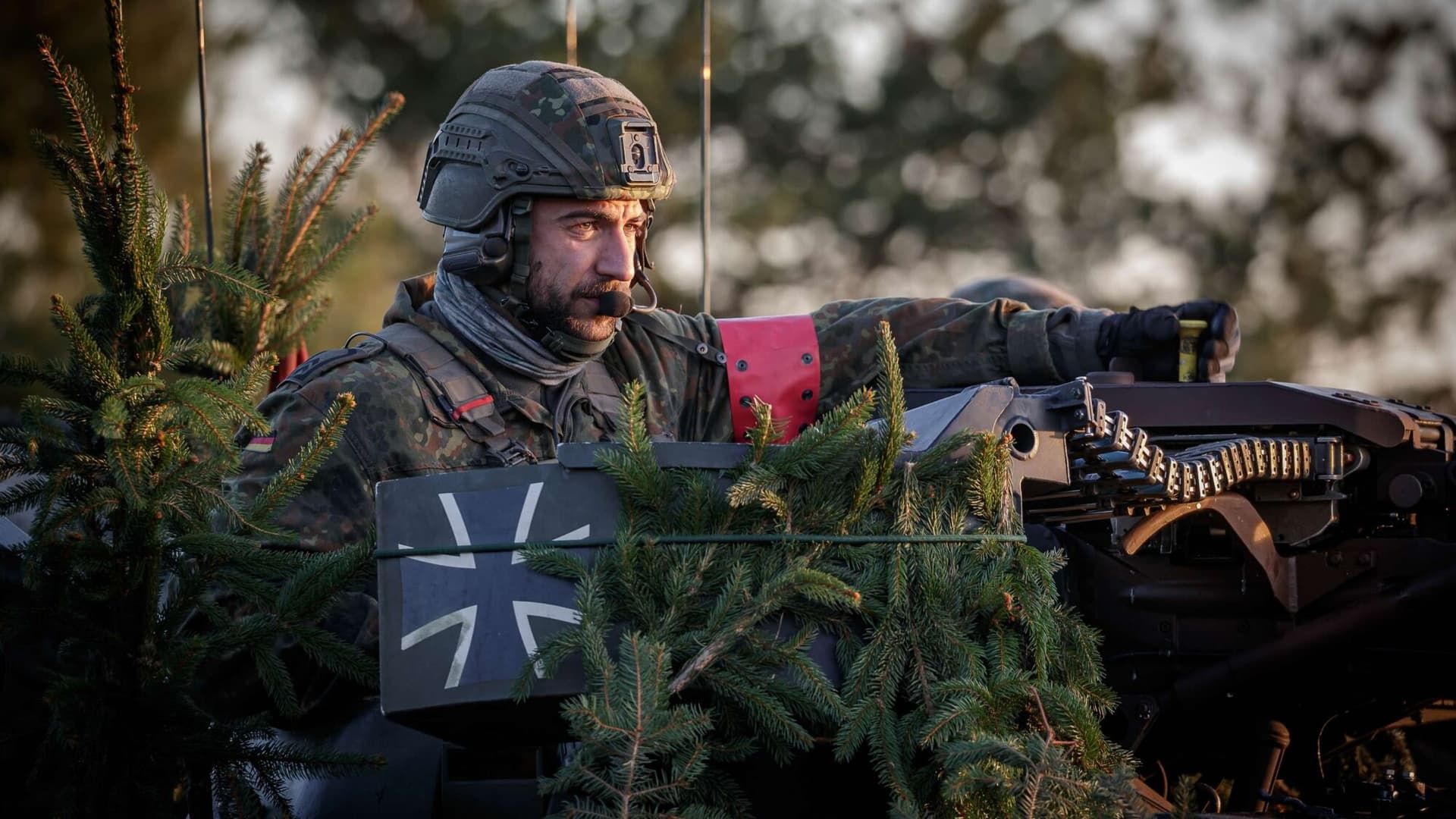
German society has just received a painful lesson in vigilance. An amendment to the military recruitment law, quietly introduced on 1 January, has set off a political earthquake. Under the new provisions, every man aged 17 to 45 was required to obtain a special permit from the Bundeswehr if he planned to stay abroad for more than three months. For many Germans this was an alarm bell - a kind of "Christmas bomb" that revealed just how close the state can move toward the logic of full militarization. Although Defence Minister Boris Pistorius, returning from holiday in Australia, was quick to call the provisions a "mistake," it is hard to shake the impression that this may well have been an attempt to test public reaction.
According to German press reports, the defence ministry had to scramble to walk back the controversial rules, announcing a sweeping exemption for travellers. Pistorius reassured the public that, since military service remains voluntary, no one will be prosecuted for going on holiday, working abroad or studying overseas. The problem, however, is that the mere existence of such regulations has raised questions far more serious than a simple clerical mistake.
If voluntary recruitment is failing to deliver the expected results and the German army needs new personnel, the natural suspicion is that the authorities are beginning to test the ground for far-reaching solutions. Seen in that light, it is hard to speak simply of bureaucratic chaos. It looks more like a test - an attempt to see how far one can push the limits of public acceptance in a state that is betting ever more heavily on defence.
The case is all the more significant because it is happening at a moment of clear change in Germany's political climate. Security, armaments and defence readiness have stopped being a footnote to the public debate and are becoming its central axis. There is growing talk of reserves, training, industrial capacity to support the army and the need to prepare the state for a protracted crisis. In such an environment, even a seemingly technical provision in a law ceases to be a trifle. It becomes a signal of the direction in which the whole state may be heading.
That is precisely why so many observers have read this situation as something more than a legislative oversight. If the government assures everyone today that "everyone is free to travel," tomorrow it may decide that the security situation now demands different decisions. And since the idea of restoring mandatory military service is returning ever more loudly to the German debate, such episodes are hard to treat as a political accident.
One cannot rule out either that the entire affair has a purely political dimension and is part of a game inside the ruling coalition. Boris Pistorius, until recently portrayed as one of the strongest SPD politicians, has suddenly found himself on the defensive, forced to justify regulations that have shaken trust in his ministry. In German politics such slip-ups rarely remain a mere workplace accident. They often become a tool for weakening the position of those who start to rise too fast.
Even if one accepts the theory of an administrative blunder, the dynamic of change remains unsettling. The ever tighter linking of the economy, industry and social life with the logic of defence shows that Berlin is preparing for a new era - an era in which state security may increasingly take precedence over the comfort and freedom of the citizen.
Today the German defence minister is reassuring the public that there is no reason to panic. Yet politics rarely stops in mid-stride. If the Bundeswehr's personnel problems keep mounting and geopolitical pressure continues to grow, the subject of compulsory military service will return sooner than many Germans think. And then the question will no longer be whether this was a legislative mistake, but whether the current commotion was the first signal of a much larger change.