In the Paraguayan landscape of savannas and rainforests, the German diaspora stands out - from Mennonites in the arid Chaco to descendants of emigrants from Brazil in the fertile eastern provinces. Their contribution to agricultural modernization, from dairy farming to soybeans, forms a unique bridge between Paraguay and Germany. This is the foundation and bedrock of Mercosur.
The history of German migration to Paraguay dates to the 19th century, but it culminated in the 20th. In 1927, the first Mennonites, fleeing persecution in Russia, Canada, and Mexico, settled in the Gran Chaco - an inhospitable, arid province in the west of the country. Today they number 45,000-50,000 people, mostly German-speaking, and manage 1.5 million hectares of land. They introduced European dairy standards: in the 1970s they built modern farms, producing milk and cheese for export. Their colonies, such as Fernheim and Neuland, became oases of progress in a region where 90 percent of the population lives in the east, near the Paraná River. The Mennonites did not just survive - they transformed the Chaco into a cattle-breeding center where, reportedly without state subsidies, they turn a profit through innovation and ties to their German homeland.
An even larger wave of Germans in Paraguay was the emigration of Deutschbrasilaner - descendants of Germans from southern Brazil. Between 1954 and 1989, under the dictatorship of Alfredo Stroessner (son of a Bavarian from Hof), tens of thousands arrived from states such as Rio Grande do Sul and Santa Catarina. In 1973-74 alone, more than 42,000 settled in the provinces of Alto Paraná, Caazapá, and Itapúa. Today they number more than 100,000 in 9 large settlements and 45 smaller ones, concentrated around Hohenau (30,000-35,000 residents). They constitute 5-7 percent of Paraguay's population and dominate eastern agriculture: cultivating soybeans (the main export, 3.9 million tons per year), cassava, cotton, and sugarcane. Their secret of success? A combination of Brazilian scale with German connections.
Contemporary ties with Germany extend far beyond the diaspora. The German Chamber of Commerce and Industry in Asunción (AHK Paraguay) supports investments in the agricultural sector - from agricultural machinery to renewable energy. German companies like Claas supply technology, and Paraguay's beef exports to Germany are growing - in 2024, a cooperative with 2,200 members slaughtered 200,000 head of cattle, a significant portion of which was shipped to Europe. In June 2024, a Paraguayan delegation visited Brandenburg: they met with local farmers in Goßmar and Görlsdorf, discussing similarities in livestock farming. Boris, one of them, stayed for three months to help with the harvest - a symbol of a living exchange. "This is not theory; this is practice among colleagues," says Thomas Domin, a farmer from Peickwitz.
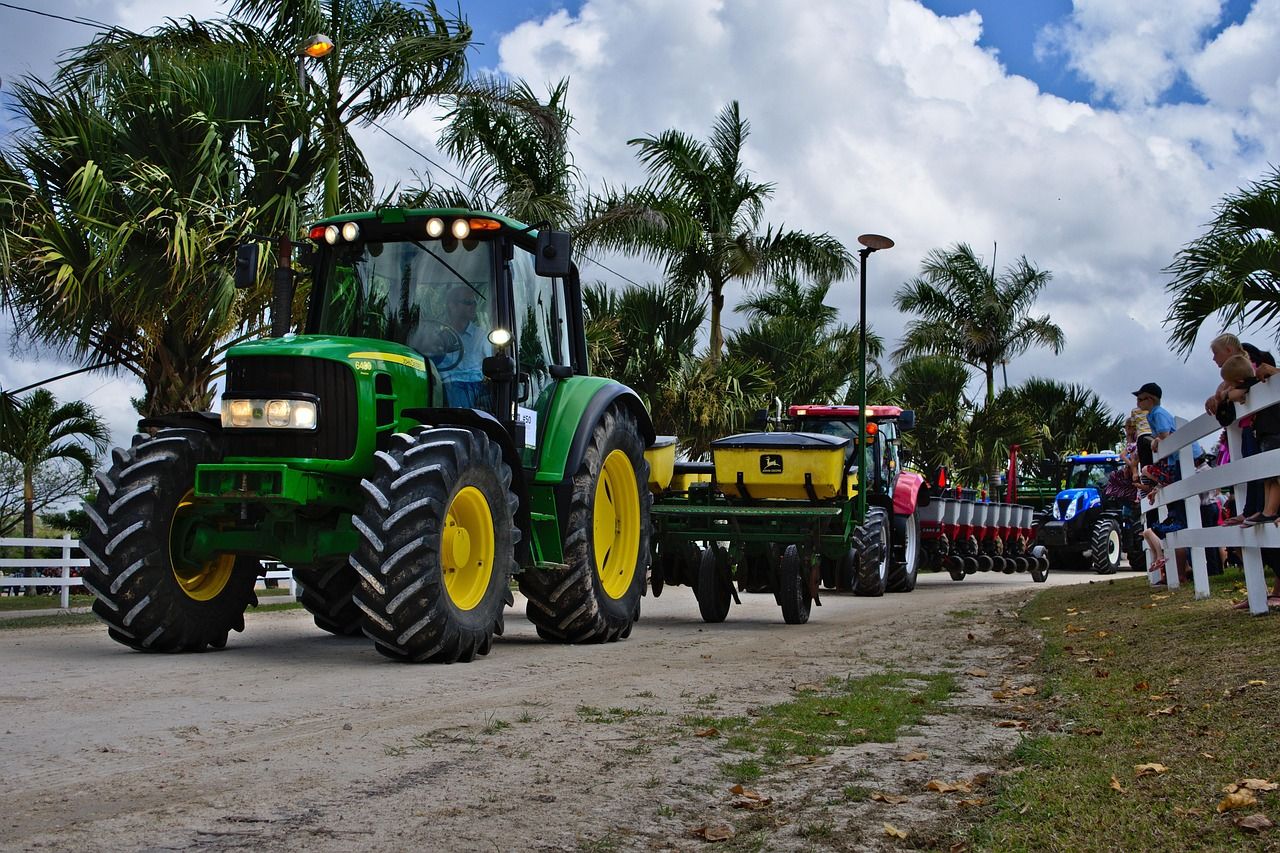
Innovations driven by German know-how are transforming Paraguayan fields. Alfred Fast, a Mennonite farmer, in a lecture at the 2025 GKB congress emphasized "Direktsaat" - no-till direct seeding, introduced in the 1980s to combat erosion on sandy soils. Today, 90 percent of the cultivated area (more than 3 million hectares) uses this method: soybean yields rose from 1,500 to 3,000 kg/ha, and soils became more fertile thanks to mulching. Fast combines this with integration: after soybeans and corn, fields are turned to pasture for years, regenerating under the hooves of cattle. Paraguay, the world's 10th-largest beef exporter, avoids subsidies - a tax reform (income tax cut from 30 to 10 percent) delivered a 600 percent increase in GDP over 20 years. In Q1 2025, agriculture's contribution to GDP reached 5.86 trillion guaraní (a 70 percent year-on-year increase), with a forecast of 3.9 trillion in 2027 - proof that the ties with Germany are working superbly.
Agri Terra KG, founded by brothers Carsten and Michael Pfau from Grasbrunn near Munich, has become a symbol of successful investment in Paraguay's agricultural sector. The story begins with Carsten Pfau, a German-born entrepreneur who settled in Paraguay in 1997. With a degree from the University of Mannheim, Pfau recognized the potential in the underfunded agricultural sector. Together with his brother Michael, he founded Agri Terra KG in 2012 - a company based in Grasbrunn, just outside Munich, specializing in agricultural and real estate investments. Today the group encompasses more than 40 independent companies, employing hundreds of people in seven countries across three continents. In Paraguay, where 80 percent of farmland belongs to 1 percent of owners, the Pfau brothers manage plantations of oranges, tomatoes, peppers, limes, and strawberries, becoming one of the country's largest producers. Their companies belong to the top 1 percent of enterprises in Paraguay, producing the third-largest quantity of oranges and operating the largest greenhouse complex for fruit and vegetable cultivation.
The Pfau brothers' investments remain focused on agriculture. In 2018, they launched orange plantations. Yields turned out better than planned, despite climatic challenges. The company produces fruit juices under the Frutana brand, which in 2023 achieved an operating profit, acquiring competitors and capturing a significant share of the Paraguayan market. Agri Terra also invests in organic supermarkets, selling not only its own products but also the produce of other farmers. In the media and entertainment segment, the Pfau brothers even produce TV shows such as "Libres para Elegir" and "El Gran Debate," promoting the free market and economic education. Carsten Pfau, winner of a Paraguayan Emmy for the show "El Audaz" in 2023, supports startups and invests in innovative projects in the country.
The EU-Mercosur agreement is a project aimed at creating a free trade zone between the European Union and the South American countries belonging to Mercosur (including Argentina, Brazil, Paraguay, and Uruguay). The main proponents of the EU-Mercosur agreement are Germany and Spain, which lead a coalition of 11 EU states. Under the free trade zone, German industrial products would enter Mercosur countries, while European markets would be flooded with agricultural products from Mercosur countries.
EU farmers, including those in Poland, are protesting against the EU-Mercosur trade agreement, pointing out that the influx of cheap agricultural products from South America, which do not always meet European quality standards, will destroy European agriculture.
[Aleksandra Fedorska is a journalist for Tysol.pl and numerous Polish and German media outlets]