The educational opportunities monitor published by the IfO Institute shows that school success in Germany is increasingly becoming a function of parents' material status and education, rather than the individual engagement or work of the student.
This phenomenon stands in stark contradiction to the model known from the 1960s or 1990s, when the "social spring" allowed people from working-class or immigrant families to attain high professional positions thanks to the rungs of public education.
Currently, statistics indicate progressive polarization: on one hand, the group of young people aspiring to the Abitur in Gymnasiums is growing, while on the other hand the category of "chanceless" children who achieve no school success at all is rapidly expanding.
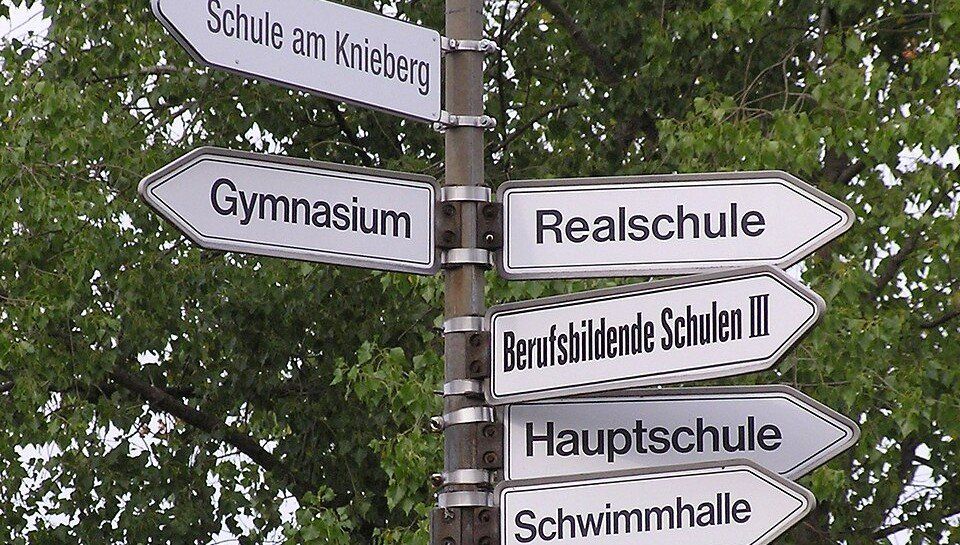
One of the main axes of dispute over the shape of German schooling is the system of early student selection, which in most federal states occurs as early as after the fourth grade of primary school.
Parents are then forced to make a decision about the future life path of a ten-year-old child, directing them to a Gymnasium, a Realschule, or a Hauptschule.
Critics of this solution point out that it is introduced too early, at a time when children are only learning the process of effective acquisition of knowledge, which prevents them from developing together and equalizing opportunities.
In the past, especially in the 1990s, the system was more flexible, enabling the flow of students between different types of schools and the later supplementing of education at higher vocational colleges, which fostered social integration, including the large group of Poles arriving in Germany.
A particularly worrying phenomenon, noted in the latest research, is the growing educational regression among boys, who statistically perform much worse at school than girls.
This problem manifests itself not only in difficulties mastering the basics of the curriculum, but also in growing aggressive attitudes and the failure to find their place in the female-dominated early-school environment.
After decades of intense feminization of pedagogical staff in kindergartens and primary schools, the German public debate sees the emergence of a postulate to return to traditional patterns of male authority.
Experts suggest that the solution to the upbringing and educational problems of boys could be increased employment of male teachers, who would become role models of "a wise, educated, and well-mannered man" - an alternative to aggressive attitudes.
This crisis affects the foundations of social cohesion, since the sense of influence over one's own fate through education is a key element of state stability.
If the system loses the ability to provide equal opportunities, and success becomes hereditary, an erosion of trust in public institutions occurs.
Although educational systems in individual federal states differ in their degree of complexity, the general trend points to a loss of the dynamics that for decades drove the German "economic miracle."
Contemporary challenges, such as the integration of children from families without academic traditions, require a redefinition of existing methods of sorting students and a greater emphasis on supporting children at the earliest stages of development, before an irreversible division into groups of success and marginalization occurs.