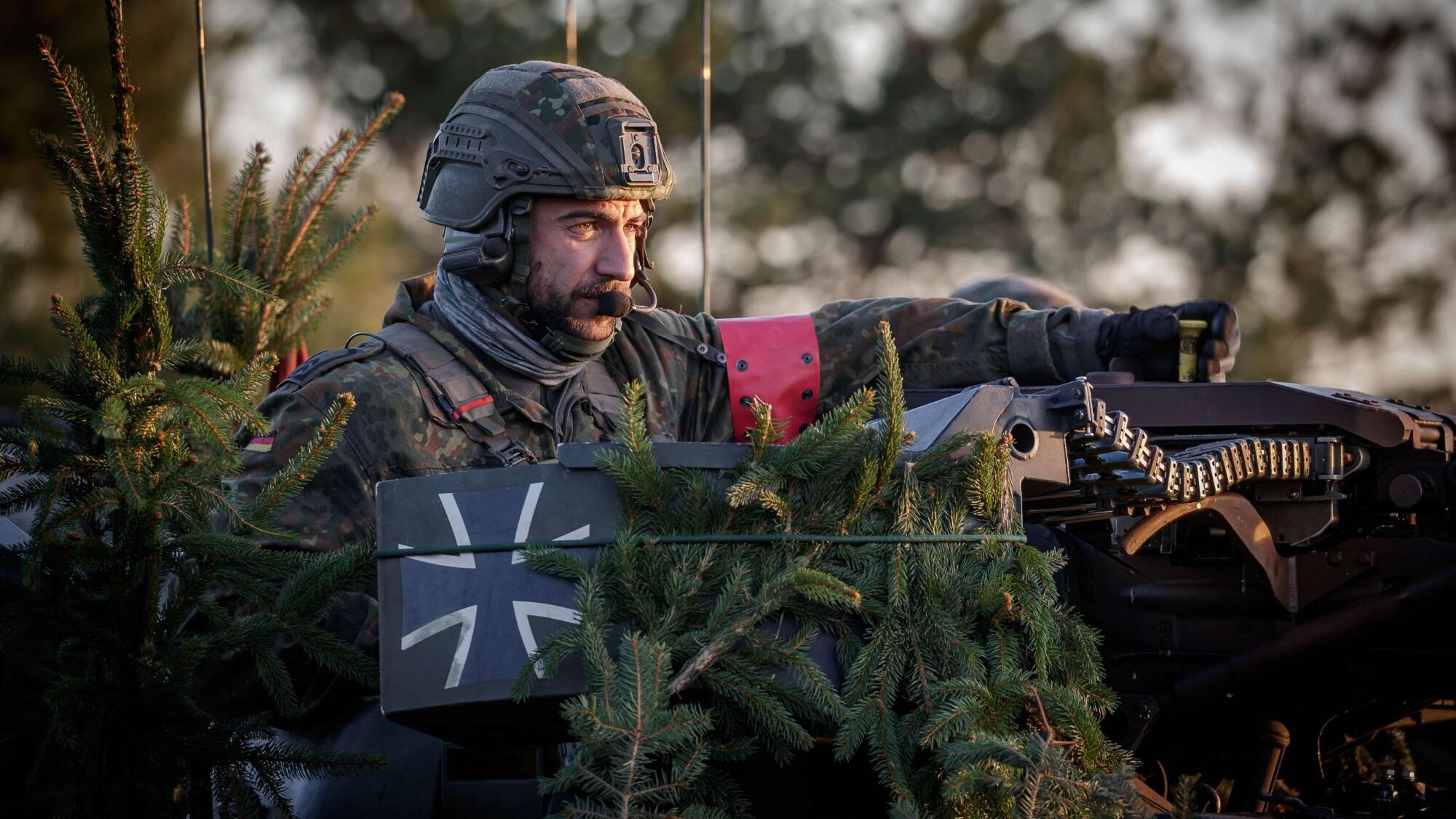
The German government has published a new military strategy, which envisages the development, modernization, and increase of the Bundeswehr's potential through 2039. The document was commented on, on Radio Wnet's airwaves, by Aleksandra Fedorska, editor-in-chief of Radio Debata.
As she emphasized, Berlin is not hiding its ambitions and wants to become Europe's main military power.
In Aleksandra Fedorska's opinion, the new strategy is above all a confirmation of the direction Berlin had already taken earlier following the Russian aggression against Ukraine.
These are German ambitions, that they will have the largest army, the most effective on the continent, she said.
As she noted, Defense Minister Boris Pistorius did not present revolutionary new ideas, but rather gathered earlier declarations of the German government in a single document.
"He didn't actually tell us anything new, only with new words and his voice he said what Chancellor Merz and experts had already said earlier," she added.
One of the most important elements of the strategy is the gigantic spending on defense. Berlin plans to allocate around 500 billion euros for this purpose.
"A gigantic half-trillion euros. Half a trillion euros," Fedorska emphasized.
As she indicated, the funds are to be allocated both to support the German defense industry and to purchase the most modern armaments abroad.
According to Radio Wnet's interlocutor, Germany is currently trying to undertake a deep change in social mentality. After decades of dominance of pacifism, the slogan of readiness for war is now appearing more and more often in public debate.
"This word is such a key word: readiness for war," she noted.
Fedorska drew attention to the fact that German society remains strongly divided on this issue.
"We still have very pacifist circles, but we also have this second group, which absolutely supports rearmament," she said.
In Aleksandra Fedorska's assessment, Germans increasingly boldly see themselves as a leader of security structures in Europe, also within the North Atlantic Alliance.
"Of course, in a leadership role," she replied when asked about Berlin's role in NATO.
As she added, the concept of a "European NATO" appears more and more often in the German debate, which causes her concern.
"I very much dislike this term European NATO, and this term is appearing more and more often," she emphasized.
Fedorska also indicated that German ambitions are clashing with French interests. An example is the joint project of a new combat fighter worth around 100 billion euros.
"The states are quarreling over who will be the leader, and they cannot deal with it. The project is in suspension," she assessed.
Toward the end of the conversation, the expert also referred to the decision of the German administrative court in Koblenz, which questioned part of the border controls toward Luxembourg.
"The administrative court in Koblenz ruled that unilateral border controls are inconsistent with European law," she said.
As she emphasized, a similar case concerning the Polish-German border is still awaiting resolution.