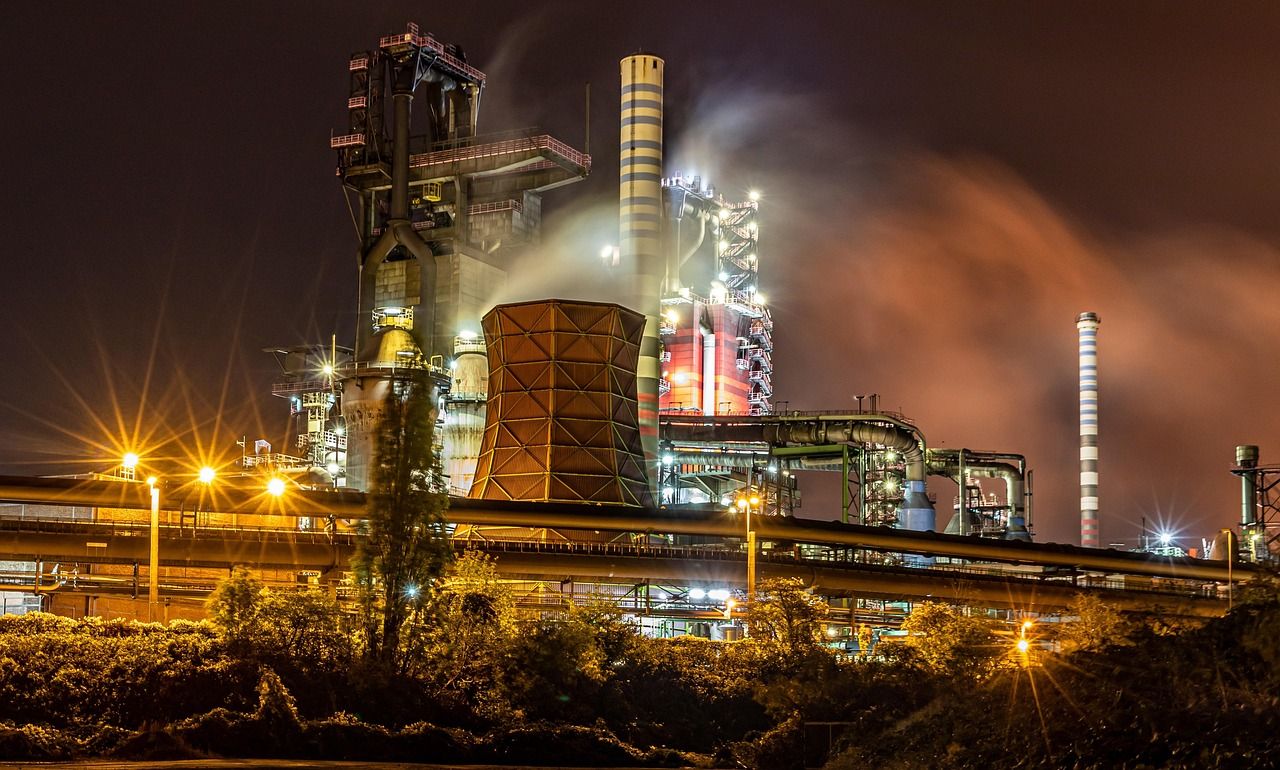
The German chemical industry, once a pillar of the German economy, is going through its most serious crisis in decades. In the document "Kernergebnisse Chemieagenda" of March 2026, prepared by the Ministry of Economy and Energy and the Ministry of the Environment, the government openly admits: chemical production in Germany has fallen by 20 percent over the course of a few years, many installations are operating below the profitability threshold, and some plants have already been permanently closed or are on the verge of liquidation. A rescue package has been prepared.
The crisis is hitting small and medium-sized enterprises particularly hard, as they have no ability to compensate for losses through exports to global markets. The reasons are manifold: record-high energy and CO2 emissions costs, complex EU regulations (REACH, IED), lengthy permit procedures, and a lack of qualified personnel. As a result, German producers are losing market share to cheaper competition from Asia and the Middle East, and investments in innovation are being moved outside Europe.
The coalition agreement sets the goal of making Germany the most innovative location in the world for the chemical, pharmaceutical, and biotechnology industries, the document states.
Four key areas of action are intended to address the particularly tense situation of the chemical industry in the short term:
As part of "Chemieagenda 2045," a wide-ranging package of measures has been launched: from the introduction of the industriestrompreis (electricity prices for industry) and the extension of energy price compensation to 31 sectors, through the reform of the ETS and CBAM systems, to the simplification of administrative procedures and support for biotechnology and the circular economy (including mass balance and chemical recycling). The document emphasizes that without rapid stabilization, further deindustrialization is threatened, including the loss of 480,000 jobs and 222 billion euros in turnover annually.
Chemistry is, after all, the so-called "industry of industries," because it supplies basic raw materials for the automotive sector, agriculture, medicine, and clean technologies. Without a strong chemical sector, the German economy is losing competitiveness throughout the value chain.
Against this background, the role of Polish players is particularly interesting. Grupa Azoty, the largest Polish chemical concern controlled by the State Treasury, has for years actively exploited the weakness of its German neighbor. The most spectacular example is the takeover in 2018 of the German fertilizer producer Compo Expert for 235 million euros. The transaction was meant to strengthen Azoty's position as one of the largest fertilizer players in Europe. Compo, with plants in Germany, became an important asset in the Polish champion's portfolio. However, already in January 2025, and in the context of 2026 the situation deepened, the then-vice president of Azoty Andrzej Skolmowski said openly in an interview for the "Financial Times":
Compo was acquired several years ago in a different situation for Grupa Azoty, and currently we are thinking more from a cash perspective.
The concern is considering the sale of the German asset to improve financial liquidity. There is currently no information on the finalization of the sale of Compo Expert. The company still belongs to Grupa Azoty, and Andrzej Skolmowski was dismissed from the position of president on February 12, 2026.
In parallel, Azoty launched the Polimery Police project (Azoty Polyolefins). The investment in a polypropylene and propylene complex in Police consumed more than 7 billion zloty and was meant to be a flagship example of Polish petrochemistry. Unfortunately, like the German chemical industry, Polimery is grappling with gigantic problems: contractor delays (Hyundai Engineering), rising energy costs, problems starting up the installation, and enormous debt. In 2026, Grupa Azoty Polyolefins is in restructuring, and Orlen has submitted an offer to take over all shares for about 1 billion zloty. Trade unions are sounding the alarm about the threat to more than 900 jobs at Zaklady Chemiczne Police and are appealing to the government for intervention. The project, which was meant to be a symbol of Polish expansion, has become an example of the same problem with which the German sector is struggling: high costs, regulatory pressure, and global competition. The Polimery project is not being developed or launched in its current form. It is, instead, frozen and being prepared for takeover by Orlen after restructuring.
[Author Aleksandra Fedorska is a journalist for Tysol.pl and numerous Polish and German media outlets]
[Title, lead, the "What You Need to Know" and "What This Means for Poland" sections, as well as some subheadings, were added by the editorial team]