In defense of her strategy before the German Bundestag on October 17, German Foreign Minister Annalena Baerbock said:
"When we talk about peace today, we cannot narrow our focus and attention to purely military matters. Security, and thus peace, affects all areas of our social life. (...) One of our greatest successes over the past two and a half years has been preserving the unity of our free and liberal Europe and of all the world's nations that believe in a rules-based international order."
In response to Annalena Baerbock's speech, the opposition Christian Democratic party precisely catalogued the biggest errors and gaps in Germany's security strategy. According to CDU MP Johann Wadephul, Germany is unable to respond adequately to specific threats, such as the penetration of German infrastructure by drones. The federal states and local governments have neither been given the capability nor any guidance on how to handle such situations.
The implementation of Germany's national security strategy is, as it turns out, also a financial problem for Poland's western neighbor. Germany's 2025 budget foresees very deep cuts precisely in those ministries where German security plays the main role. Funding for international policy will be reduced by 17 percent, which clearly shows that this policy direction does not carry great weight for the German government.
While the CDU and CSU were relatively cautious in their criticism of Germany's security strategy, the Alternative for Germany (AfD) challenged its fundamental purpose in the plenary debate. Federal Minister Baerbock had repeatedly stated that the goal of German action on the international stage is a credible and responsible policy. The AfD believes, however, that the goal of the security strategy should be the rebuilding of Germany's strong position in international relations. According to MP Joachim Wundrak (AfD), who served in the German Bundeswehr from 1974 to 2018, action for Germany's security must be "proactive, systematic, and well-grounded, and must enforce goals in Germany's interest."
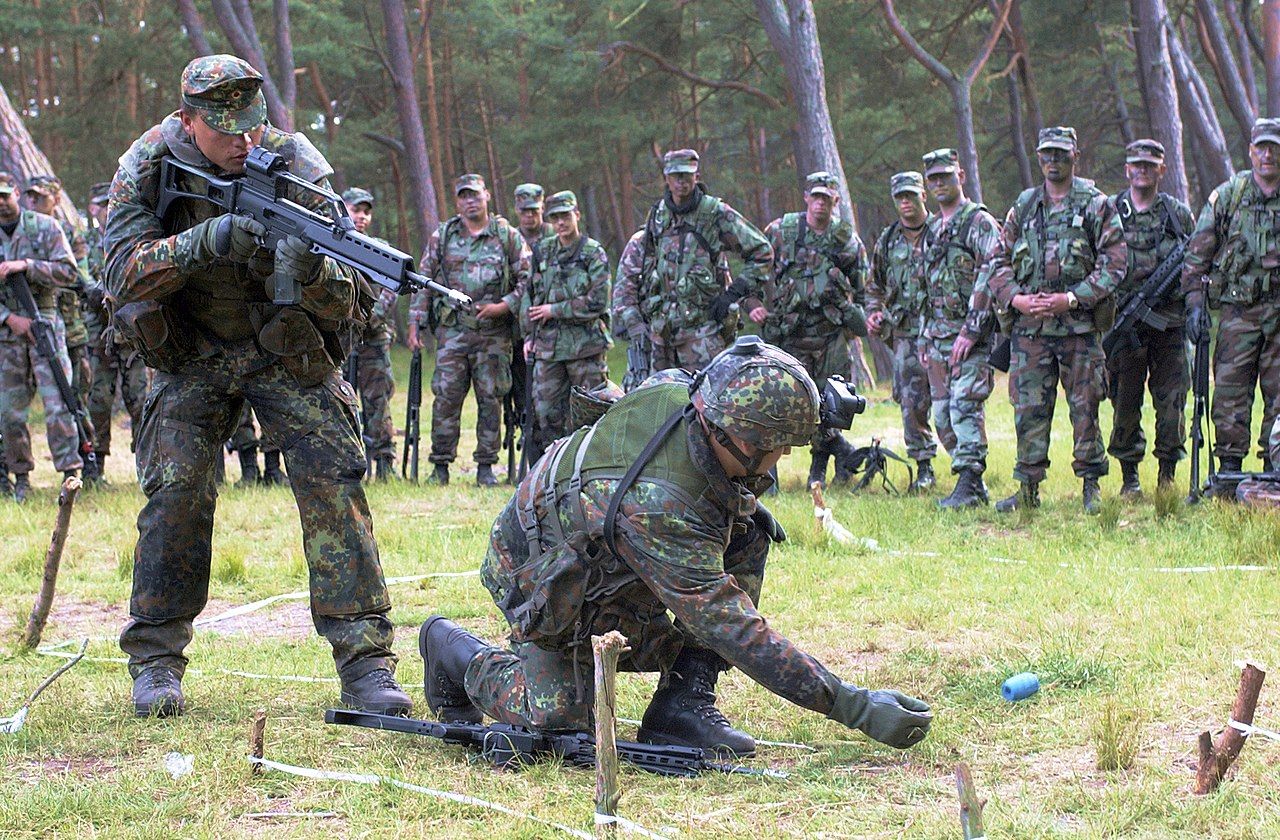
"NATO is an effective guarantor of Germany's external security and is indispensable. There have, however, also been glaring mistakes, such as the air war against Serbia and the brutal regime change in Libya. (...) Germany's security will not be defended in the South China Sea or anywhere else in Asia. The theater of operations of a defensive alliance, which NATO is according to its Charter, must be limited to the North Atlantic area and Europe."
The Left Party (Die Linke) takes a similarly critical approach to security matters:
"Last year, according to the Swedish peace research institute SIPRI, NATO spent more money on armaments than all other countries in the world combined. (...) There is no conventional power on this planet that could truly compete with NATO. We do not need more arms."
[Aleksandra Fedorska is a journalist for Polish and German media outlets]