Actions are the best political statement.
Today I want to lay out a certain matter calmly and with a cool head, because a great deal of emotion has built up around it, and emotion is rarely a good adviser. I am speaking about Poland's historical memory and about what we have the right to demand from our neighbours, Kyiv included. In my view this matter has to be divided into several levels, because at each of them a different logic applies. The first level is the most fundamental - it is simply historical truth. We have a fully legitimate interest, as Poland and as Poles, in demanding respect for the memory of our victims. And we are talking here about nearly 200,000 people. This is not a question of current politics, it is a question of elementary decency.
The first level, that is, the basic principles of diplomacy.
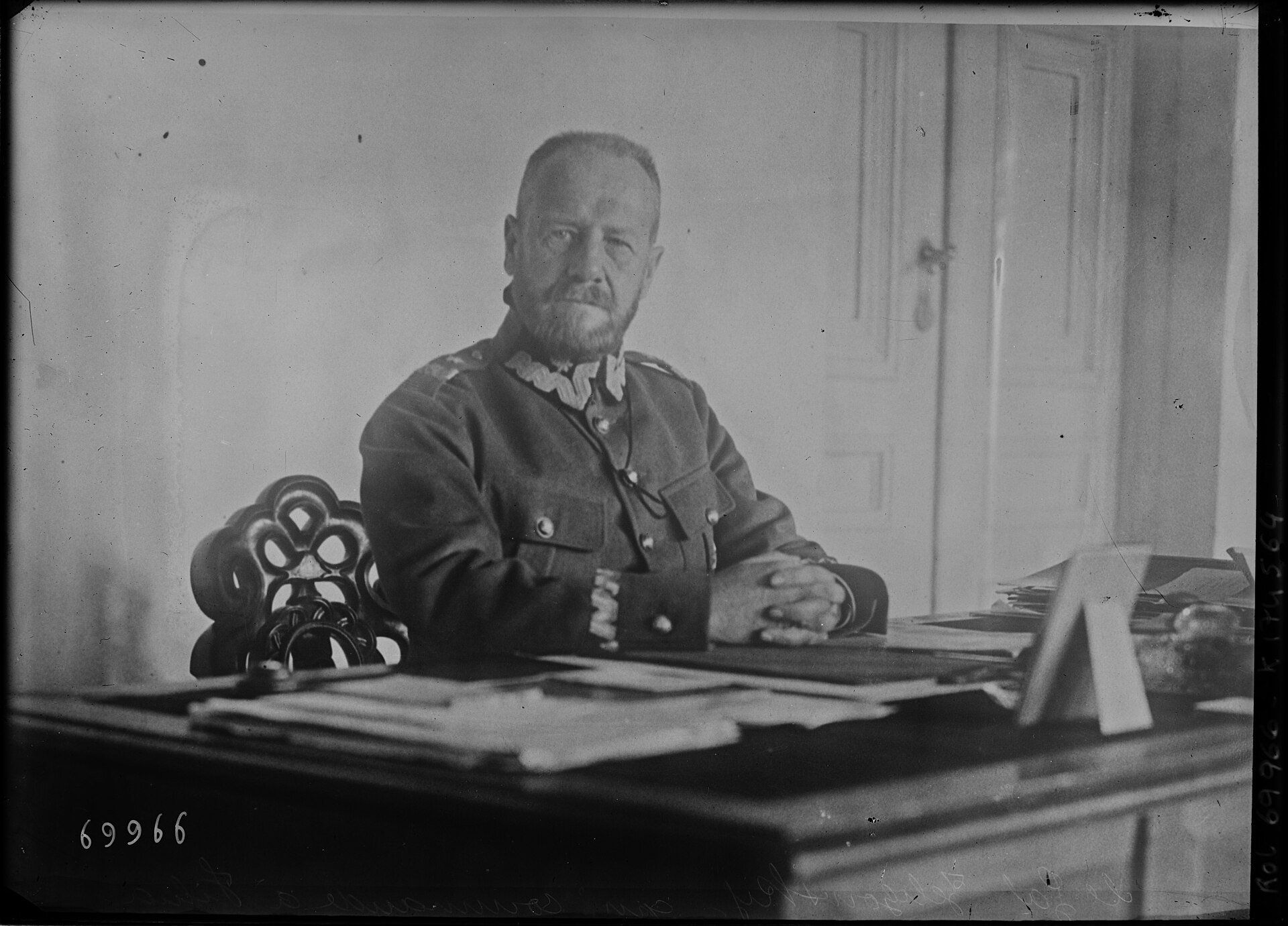
The example below is in no way an analogy or a comparison. It is, however, quite obvious that if we in Poland were to stage grand, official celebrations in honour of General Żeligowski, it would have a damaging effect on our diplomatic relations with Lithuania.
General Żeligowski is, for us Poles, an exceptional figure because of his seizure of Vilnius for us. He did it through his famous mutiny, literally two days after Poland had signed an international agreement with Lithuania in 1920. For us, Żeligowski is a hero. But let us look at it through Lithuanian eyes. For them he was the one who stabbed them in the back, because he seized central Lithuania, the entire Vilnius region together with its capital. And what have we done with that victory over the decades? We have shown enormous restraint. It stems from the fact that Poland wants to have good relations with Lithuania, built on respect. Such are the rules of diplomacy, and it is they that form the backdrop for respectful cooperation between states.
Unfortunately, President Zelensky either does not know these rules, or he believes that Ukraine, despite a very uncertain future, stands above its European partners and can conduct foreign policy from a position of strength. At least towards Poland. He demonstrated this in the most scandalous manner, bestowing on an elite Ukrainian special forces unit an honorary name referring to the Heroes of the UPA, that is, to the very same Ukrainian Insurgent Army (UPA) that the Polish Sejm recognised as co-responsible for the genocide committed against Poles. If a Ukrainian military formation is to bear the name of a symbol of the Volhynia massacre, then this is a slap in the face delivered to Poland and its citizens, and above all to the Polish victims of that slaughter. Such an imbalance in Polish-Ukrainian relations demands a swift response from Poland. And not merely a diplomatic one.
The second level, that is, our domestic politics.
President Karol Nawrocki has initiated the procedure to revoke Zelensky's Order of the White Eagle and has brought this matter before the deliberations of the Order's Chapter, which is to convene on 8 June. One thing, however, must be borne in mind - such a procedure cannot be completed without the Prime Minister's countersignature. The lion's share of Polish public opinion is decidedly in favour of revoking the decoration, but until the Prime Minister puts down his signature, the order formally remains. And this places Prime Minister Tusk in an exceptionally awkward position. On the one hand, it is hard for him to openly join in this decision, because it was initiated by the President - his political rival. On the other hand, by not putting up resistance, he will most likely lose the support of his own electorate.
The third level, that is, the hard game over Ukraine.
The third level is the most important to me, because this is the real game over the future. It is in Poland's interest - and I say this without a shadow of a doubt - for Ukraine, in whatever form of rapprochement with the European Union, to first be civilised after all. Without the cult of Bandera, to call the thing by its name, and without that enormous level of corruption that has to be eliminated slowly, step by step. And this is a line that must not be crossed when permitting any rapprochement of Ukraine with the EU.
We, as the Polish state, cannot in any way sanction the building of Ukrainian national identity on the cult of people responsible for the Volhynia massacre. This is absolutely unacceptable to us. The memory of Volhynia is sacred to us, and on this one matter we must be firm. That is why I consider the very initiative of President Karol Nawrocki to revoke this decoration to be entirely justified.
Firmly, but wisely
Firmly, but at the same time wisely. Because we must not, through our own resoluteness, push Ukraine back into the arms of Moscow, and that risk is altogether real. We are therefore left with a very narrow path along which we must move, and that is precisely why a cool head is needed here, not emotions. Hence the question - what can we do? As my colleague Aleksandra Fedorska rightly observed, it is clear that Poland will not regain a proper balance in its relations with Ukraine by means of diplomatic statements alone. The Polish administration and citizens should reach for practical, fully legal tools aimed at the extensive grey economy in which some Ukrainian commercial entities operate in Poland. This concerns, among other things, the effective control of dubious immigration practices, and in particular the import and transit of goods that have not been duly examined by the Polish customs office and the relevant services.
In our reactions one general principle should apply - in military matters we help as before, making available our own airspace and territory, while in everything else we firmly demand that our conditions be met. And as for President Zelensky, let him from now on find himself some airport other than Rzeszów to fly around the world from.
In this text I draw on the historical facts concerning the seizure of Vilnius in 1920, on the findings of the Institute of National Remembrance, and on the resolution of the Sejm of the Republic of Poland of 22 July 2016 recognising the Volhynia massacre as genocide, on the constitutional principles for conferring and revoking the Order of the White Eagle, as well as on current reports from Polish and international media at the turn of May and June 2026 concerning the bestowal upon a Ukrainian unit of a name referring to the UPA and Poland's reaction to that decision. All political assessments contained here are my personal opinion.