In this context, one should not again speak of educated urban elites who prefer to vote progressively, but instead soberly analyze the system and hierarchy of power in large Polish cities. Particular attention should be paid to neighborhood councils, which for more than a decade have been gaining political and financial influence, extending their control increasingly to every sidewalk and nearly every courtyard.
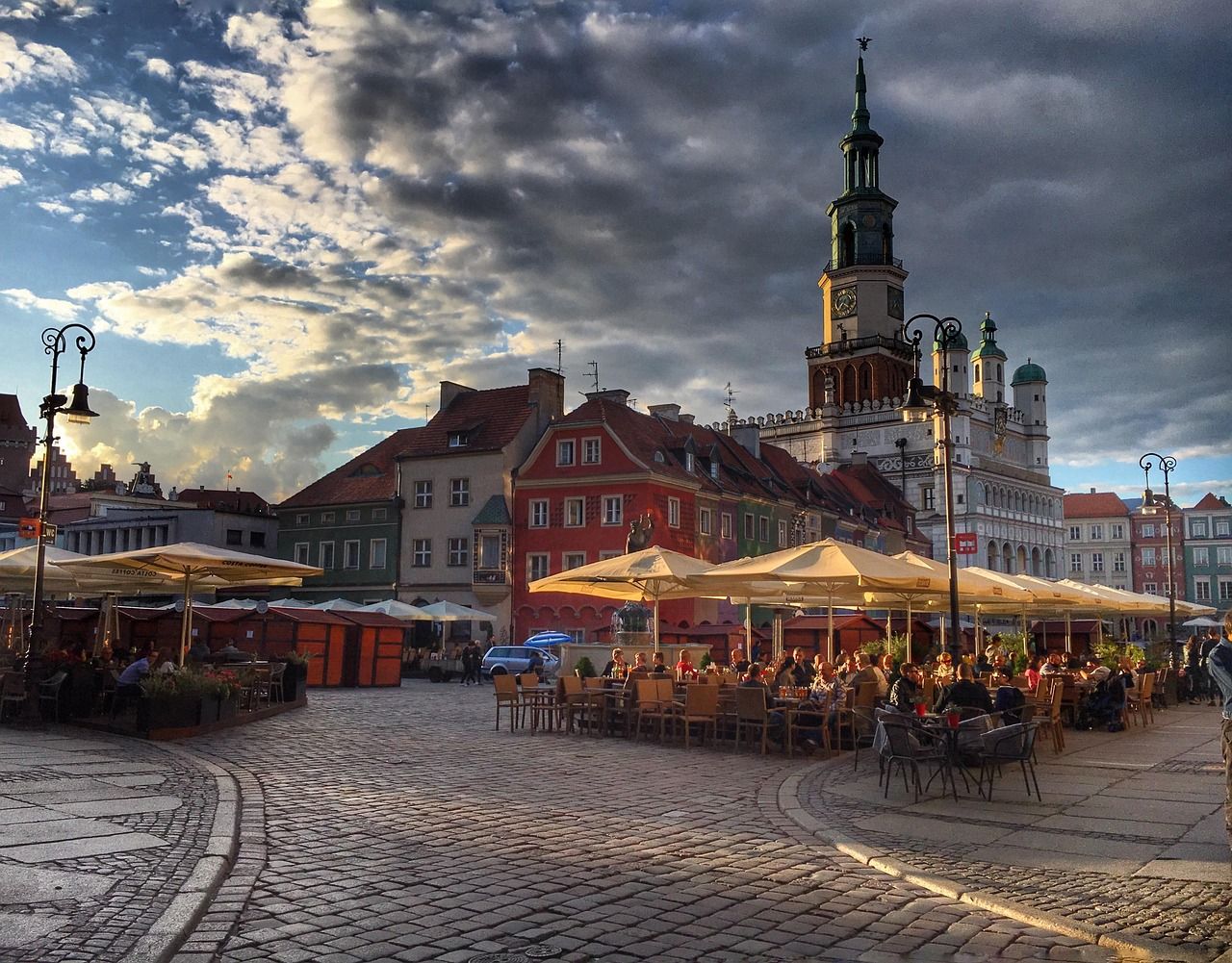
Neighborhood councils existed in Poznań earlier, but their current form is the result of a reform carried out in 2010, which aimed to increase the competencies and budgets of neighborhoods to better respond to residents' needs. Each neighborhood has a council and a board, elected in local elections every five years. Each neighborhood has its own budget, adopted by the neighborhood council and reviewed by municipal units. For example, the budget for Jeżyce (approximately 20,000-25,000 residents) is around 800,000 PLN, of which 150,000 PLN goes to non-investment activities and the rest to investments such as road and sidewalk repairs. So there is something to divide up and hand out to those who are favorably disposed. Council members do not receive a regular salary, but they can draw from a small per-diem fund. Far more significant is the local influence of these activists, who through so-called local actions reward or exclude entire groups of residents. A group particularly harshly excluded consists of people associated with the Catholic Church, scouting, and - oddly enough - a large share of schools, which can only very rarely count on support from neighborhood councils.
The Old Town Neighborhood Council has the ability to subsidize dozens of local initiatives and so-called CILs (Local Initiative Centers). A bench, a crocheting course, a theater group, or workshops for children - these are all worthy and good initiatives, but what if the process of obtaining these funds is non-transparent and leads to the shaping of a favorably disposed environment? This is what has happened in Poznań, where even council members use this mechanism to finance small projects of their colleagues. Whoever criticizes this must be a bad person - after all, how can one oppose, say, a seniors' club meeting or a new bench? "Don't do this, you'll end up completely alone," I was told by an acquaintance who, in addition to her regular job, runs various urban greenery projects in our Poznań district of Old Town. "As a council member, I will speak about it, because we are dealing here with a system of manipulation through money and social influence. It is precisely this system that contributed, among other things, to our large Polish cities becoming monopolistic and exclusionary toward people with different views."
In Warsaw, neighborhood councils were established under the Local Government Act as the lowest tier of territorial self-government. Their origins date back to the 1980s, when the awakening of local self-governance led to the replacement of Housing Estate Committees with neighborhood councils. An important moment in their development was 1994, when, following the creation of the Warsaw-Wawer Municipality, neighborhood councils received greater competencies and resources for improving local infrastructure.
In Warsaw, neighborhood councils do not create their own budgets or manage their own finances - their activities are based on unpaid civic work. They do, however, organize local events such as fairs, sports competitions, and charity drives, strengthening community bonds. Although they do not make decisions directly, they influence the district government by representing residents' voices and raising initiatives.
[Aleksandra Fedorska is a journalist for Polish and German media outlets, and a council member in one of Poznań's neighborhoods]