In March 2026, the Federation of German Industries (BDI) published a report on cooperation between the civilian economy and the security and defense industry (Sicherheits- und Verteidigungsindustrie). The document, based on a survey of 143 companies from various sectors (aviation, electronics, machinery, automotive, metallurgy) and of varying sizes, paints a troubling picture of the German economy in a time of growing geopolitical threat.
BDI President Peter Leibinger diagnoses the problem:
"Security policy needs industry, and industry needs security policy. Resilience arises from this strategic symbiosis and an efficient industrial ecosystem."
The report reveals, however, that this symbiosis hardly exists in Germany.
"The defense boom has no broad impact: 24% of respondents see no effects whatsoever, and only 6% generate regular revenues."
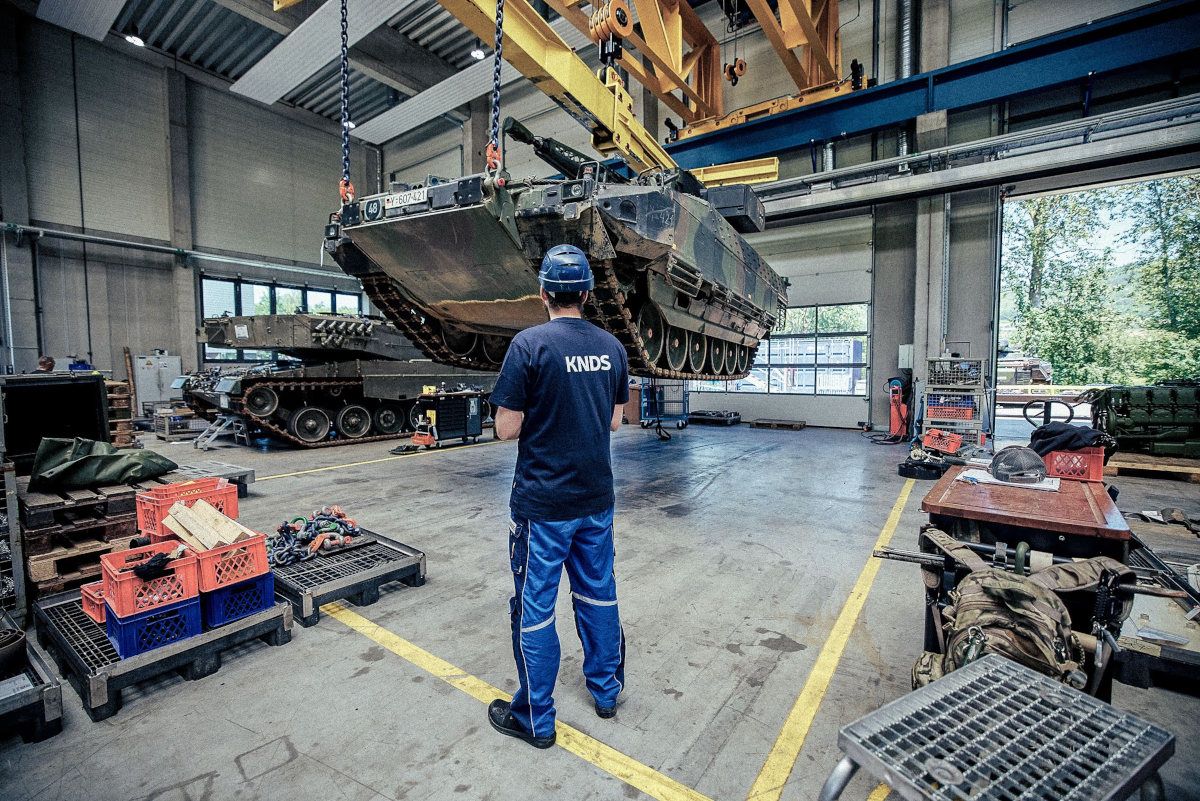
Despite massive defense spending in Germany and across Europe following Russia's invasion of Ukraine, the effects are negligible. Only 6 percent of surveyed companies generate regular revenues from the defense sector. For 24 percent, the increase in arms spending brings no benefits at all. Another 24 percent feel the effects only to a minor degree. At the same time, more than 80 percent of surveyed companies see great potential in dual-use (civilian-military) technologies. Many of them claim they could enter this segment at relatively low cost.
The key barriers cited by companies in the German industrial sector are as follows:
Entrepreneurs complain about exceedingly complicated procurement procedures, lengthy certifications, slow security clearance processes, and the lack of long-term procurement planning by the state. The German defense industry (BDI) clearly identifies what is blocking its development and demands simplification and acceleration of procurement procedures (75%), long-term rational defense procurement planning (69%), lasting and effective state-military-industry cooperation (69%), and significant simplification of certifications and tenders (62%), since for many companies these are simply incomprehensible and overly specialized.
The report additionally fits into the broader picture of Germany's weakening economy. After years of economic stagnation, industrial production remains under pressure from high energy costs, labor shortages, and geopolitical uncertainty. Cyberattacks and infrastructure sabotage cost the German economy hundreds of billions of euros annually. In such a situation, the inability to harness the potential of the defense sector is not only a military problem but a strategic and economic one. Germany risks further loss of competitiveness and technological sovereignty.
[The author, Aleksandra Fedorska, is a journalist for Tysol.pl and numerous Polish and German media outlets]
[Title, "What You Need to Know" section, partially "What This Means for Poland," and some subheadings and lead by the Editorial Team]