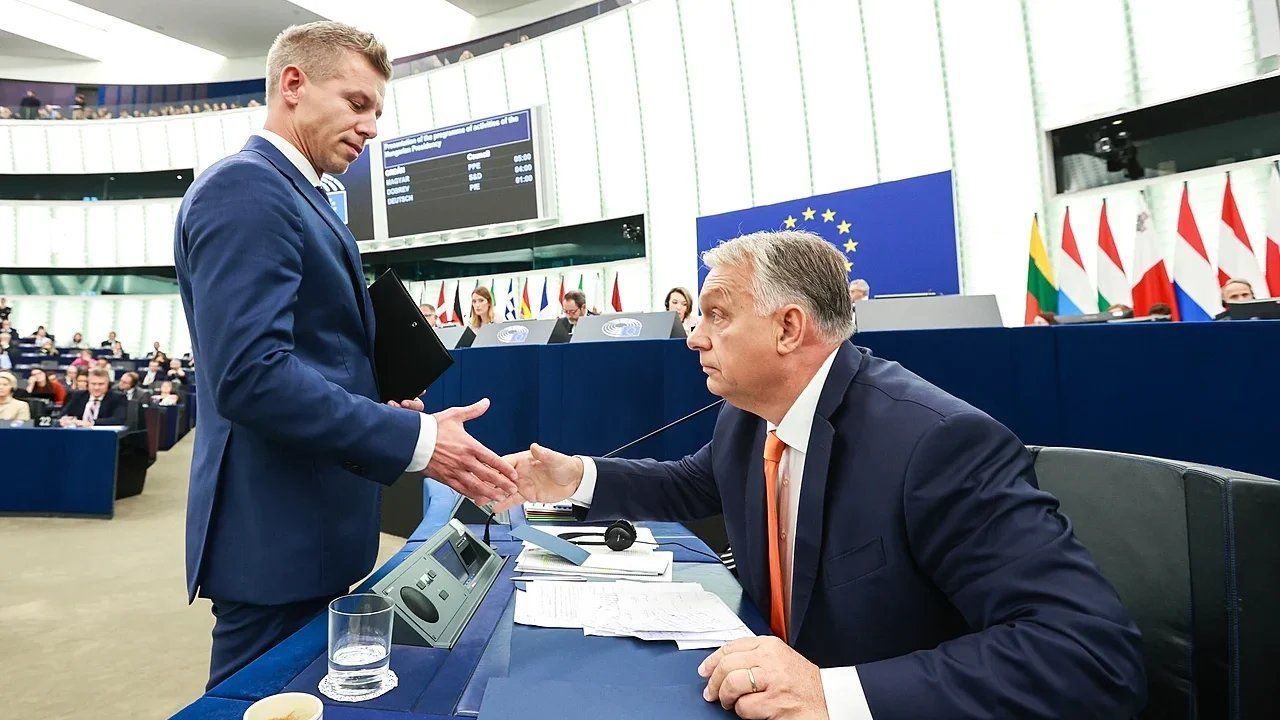
Viktor Orbán is leaving after sixteen years, ending an era that lasted longer than the rule of Angela Merkel, but Berlin's hopes for a sudden plot twist may turn out to be premature naivety.
The German government, through the lips of spokesman Stefan Kornelius, hastened with enthusiastic, almost uncritical support for the change of power, sniffing out in this a chance for more effective realization of its own, almost imperial economic ambitions. This is a rarely seen display in diplomacy of joy at the result of elections in another country, which reveals the brutal truth: Germany is not seeking a partner, but rather a transmission for its interests. However, Péter Magyar, who is to be the face of the new Hungary, has no intention of throwing himself into Berlin's arms with a song of adoration on his lips.
Magyar, although he presents himself to the world as a smooth, modern figure "trained" for Brussels salons, on key issues speaks with the voice of his old teacher - Viktor Orbán. He is already cutting off speculation regarding an energy divorce from Moscow, stating without ceremony that the import of Russian raw materials is simply profitable for Hungary and stems from hard geography, not sentiments. The new leader is stepping into the shoes of a "something for something" style negotiator, blocking EU loans for Ukraine and tough fighting for the unfreezing of 35 billion euros from funds.
For the German automotive sector, with Mercedes and BMW at the forefront, Hungary is today more important than Poland or the Czech Republic. It is there, thanks to the conditions created by Orbán, that the largest car factories outside Germany's borders have grown. If the new team in Budapest maintains low energy prices and competent personnel, we can expect an inflow of German capital. Companies such as Bosch, ZF, or Siemens Energy are already there and are only waiting for the signal for further expansion. This is a paradox: Berlin rejoices over Orbán's departure, not noticing that the system created may become an even stronger competition for its economy.