In 2024, Brazil marked the 200th anniversary of German immigration. This process has shaped not only the cultural landscape of South America's largest country, but above all its agricultural power. From the first settlers of 1824, recruited by Brazil's Emperor Peter I (1822-1831) to populate the south and secure the borders following the colonial collapse, to today's pioneers in the interior, farmers of German descent remain a key element of Brazilian and Paraguayan agribusiness.
Against the backdrop of the Mercosur-EU trade agreement ratified in 2026, their role takes on an additional, geopolitical dimension, as they are not only heirs to the tradition of family farming, but also the architects of an export boom that arouses both admiration and environmental controversy in Europe.
The beginning of the German presence in Brazil dates to July 1824, when the first group of 39 settlers from northern Germany arrived in Rio Grande do Sul. Recruited by Georg Anton von Schaeffer, they each received 77 hectares, the so-called "picadas" - clearings in the Amazon rainforest - along with tools, seeds, and two years of financial support. In contrast to the latifundia based on export monocultures (sugar, coffee, tobacco), the Germans introduced the family-farm model in Brazil: self-sufficiency combined with the sale of surpluses. They cultivated rice and potatoes, raised pigs, cows, and chickens, and built water mills and oil presses. By the 1930s, around 250,000 Germans had arrived in Brazil. Their contribution proved to be remarkably enduring, since today the family farms in which Germans played a pioneering role supply as much as 70 percent of Brazil's food.
A contemporary embodiment of the German legacy in Brazil is the farming couple Helena and Célio Riffel from Mato Grosso. The couple was profiled by the German newspaper Handelsblatt. Their ancestors arrived from the Hunsrück region more than a century ago in southern Brazil. Thirty-seven years ago, the couple left their home region on the border with Argentina and moved 2,300 km north into Brazil, buying 798 hectares of wild Cerrado, the tropical savanna on the fringes of Amazonia. The reddish-brown soil, hardening to stone in the sun and turning into muddy ruts during the rainy season, demanded a heroic effort to cultivate. Today they farm 1,200 hectares of soy and corn. Their story illustrates the mechanism of Brazil's agricultural boom: the German work ethic, entrepreneurship, and willingness to take risks have enabled expansion onto the poor, cheap land of the interior. Soy and corn from Mato Grosso have become strategic products in the global food chain.
A similar model operates in Paraguay, the second key agricultural country of Mercosur. German settlers had been arriving there since the late 19th century, often from overcrowded Brazilian colonies. Colonies such as Nueva Germania, founded in 1887, or Hohenau in the Itapúa region, became bastions of German farming - soy, yerba mate, dairy, and pig breeding. The subtropical soils of southern Paraguay proved ideal for intensive production.
In recent years, particularly during the COVID-19 pandemic, an entirely new influx of Germans has been recorded - in 2021, as many as 3,440 people. Many of them, often holding views that question the official narrative - so-called "anti-vaxxers" and right-wing circles - settled in closed colonies such as El Paraíso Verde. They establish self-sufficient farms, buy land - which is straightforward for foreigners in Paraguay - and build their "own paradise" far from European bureaucracy and regulation. Integration can be problematic due to weak Spanish-language skills, isolationism, and conflicts with local law, but economically they strengthen the Mercosur agricultural sector. The German colonies have been producing for export for generations, drawing on the same German discipline and innovation as the Riffels in Brazil.
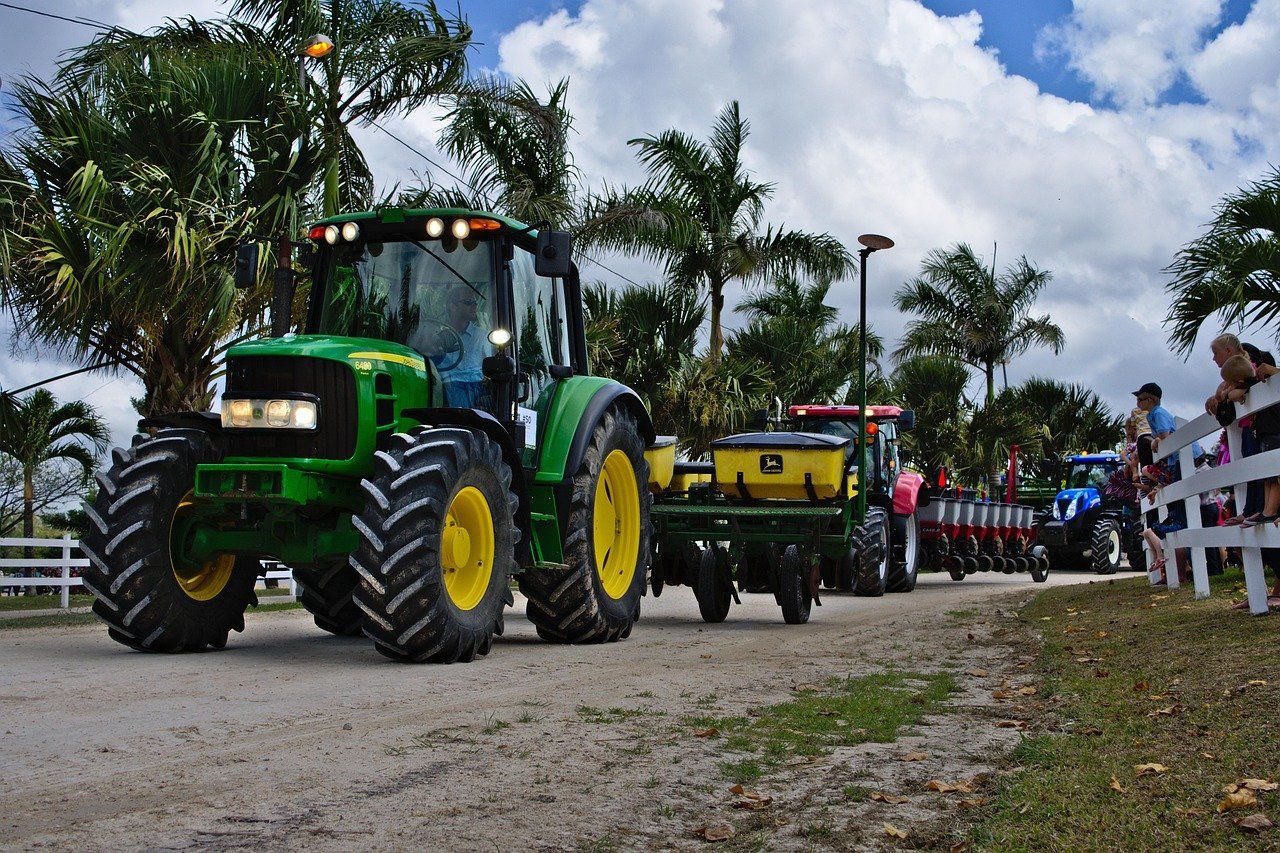
Yet this success carries with it deep dilemmas. The expansion of soy and pasture in the Cerrado - a biome adjacent to Amazonia - is bound up with deforestation, the loss of biodiversity, and CO₂ emissions. Critics in Europe (especially French and Polish farmers) argue that the agreement favors production with lower environmental and social standards, undermining the EU's Green Deal. German farmers in Brazil and Paraguay become a symbolic figure in this dispute, since on one hand they embody German organizational and technical genius - modern machinery, precision agriculture - while on the other they are accused of taking part in the destruction of natural resources in their new homeland.
It is precisely in this context that the Mercosur-EU agreement, ratified by Brazil in March 2026 with the possibility of provisional application from May, that immigration from Germany takes on particular significance. The agreement, negotiated for more than a quarter of a century, opens the EU market to Brazilian and Paraguayan agricultural production: quotas on beef, easements for soy, corn, sugar, and ethanol.
For German farmers in Brazil and Paraguay, this means a powerful export impulse. Brazil is already a world leader in soy exports (mainly to China and the EU as feed), and expansion in the Cerrado - a region where thousands of descendants of Germans operate - is accelerating thanks to their know-how. It is estimated that full implementation of Mercosur could increase Brazilian agricultural exports by several percent, generating billions of dollars and reinforcing Mercosur's position as the "granary of the world".
Poland, as one of the largest food producers in the EU, may feel the effects of this agreement particularly acutely. Cheaper imports from Brazil and Paraguay mean greater pressure on prices, as well as the risk of unequal competition - especially if production outside the EU does not meet the same environmental and cost standards.