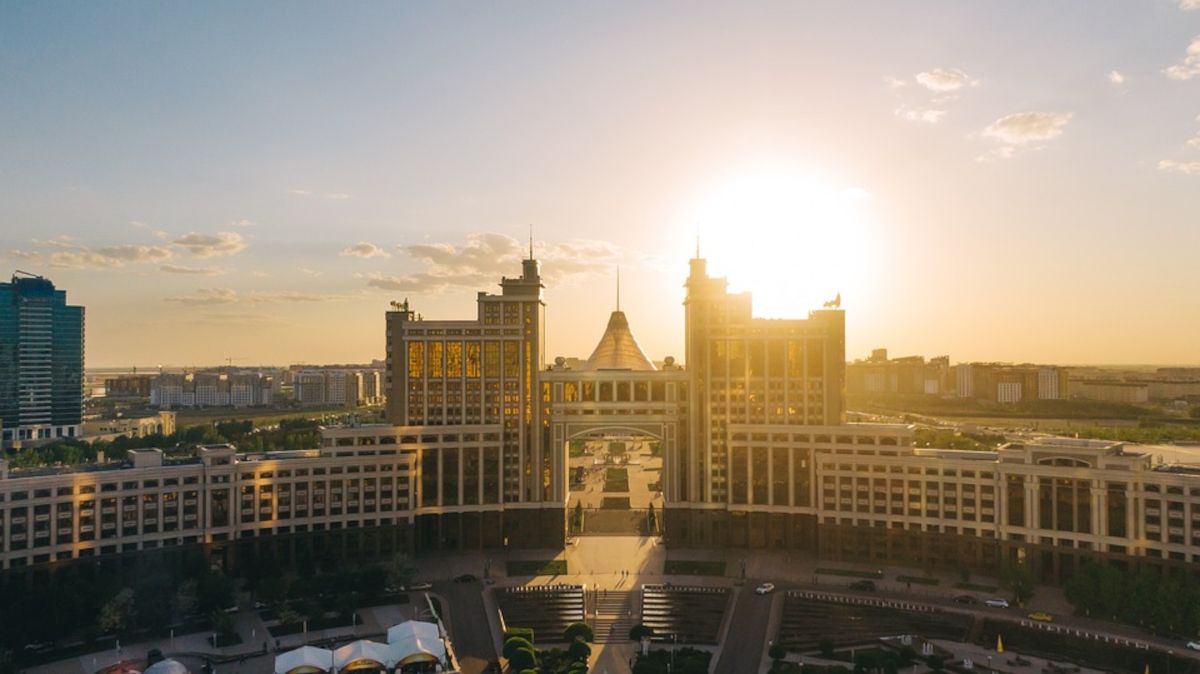
Schmidt regularly visits Kazakhstan in particular, where he has contacts with local businessmen and politicians. Schmidt is not, however, an ordinary right-wing parliamentarian but a man born in the Soviet Union with excellent contacts in Russia and the post-Soviet republics. The German weekly Der Spiegel reported that Eugen Schmidt still uses his Russian passport and introduces himself on Russian territory by his original first name, Yevgeny. Steffen Kotré, known for his pro-Russian stance, appeared just last year on Russian television in Vladimir Solovyov's propaganda show. Markus Frohnmaier, meanwhile, eagerly visited Crimea after 2015. The signatures of former high-ranking Bundeswehr officers Gerold Otten and Joachim Wundrak are also significant for this motion. In its strategy, the AfD demonstrates considerable awareness of the situation in Central Asia and strong determination to pursue activities that go far beyond Germany's existing policy in the region.
The AfD draws attention to the relatively sizable German diaspora of 200,000 in Kazakhstan, Kyrgyzstan, and Uzbekistan. The German right envisions a specific "bridge" function for this group between local administrations and businesses on the one hand and the German government on the other. The party expects greater financial and organizational support from the German government for the German minority in Central Asia. Additionally, the AfD advocates for greater expenditure on promoting the German language in the region.
Germany should, in the AfD's view, direct financial resources and attention toward the raw materials potential of the Central Asian region. The AfD parliamentary group calls for state guarantees for investments in this economic sector, the introduction of fixed purchase contracts with state price guarantees for key raw materials, and the provision of favorable export credits.
Currently, maritime transport is complicated and expensive, but Germany should ultimately work toward better overland transport infrastructure between Central Asia and Germany. This includes support for the so-called Middle Corridor between China, Central Asia, the Caucasus, Turkey, and Europe.
At the level of intergovernmental cooperation between Germany and the Central Asian countries, the topic of security and counterterrorism should appear in a more prominent form. The AfD wants the German government to ban the Islamic Movement of Uzbekistan (IBU) and Islamic Jihad (IJU) and to take decisive action against Tajik Islamic extremists, many of whom are particularly active in Germany. Cooperation with the region's governments in combating terrorism should also work in the other direction, so that Islamists from Central Asian states are swiftly deported to their countries of origin or to transit countries.
"All prison sentences should be served in the countries of origin, provided this is effectively guaranteed in intergovernmental agreements."
The authors of the November 14 motion envision a significantly expanded role for Germany in this region compared with the past. According to the AfD, Germany should become more active in preventing water and border conflicts as well as in border management and security - particularly between Tajikistan, Uzbekistan, Turkmenistan, and Afghanistan. Furthermore, Germany should work to prevent drug and human trafficking as well as terrorist threats from Afghanistan.
Germany, as the AfD emphasizes, should exert influence on Saudi Arabia and Qatar to cease promoting Islamism and jihadism in Central Asia. On the other hand, Germany should stop all attempts at regime change in Central Asian states and refrain from unauthorized interference in their internal affairs.
The AfD calls on the government to cooperate with Uzbekistan at the UN level to ensure that the frozen funds of the Afghan central bank are used exclusively for humanitarian purposes under strict international oversight.
[Aleksandra Fedorska is a journalist for Polish and German media outlets]