The Alternative for Germany (AfD) consistently holds one of the most unequivocal and radically pro-nuclear positions. The fullest expression of this stance remains the motion submitted to the Bundestag on 4 March 2026, prepared by deputies Adam Balten, Leif-Erik Holm, Steffen Kotré and Dr Malte Kaufmann, and signed by the party leaders Alice Weidel and Tino Chrupalla.
The document constitutes a thoughtful, multi-stranded diagnosis of the crisis in German energy policy and a proposal for a strategic change of direction intended to restore rationality and sovereignty in the management of the country's energy resources.
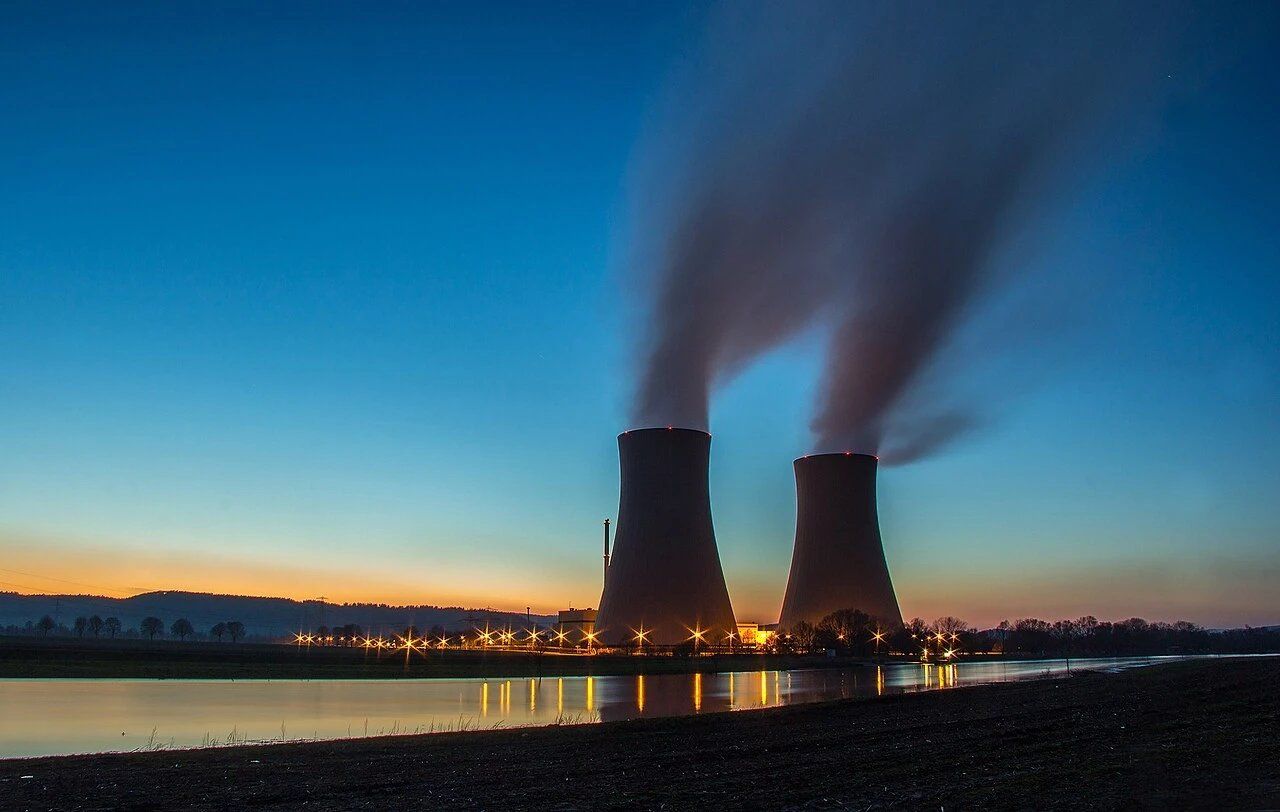
The AfD opens its motion with the unequivocal statement that the ideologically motivated abandonment of nuclear energy constitutes one of the most serious strategic mistakes of recent decades. The decision to shut down the last three German nuclear power plants in April 2023 was taken despite many years of reliable operation and compliance with the highest safety standards. It was an act that struck directly at the foundations of German prosperity, the security of energy supplies and the international competitiveness of the German economy. The authors of the motion from the ranks of the AfD contrast this policy with the approach of neighbouring states, where nuclear energy is treated as a pillar of a stable, low-emission and predictable energy system. Instead of continuing the development of modern, clean and dispatchable nuclear technologies, Germany has replaced their output with expensive imports and energy from sources heavily dependent on weather conditions. The consequences of this change are a systematic increase in electricity prices, the progressive destabilisation of the transmission grid and growing dependence on foreign suppliers, which in turn weakens not only Germany's industrial position but also its strategic autonomy and its relations with its neighbours.
The German right does not stop at general assessments but cites concrete, measurable data, according to which the total costs of the Energiewende energy transition to date may reach as much as 5.4 trillion euros, while delivering neither lasting security of supply nor the credible achievement of climate targets. Even more telling, in the AfD's view, is the emissions aspect. Data published by the Electricity Maps platform show that after the shutdown of the last nuclear power plants, the German energy mix generates higher CO₂ emissions than in the preceding period, while in France, a country almost entirely reliant on nuclear power, these emissions are about eleven times lower. In this way, the motion debunks the myth that the departure from nuclear energy was a step toward climate protection, while at the same time showing that it is rather a step backwards both in environmental and economic terms.
The AfD calls on the federal government to undertake systemic measures. It demands above all the formal recognition of nuclear energy as an environmentally friendly source in line with the EU energy taxonomy, which should be directly reflected in German energy law. At the same time, the right-wing party calls for a radical increase in expenditure on research and development of the latest generations of reactors, including small modular reactors (SMRs), molten salt reactors and dual-fluid reactors, which offer a higher level of safety, significantly better efficiency and more rational use of resources. On the issue of radioactive waste, innovative solutions based on advanced fuel reprocessing and transmutation technologies are promoted, which could in the long term significantly reduce the scale and danger associated with their storage. The motion of the German right has a social dimension as well, since the AfD wants the launch of a broad, fact-based information campaign that would present to the public the current state of scientific knowledge on the safety, environmental benefits and technological progress of nuclear power, while actively counteracting the disinformation and stereotypes that for years have shaped the negative image of this technology in Germany.
The AfD calls for an objective re-evaluation, free of ideological bias, of all available energy sources, taking into account not only the emissions balance but above all technical efficiency and the real contribution to economic development and social stability. The party consistently opposes what it calls the ideological blindness of the dominant strand of energy policy. The motion of March 2026 is thus not an act of ad hoc criticism but a deliberate contribution to the debate on the future of German energy, one that combines a diagnosis of mistakes made with a concrete vision of the future based on technological modernity, economic realism and long-term strategic thinking.