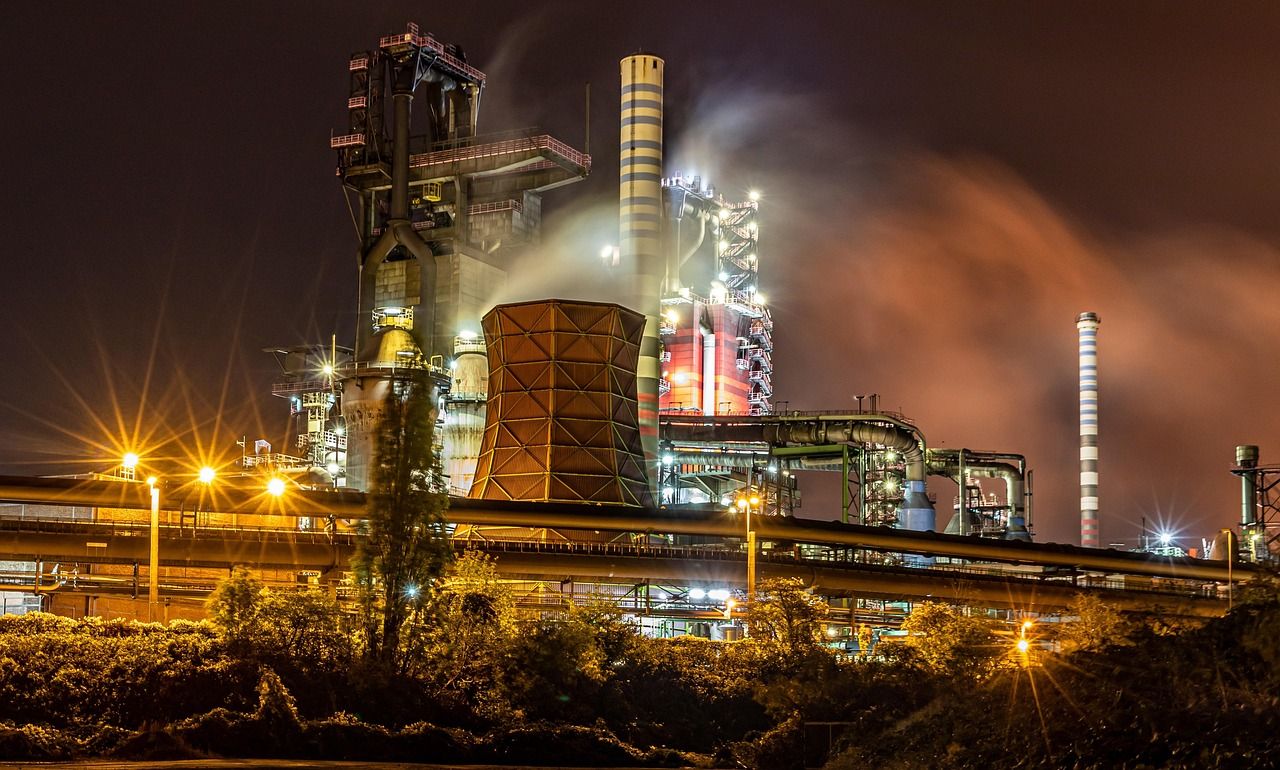
This is the steepest monthly drop in two years, far exceeding the forecasts of all analysts, who had anticipated only about 4.5 percent. Industrial production fell by 0.5 percent month-on-month, underscoring the instability of business conditions and a deep crisis in Germany.
The detailed figures paint a very bleak picture. Orders from the German domestic market plunged by as much as 16.2 percent, while foreign orders declined by 7.1 percent - including 7.3 percent from the eurozone and 7.1 percent from the rest of the world. Excluding large orders (such as government contracts for armaments and infrastructure), the decline was only 0.4 percent, indicating that the regression stems mainly from the absence of such impulses in January. Industrial production fell by 2.5 percent, with the largest losses in the metals sector (-12.4%), pharmaceuticals (-11.9%), and electronic and optical equipment (-6.8%). In the metals sector, orders dropped by 39.4 percent, following a rise of 29.7 percent in December 2025.
Compared with the previous month, December 2025 brought a 6.4 percent increase in orders, driven by large government contracts. The lack of year-on-year data underscores that these are monthly fluctuations, but experts warn of long-term downward trends.
The decline is not evenly distributed. The metals and machinery industries suffered the most, with order declines exceeding 10-39 percent. Pharmaceuticals and electronics point to problems with global demand, while the automotive sector continues to grapple with job losses (approximately 50,000 in 2025). The Federal Ministry of Economics emphasizes that business conditions have weakened on both the demand and the production side.
The main cause of the collapse in Germany's industrial business cycle is the absence of large government orders that had driven growth in previous months. An additional burden is the conflict in the Middle East, including the war with Iran, which has pushed oil prices above $100 per barrel and raised gas prices on global markets. This is hampering recovery by increasing production costs and dampening demand. Weak domestic and foreign demand, normalization after a strong December, and the potential closure of the Strait of Hormuz are compounding the problems.
German economists are, however, taken aback by the sheer scale of the order decline in Germany. Jens Oliver Niklasch of Landesbank Baden-Württemberg (LBBW) states:
"A significant drop in orders was generally expected given the strong preceding months. But the fact that it's falling by double digits is a bitter disappointment."
Alexander Krüger of Hauck Aufhäuser Lampe Privatbank adds:
"The decline was to be expected; the shock, however, is the scale of the phenomenon." Thomas Gitzel of VP Bank underscores: "The good news is that the current events in the Middle East are not affecting the federal government's program for armaments and infrastructure. The public sector will continue to supply orders to the private sector."
Germans point to possible stabilization thanks to the government's fiscal packages and EU economic stimulus measures, including SAFE, which could boost orders in the coming months. LBBW expects better data in 2026 compared with the previous year, despite instability. However, rising energy prices raise the risk of a return to recession, threatening employment and competitiveness. Calls are also emerging for monetary and fiscal intervention to avert a further economic slowdown in Germany.
[The author, Aleksandra Fedorska, is a journalist for Tysol.pl and numerous Polish and German media outlets]
[Title, "What You Need to Know" and "What This Means for Poland?" sections, and some subheadings by the Editorial Team]