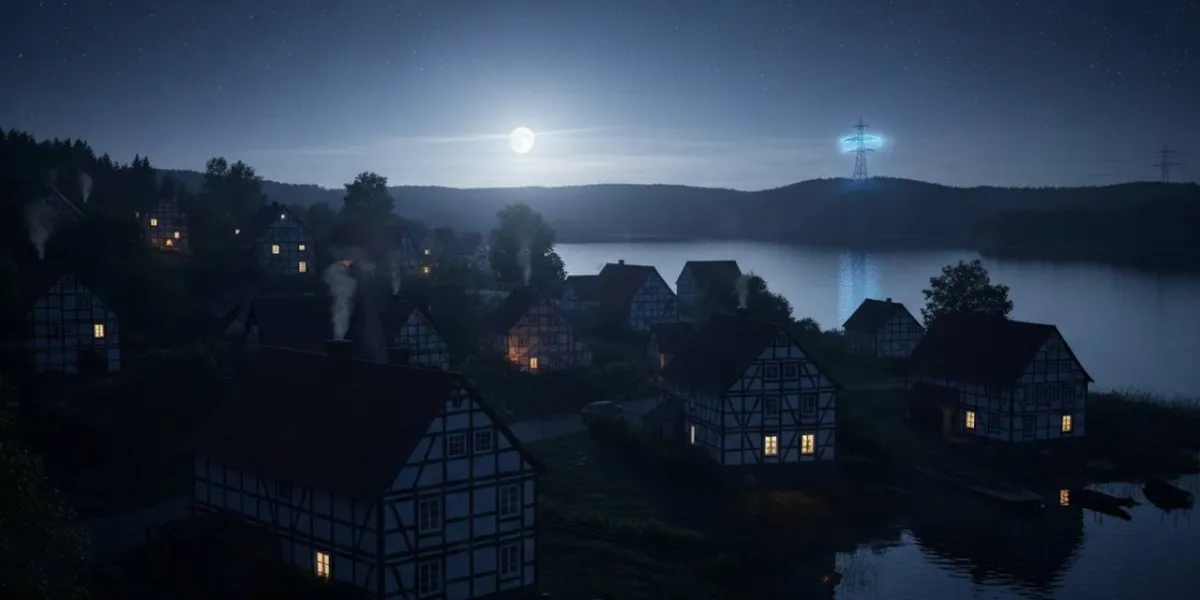
In the sparsely populated areas of the German state of Mecklenburg-Western Pomerania, residents are grappling with unusual power outages that for months have caused bewilderment and frustration. The region consists mainly of tourist towns situated around the Mecklenburg Lake District.
The situation with blackouts shows how complicated modern energy systems can be. In an era of energy transition, as more and more power comes from renewable sources, such problems may intensify. Residents of the Mecklenburg Lake District hope a solution will soon be found that restores power supply stability and allows them to return to normal life.
Residents currently report that lights in their homes flicker, electrical appliances shut off unexpectedly, and in some cases equipment is even damaged - televisions, computers, and the like. Although the phenomenon lasts only a few seconds, it causes significant disruption to daily life.
Specialists from the local energy company WEMAG, responsible for power supply in the region, are working intensively to determine the cause of the problem. So far, despite numerous inspections and measurements, no clear source of the failures has been identified. Technicians, even those with decades of experience, acknowledge that they have never encountered a similar phenomenon. Standard causes such as grid overload, damaged cables, or failures in transformer stations have been ruled out after thorough examination.
Suspicion falls on more unusual factors, such as electromagnetic interference or the influence of high-power equipment operating in the vicinity.
One hypothesis points to possible problems related to renewable energy sources, which are increasingly prevalent in the region. Wind turbines and photovoltaic installations, while ecological, can under certain conditions cause grid instability. For now, however, these are merely conjectures, and concrete evidence is still lacking.
Residents feel left to fend for themselves. Some of them, as they report, have had to replace damaged appliances at their own expense, which breeds additional dissatisfaction. WEMAG assures that resolving the problem is a priority and that technical teams are continuing their analyses. The company is also considering installing additional metering devices to allow for more precise monitoring of the grid and faster detection of the cause.
According to a survey conducted by the German Chamber of Industry and Commerce (DIHK) in January 2025, the share of companies experiencing brief power outages (under 3 minutes) rose from 9 percent in 2022 to 16 percent in 2024. In the industrial sector, blackouts affected as many as 25 percent of companies, with 11 percent reporting power quality issues. The exact number of blackouts in Germany was not specified in this survey.