For the entire past week we lived inside a great information storm surrounding American troops. Anyone who wants to see a mess in it - let them see one. I propose we arrange the facts in order. Then what emerges is not chaos, but a precise game.
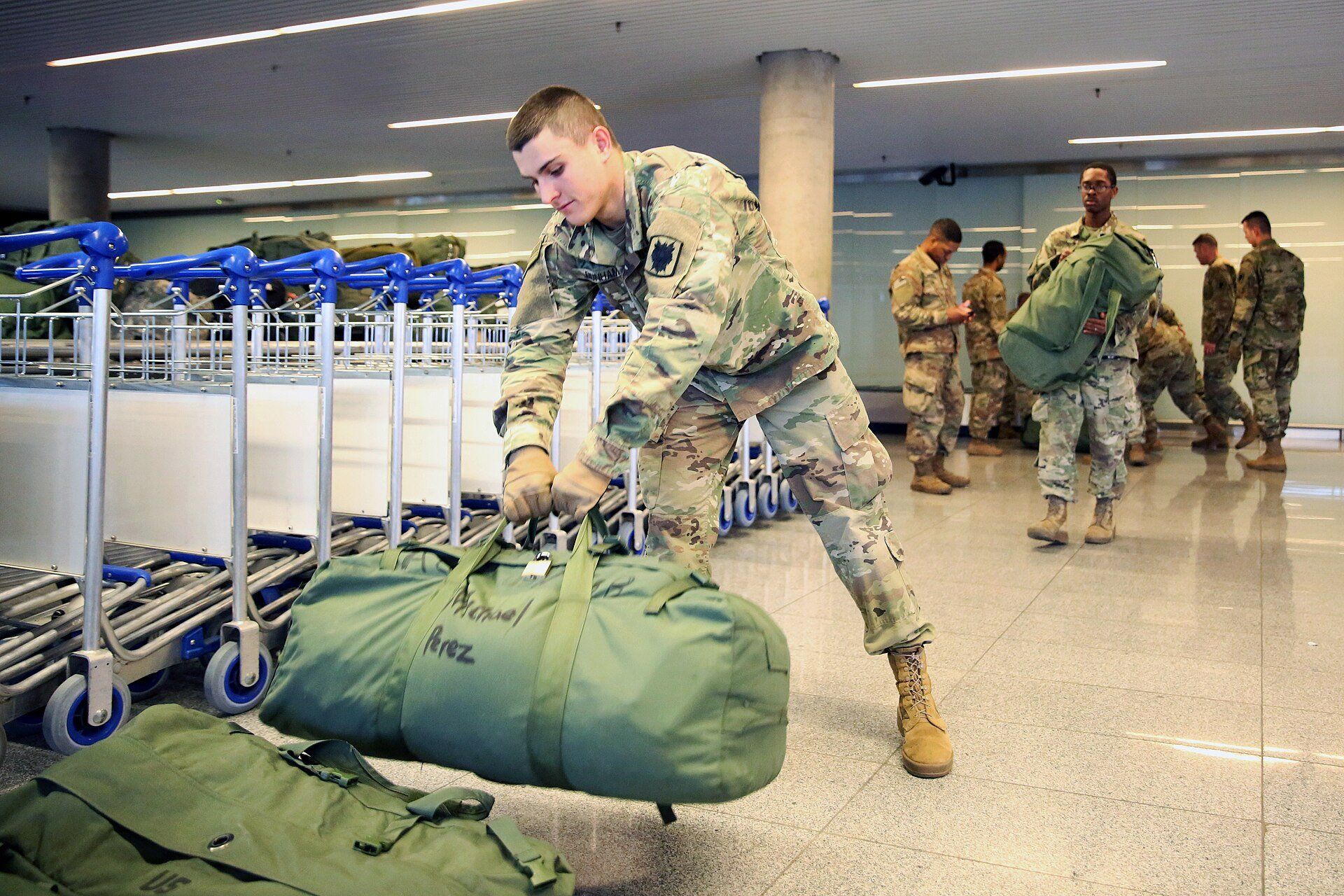
First there was supposed to be a delayed rotation and the withdrawal of 4,000 American soldiers from Poland. Then it turned out that 5,000 are in fact arriving, against 4,000 departing - leaving a net gain of a thousand. Finally President Trump himself spoke up, as the highest authority. It was easy to conclude that ordinary disorder reigns within the structures of the world's most powerful state. Well, no. Let us set these prosaic, populist theories aside and not get excited about them. If we arrange the facts in the proper order, we will see a game, and within it Poland as the chief beneficiary.
Let's go back a month - the umbrella America didn't want
A month ago President Macron flew into Gdansk. Among other things, a joint Polish-French defense agreement was signed at the time, which de facto opened the way to joint air exercises involving aircraft capable of carrying nuclear payloads. We called it the French nuclear umbrella. Germany agreed to analogous exercises. All of this was happening as part of building so-called European strategic independence.
Except that we, the Poles, know best what Europe is capable of pulling off - we lived through Nord Stream. And the United States has just lived through a lesson called Iran and seen how "eager" Europe can be to help its most important ally.
Pressure on Kyiv
At the same time in Germany, as Aleksandra Fedorska pointed out, texts appeared - for instance in the "Frankfurter Allgemeine Zeitung" - striking hard at Ukraine and questioning the sense of financing it any further. The Taurus missiles did not go. A whole series of kompromat on President Zelensky also returned - material from a good few years back, now suddenly dragged to the surface.
What for? I put forward a thesis: in order to force Zelensky to sit down at the negotiating table and end the war with Russia, accepting his own territorial losses. And Europe is doing this, Germany is doing this, at a moment when Ukraine has a relatively stable front and real successes: every day we read about strikes on refineries, ports, gas pumping stations, ammunition depots.
Why does Europe care so much about this? Because to be strategically independent you have to have an army, and the world will not wait for Europe to build its own. For four years now Germany has been unable to stand up a single brigade in Lithuania; first it was supposed to be German, then it became international, and even so it isn't there. So Europe needs the Ukrainian army. And to make use of it, Ukraine must have peace with Russia. Hence the pressure on Kyiv. America responded in its own way and launched another aid package, so that Zelensky would have the strength to say "no" to Europe. Because this is Ukraine's sacred right: it is the one that paid the price in blood, and it is the one that gets to decide when and on what terms it ends this war.
A signal to Berlin - there will be no Tomahawks
Last week Germany heard that the promised medium-range missiles, the Tomahawks, which fly 2,000 km, will not after all be coming their way. And this is a fact incomparably more important than the shifting of five thousand soldiers.
There are 39,000 Americans in Germany. Five thousand one way or the other changes nothing. Ramstein existed before and will go on existing, because it is a base too large and too intertwined with Germany - with hospitals, schools, entire housing estates - for anyone to seriously contemplate shutting it down. But the absence of Tomahawks creates a gap in the German security system that Berlin will not replace with anything. And the Germans know this perfectly well.
Merz's phone call and the deputy ministers' flight
A message flowed to Poland suggesting that total disorder reigns within the American administration: Hegseth says one thing, Rubio another, and Trump once said something else and is now silent. Last Friday morning our General Staff received word. That same Friday Trump was returning from Beijing, and an agitated Merz was calling him.
Merz called on Friday, and already on Monday morning two of our deputy defense ministers were flying to Washington. Officially we still didn't know anything. I put forward a thesis that Merz told Trump more or less this: there will be no French nuclear umbrella, we don't want it; we want to build a conventional army and take greater responsibility for Europe's security in that dimension, and we know who the hegemon is. And it isn't only us - Germany knows it; Poland will confirm it on Monday.
On Wednesday a clear statement came out, though still with a loophole. Because the Americans know that German declarations can be worth about as much as last year's snow. So they are waiting for concrete moves confirming membership in the transatlantic team, rather than the building of an axis with France and ultimately with Russia - that is, continental interests.
Poland as the pivot
In this puzzle Poland is an instrument of America - and I say this without offense, because it is good news for us. It is precisely the entire Baltic-to-Black-Sea bridge that America is today giving a chance to develop.
Every 5,000 American soldiers makes a real difference for us. Today we have 10,000 of them - another 5,000 is 50 percent more, half again as great a guarantee of security. Because no one will attack Poland as long as the Americans are here. This has to be said plainly.
Everything indicates that we are talking about an armored component. Withdrawing an armored brigade from Germany to the States means not only transport costs but also very specific phytosanitary regulations - things like pest control, disinfection, protection against European microbes and vermin. The costs are enormous. Moving this equipment to Poland is simply natural. I have heard, in fact, that the transfer has already begun and was halted only for the duration of this political game. We know about the preparation of the base in Zagan and about plans for NATO pipelines being run to it. Five thousand is precisely an armored brigade: instead of flying to America, the equipment will come to us. The soldiers may perhaps be rotated - that remains to be seen.
Tusk and the memory of a goldfish
I think Donald Tusk knows all of this perfectly well and just as effectively pretends he doesn't. Today he is celebrating President Trump's decision. But we remember the 4th of May, when he declared that he would never agree to us "poaching" those five thousand American soldiers from Germany. For us every five thousand is a concrete increase in security - and the prime minister has just come down with the memory of a goldfish. Well, that's simply how he is.
The wider game - that is, Belarus, potash and Polish ports
This entire message was further reinforced by events in the east: the change of government in Latvia, the evacuation of the Lithuanian parliament from Vilnius ahead of an approaching drone attack and the closing of Vilnius airport, and finally the nuclear-forces exercises in Belarus that are just now wrapping up. The tension was built carefully, and I understand that both Merz and Tusk were subjected to that pressure.
And at the same time something is happening that is worth remembering: we are witnessing an American-Belarusian rapprochement. It began a year ago, when the Americans showed up as observers at the Zapad exercises - we were absent then, which I loudly pointed out. Then came Lukashenko's gestures of goodwill, such as the release of Andrzej Poczobut. Today the word is that the Americans are close to a capital entry into one of the potash-salt deposits in the area of Soligorsk - that is millions of tons for export, and the world is waiting, because owing to the situation in the Persian Gulf things are getting tight with fertilizers, and potash salt is pure fertilizer.
And here a window opens for Polish ports. Belarus has no access to the sea; for the handling of this cargo we will be competing with Lithuania's Klaipeda. This is really big money, and this race is worth winning. Prime Minister Tusk, here is a task for you for the coming weeks: get the sanctions in this area lifted. You once said that no one will outplay you. We are giving you another chance.
Coldly
Let us look at this without the emotions of our Polish-against-Polish squabble. The game is being played for something far greater than the outcome of the next election; what is being decided now is the future of the entire region, and perhaps of all of Europe. And it is we who are the pivot in it. After great twists and turns, everything is beginning to fall into place: both Poland and Germany have corrected course, the American line is being carried out. And that is very good, because I see no better source of security today on which we could lean. On the condition that, in parallel, we do everything to build our own capabilities as well.
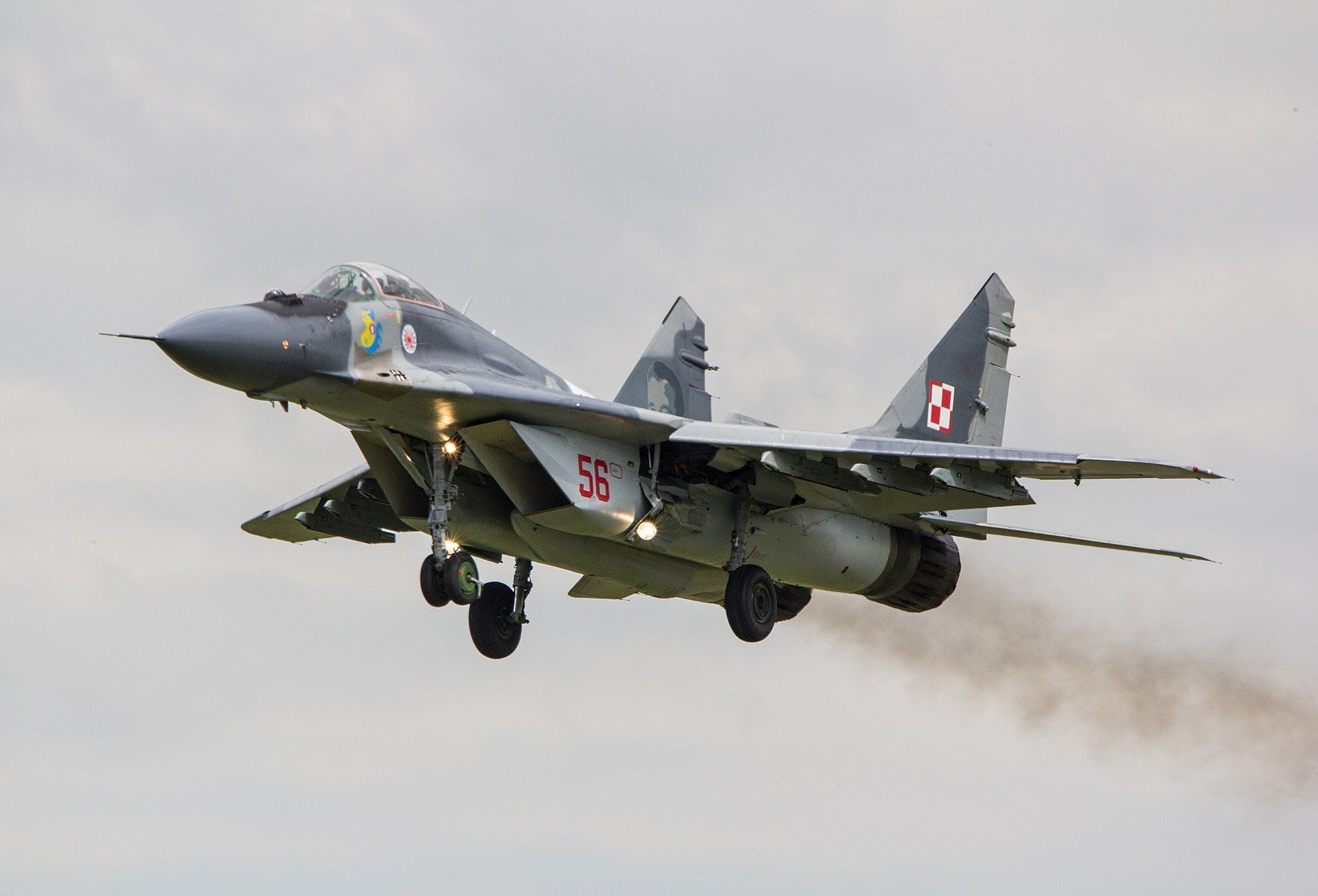
There is also a subject we will not escape: conscription. I put forward a thesis that whoever wins the next election will, right after it, in the name of responsibility for the state - though at the cost of their own ratings - reinstate conscription. Germany has just tried it and got demonstrations in the streets. And today the F-35s flew into Poland. We have lived to see it. It was a good day.