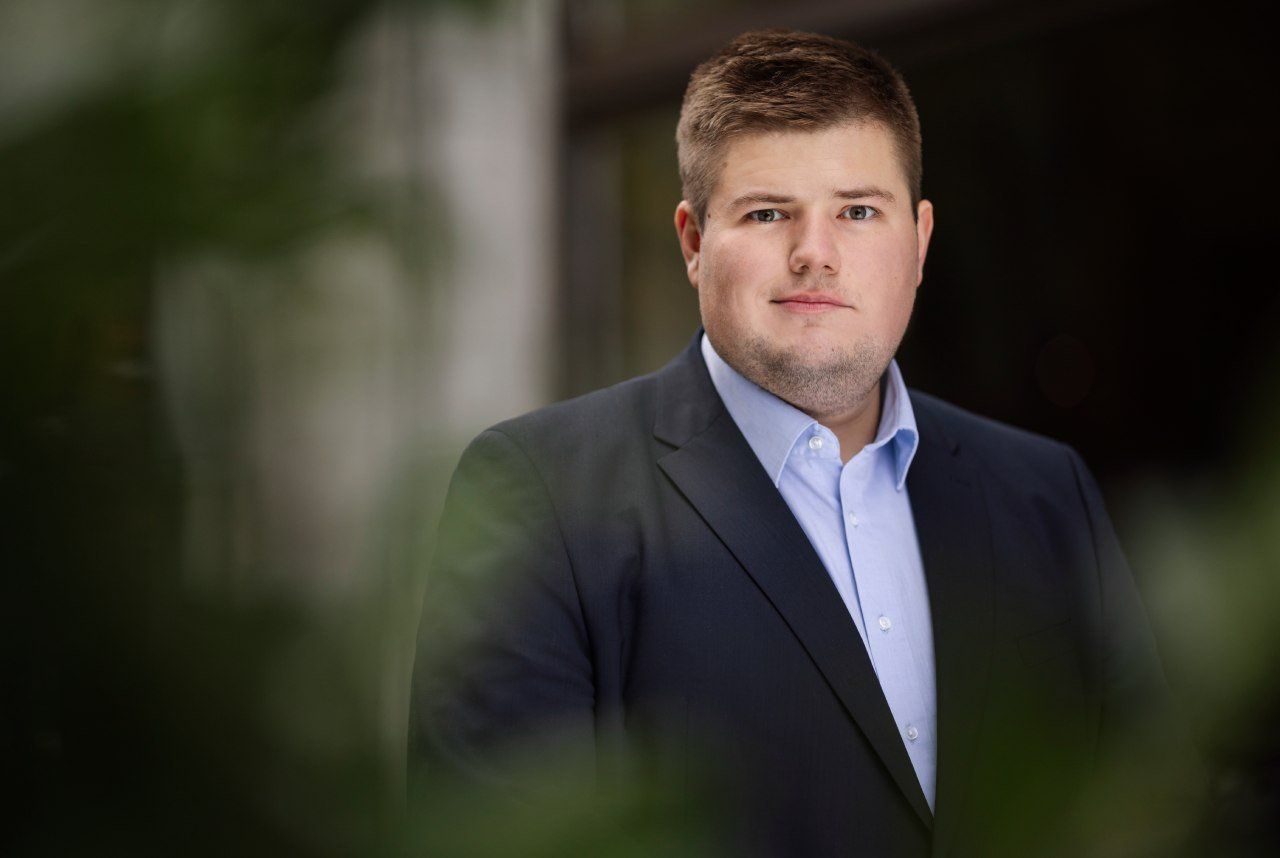
In the shadow of a deep leadership crisis in German social democracy and growing criticism directed at Friedrich Merz, a figure has appeared on the political scene of the FRG who is attracting particular interest because of his lineage and political instinct. Johannes Volkmann, a politician of merely 29, the grandson of the legendary chancellor Helmut Kohl, increasingly boldly aspires to the role of the new hope of the Christian Democrats. His presence on the foreign policy committee of the Bundestag and his skilful use of family connections mean that in backroom conversations he is spoken of as a potential successor, or at the very least an important link in the process of reconstructing the CDU/CSU. Volkmann visually and rhetorically alludes to his grandfather, which, in a society longing for stability and strong leadership, constitutes powerful political capital.
The construction of Volkmann's political position rests on a thoughtful media and programmatic strategy, an expression of which was his much-noticed article in the pages of "Handelsblatt". In that text, the young politician sketches out a vision of Germany as a state taking full responsibility for European security, postulating the building of the strongest conventional army on the continent. It is a message tailored to the expectations of the present moment, accurately diagnosing social anxieties while at the same time avoiding direct attacks on the current party leadership. Volkmann presents himself as a "voice of the people", which, given his aristocratic-political background, creates an interesting, though dangerous-for-competitors, mixture of populism and traditional conservatism. His ambitions extend to deep internal reforms, encompassing a reorganisation of labour costs, the tax system and energy prices, which is to be a response to the country's structural economic stagnation.
The Volkmann phenomenon fits into a broader trend of the formation of new political dynasties in the Federal Republic. The examples of Ursula von der Leyen or the Lambsdorff family show that the German political system, despite the meritocracy it declares, increasingly relies on the inheritance of influence and relational capital. Johannes Volkmann, however, seems to possess a rare quality - political sensitivity to social moods, which allowed his grandfather to wield power for decades. Supported by advisers drawn from the former entourage of Helmut Kohl, he can combine elegant form of expression with hard, substantive postulates, which makes him an attractive candidate for the disillusioned Christian Democratic electorate that is searching for an alternative to Merz, who is increasingly weak in the polls.
An analytical look at Volkmann's career allows the conclusion that the German political scene is preparing for a generational changing of the guard. Although his young age might be considered an obstacle, in the present conditions of chaos and uncertainty, freshness combined with a legendary surname becomes an asset that cannot be overestimated. If Volkmann manages to maintain distance from the mistakes of the current governing coalition and to present convincingly his plan to "set Germany in order anew", he may become a key figure in the upcoming election campaign. His success would be not only a triumph of a political dynasty, but above all a signal that German Christian Democracy is returning to its roots, looking to the past for prescriptions for the challenges of the future.