In December 2025, the German think tank Stiftung Wissenschaft und Politik (SWP) published a paper analyzing the European Commission's (EC) plans to reform Europol — the EU's law enforcement cooperation agency. The EC, led by Ursula von der Leyen, proposes doubling its staff and expanding its mandate to cover sabotage, disinformation, and hybrid threats. The goal is to create a "truly powerful police force." Critics see in this a push toward a "European FBI," though the report stresses that such a transformation is controversial and not necessarily needed.
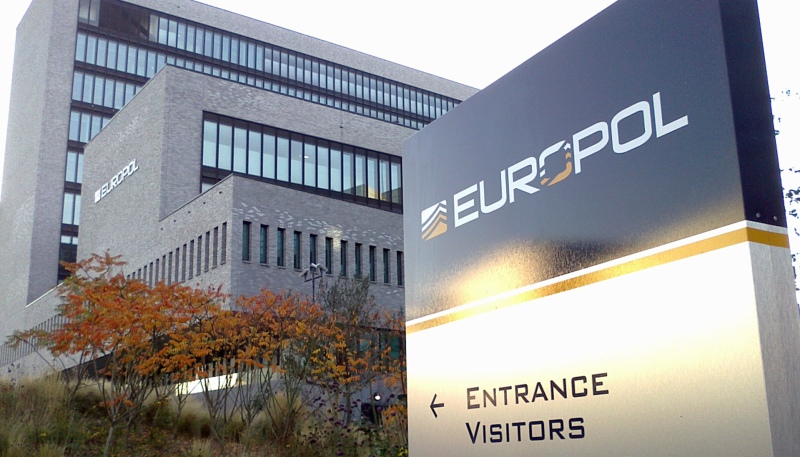
Europol, headquartered in The Hague, has evolved since 1993, when it was established as an anti-narcotics unit. Today the agency combats 30 forms of crime, including drug trafficking, cybercrime, and terrorism. In 2025, migrant smuggling and EU sanctions violations were added to its remit. Staff grew from 971 in 2021 to 1,701 in 2025, and its budget from 172 to 247 million euros.
Europol currently supports cross-border investigations at the request of member states by providing analysis. It cannot independently initiate inquiries, conduct searches, or make arrests — those remain national competences (Article 88 TEU).
The EC's proposals from 2024, reiterated after von der Leyen's reelection, call for doubling staff and expanding the mandate. In July 2024, von der Leyen spoke of threats not covered by the current mandate. The EU's Internal Security Strategy from April 2025 specifies: "Europol is to remain a support agency, but with greater EC oversight. A legislative proposal is planned for 2026."
The SWP report quotes von der Leyen as saying the goal is to combat sabotage (e.g., against critical infrastructure), disinformation, and hybrid attacks. The agency would be equipped with autonomous powers. However, the EC does not use that term, and the report warns of the risks: a lack of legal definitions, competition with other agencies (ENISA, AMLA, Frontex), and bureaucratic bloat (mandate expansion as a pretext for budget increases).
In April 2025, police chiefs of member states stated that Europol should remain a coordination center, not a headquarters. Germany supports strengthening Europol but not transforming it into an FBI. In 2020, during its EU Council presidency, Berlin advocated enhanced support without structural changes.
The SWP report argues that more value lies in core areas (drugs, cyber, terrorism) than in a new mandate. Examples of successes include the analysis of the Burgas attack (2012), the task force formed after the Paris attacks (2015), and the infiltration of EncroChat and Sky ECC (2020–2024), which exposed criminal networks.
Expanding Europol's mandate risks duplicating competences. For Poland, which is skeptical of centralization, Europol reform is yet another sensitive issue on the Warsaw-Brussels axis.