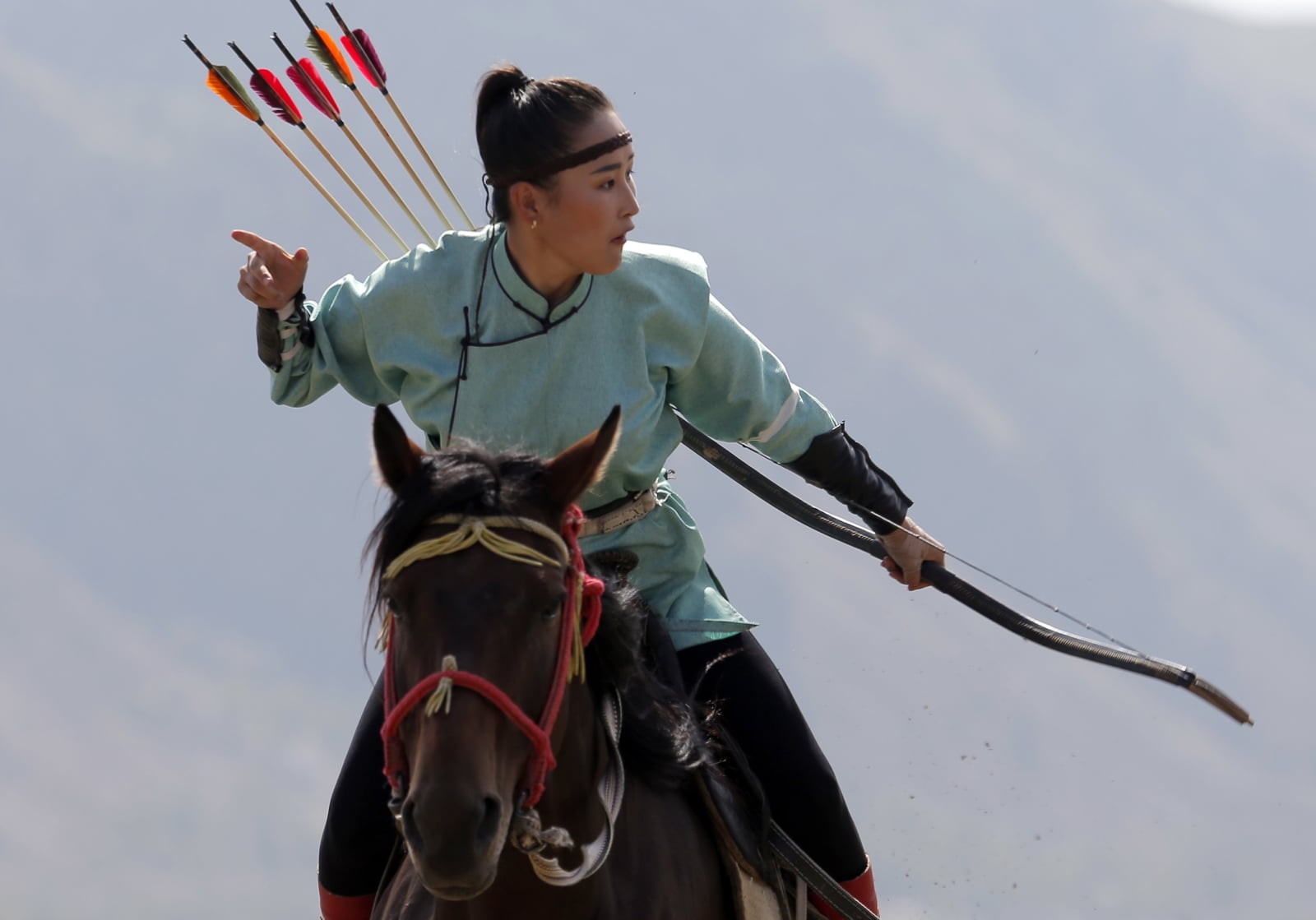
The World Nomad Games is an event that cultivates the cultural heritage and traditions of nomadic peoples. The event, which aims to popularize sports disciplines traditional to nomads, has for ten years been attracting not only the region's inhabitants but also athletes, journalists, and spectators from around the world. The event's initiator, former President of Kyrgyzstan Almazbek Atambayev, who was particularly passionate about promoting the traditional practices of nomadic peoples inhabiting the territory of present-day Central Asia, once stated that, regardless of the fact that much of the heritage of nomadic civilization has been forgotten, the atmosphere of the nomadic way of life still lingers in the air, as its strength lies in the ability to live in harmony with nature. He was also of the opinion — an exceptionally apt one — that nurturing the culture and tradition of the Great Steppe is especially important in the age of globalization. This idea took on particular significance after the Paris Olympics.
The opening ceremony of this year's Olympic Games, mocking classical values and dripping with left-liberal propaganda, concentrated as if through a lens the ideological tendencies currently prevailing in the West. Tendencies that sooner or later will upend global athletic competition.
The World Nomad Games have been held every two years since 2014 (with the exception of 2020, when the event was canceled due to the COVID-19 pandemic). The first three editions took place in the Kyrgyz city of Cholpon-Ata on the shore of Lake Issyk-Kul. In 2022, the event moved to Iznik, Turkey, and this year, for its fifth edition, it arrived in the capital of Kazakhstan — Astana. The event grows in stature and popularity from edition to edition. The Games, now a decade old, bring together athletes, artists, craftspeople, and ordinary spectators from every corner of the world. In 2014, 583 athletes from 19 countries participated, competing in 10 sporting disciplines; in 2016 there were already 1,200 athletes from 62 countries, and the number of disciplines rose to 26. Two years later, 2,000 athletes from 82 nations took part in the World Nomad Games, competing in 37 disciplines. The Turkish edition enjoyed even greater popularity. Three thousand athletes from 102 countries came to Iznik. They competed in 13 events. In the Kazakh edition, over 2,000 athletes representing 89 countries are set to compete in 21 disciplines.
Beyond promoting nomadic culture, the World Nomad Games are also tasked with supporting the development of the ethnosport movement, whose goal is to raise public awareness of traditional sports and games.
The disciplines, though not all of them, differ from the popular ones we can watch at the Olympic Games or continental championships. Wrestling attracts the most interest. It takes place in both widely known forms and in variants characteristic of nomadic communities. Also noteworthy are the strongman competitions — the Mighty Nomads. The event also tests hunting skills. For this purpose, birds of prey are used in keeping with tradition. In addition, spectators will be able to watch athletes compete in tug-of-war, horseback wrestling, and traditional strategy-and-dexterity games. During this year's edition, a total of 97 sets of medals will be awarded, and the prize pool amounts to 253 million tenge, or approximately 530,000 dollars.
Astana — capital of the nomads
The theme of this year's edition is Meeting in the Great Steppe (Uly Dala Dubiri). The logo depicts a sun rider on a dark-red background, symbolizing the simplicity and grace of the semi-precious stone carnelian. The lettering on the symbol is stylized after the Turkic script used from the 8th to the 10th century. The timing of the event is no coincidence. September for nomads signified the month of transition from summer to winter. Traditionally, this was celebrated by organizing games and festivities. Astana is preparing for the Games at full speed. Roads and sports facilities are being renovated. A broad promotional campaign is underway. There is no doubt that the Games will be an excellent opportunity for the development of the tourism sector and for building a positive image of the country on the international stage. For people from outside Central Asia, the World Nomad Games offer an unparalleled opportunity to immerse themselves in the vibrant and diverse cultures of nomadic peoples.
The culture of nomadic peoples is unique. It unites and showcases the diversity of ways of life within a single model.
But sport is not everything. The World Nomad Games also include a significant cultural component in the program. During the opening ceremony, to be held on September 8 at Astana Arena stadium, a performance titled Astana Is the Capital of Nomads will be presented, to be watched by heads of international sports federations and foreign guests. Additionally, daily cultural events will feature exhibitions and fairs showcasing craftsmanship traditional to nomadic peoples, along with opportunities to try regional food and beverages. The organizers have also planned a scholarly conference titled Nomads: History, Knowledge, Lessons.
The President of Kazakhstan, as a seasoned diplomat, will certainly use the event to build international relations. The sporting event will be an excellent opportunity to strengthen unity and regional identity, which in turn aligns with the policy pursued by all Central Asian leaders of building political and cultural independence. The event will obviously not resolve the region's pressing problems, but it will underscore the significance of a shared rich culture and heritage that must be nurtured. Dr. Stuart Murray rightly observed that "sports diplomacy is far more than soft power. It is the strategic use of sport to bring together people, nations, and institutions through a shared passion for physical pursuits"[1].
In recent years, the situation in Central Asia has undergone major changes. The Taliban's return to power in Afghanistan, the war in Ukraine, and the January 2022 events in Kazakhstan have significantly affected the region's political landscape.
President Tokayev noted that the event is of importance "both for popularizing national sports disciplines and a healthy lifestyle, and for expanding cultural and humanitarian ties between fraternal nations — the inheritors of the Great Steppe nomadic civilization"[2].
Regional integration through sports diplomacy fits into a political trend that has been visible for several years now. Alongside long-established institutionalized formats of cooperation, such as the Eurasian Economic Union and the Shanghai Cooperation Organisation, new — more or less formalized — platforms for regional cooperation of a political, economic, or social nature are springing up like mushrooms. Increasingly, more countries are expressing a desire to strengthen cooperation with the nations of Central Asia. The region is growing in significance.
In an era of pervasive globalization and cultural homogenization, the World Nomad Games are a commendable example of the drive to preserve and defend national and regional identity. In this way, fully consciously and consistently, the countries of Central Asia are casting off the yoke of post-Soviet culture that has prevailed in the region for decades. These Asian "-stans," liberating themselves from one form of domination, are not, however, submitting to another. They do not wish to trade the Moscow boot for a Chinese or American one, but want to build their own cultural center radiating to other parts of the world. They are doing something that, over more than thirty years, Americanized Poland has failed to do.