The German Steel Producers' Association (Wirtschaftsvereinigung Stahl) has issued a report on the state of crude steel production.
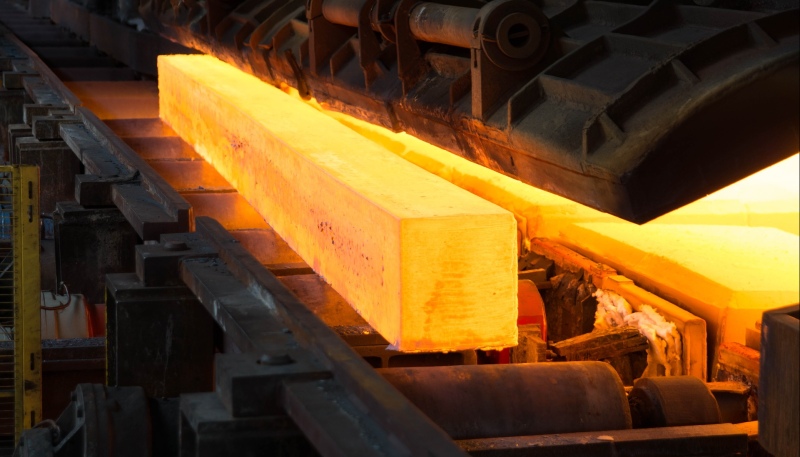
Crude steel production fell in the first half of the current year by nearly twelve percent to 17.1 million tons. This is the third consecutive sharp decline in the sector. In the first half of 2023, crude steel production in Germany fell by five percent, and in the first half of 2024 it rose by 4.5 percent. Now the figure is dropping sharply.
Wirtschaftsvereinigung Stahl points to serious challenges facing the steel industry in Germany. The main causes are high energy costs, growing import pressure, and economic difficulties that are constraining demand for steel.
High electricity and gas prices in Germany, resulting in part from the energy transition and the geopolitical situation, significantly raise production costs. As a result, German steelworks are losing competitiveness on the international market. Imports of cheaper steel, particularly from Asia, further worsen the situation for local producers.
Weak demand for steel also stems from problems in key economic sectors such as construction and automotive. The economic slowdown in Germany, driven by inflation and uncertainty in global markets, is limiting investment in construction projects and vehicle production. As a result, steelworks are recording fewer orders, forcing them to cut production.
Some companies, such as Georgsmarienhuette GmbH, are attempting to counter the difficult situation by investing in modern technologies and more environmentally friendly production methods. However, such investments require time and significant financial outlays, which under current conditions is a challenge. The steel industry is appealing to the German government for support, including lower energy costs and regulations to protect the market from unfair competition by foreign producers.
The situation in Germany's steel industry is raising concerns about the future of a sector that has been a pillar of the country's economy for years. Experts warn that without effective supportive measures, the industry could lose its importance, with negative consequences for jobs and the broader economy. Wirtschaftsvereinigung Stahl estimates that in 2024, steel production could reach its lowest level since the global financial crisis of 2009.