Germany's foremost think tank on foreign investment, German Trade and Invest (GTAI), states in its analysis that Poland is leveraging its geographic location and attracting international capital, creating thousands of jobs and stimulating the development of coastal regions. This is an opportunity for a new era in Polish trade — an era of maritime dominance.
The Polish government has announced a tripling of port capacity by 2030, which is intended to strengthen maritime trade and reduce dependence on energy imports from Russia. The growth in cargo turnover in recent years, driven by new trade routes and EU funds, paints a promising picture of an economy built on maritime transport.
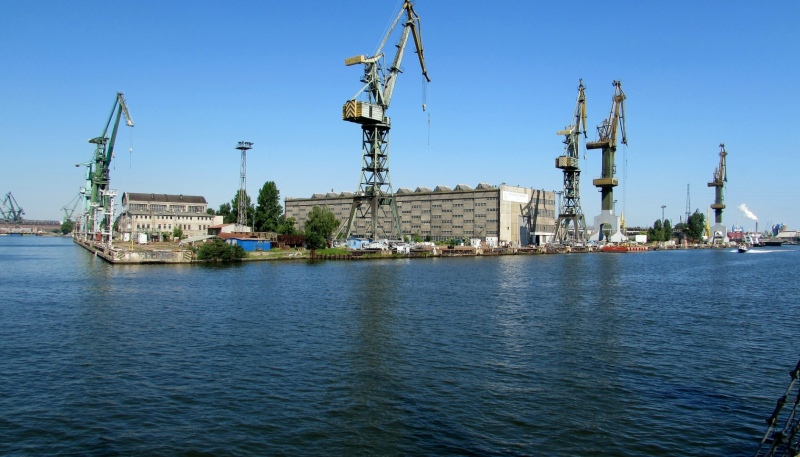
The Port of Gdansk, Poland's largest port, has posted impressive growth. Between 2015 and 2024, cargo turnover doubled, reaching record levels. A key element is the Baltic Hub terminal, where the T3 section was launched in June 2025. This investment increases annual container handling capacity by 1.5 million TEU, bringing the total to 4.5 million TEU. New maritime connections with the United States, China, South Korea, and Vietnam, operated by the shipping line MSC, open the door for car exports from Hyundai and Kia factories in the Czech Republic and Slovakia, as well as steel from neighboring countries.
German investments play a role in the development of Polish ports. For example, the Orlen group is building a new terminal in cooperation with the German company Dipl. Ing. Scherzer GmbH. Nearby, Gaz-System is planning a floating LNG terminal worth more than one billion euros. Meanwhile, the Turkish firm GAP is responsible for subsea pipelines. These projects not only diversify energy sources but also strengthen Gdansk's position as a gateway to Eastern Europe. The increase in the share of energy commodities in trade, such as crude oil and LNG, from 27.1% in 2015 to 44.4% in 2024, shows the direction of Poland's maritime imports.
The total weight of goods transported to/from main ports in the EU by short sea shipping was 1.6 billion tonnes in 2023. Busiest short sea shipping port: Rotterdam (159 million tonnes). Explore more in 'Key figures on Europe - 2025 edition'
— EU_Eurostat (@EU_Eurostat) August 25, 2025
The Port of Gdynia is, in GTAI's assessment, a key project. An artificial peninsula will house a container terminal with an annual capacity of 2.5 million TEU. The estimated cost is approximately one billion euros, though current valuations may be higher. However, the selection of a private partner has been postponed by Poland to October 2025 due to changes in the terms. The investment will improve land connectivity, including the expansion of railway lines such as Line 201 from Bydgoszcz to Gdynia. PKP PLK is planning a fourth track near Gdansk, with tenders expected shortly. Gdynia is thus becoming a complement to Gdansk, focusing on containers and bulk goods, which supports regional exports and attracts foreign investors.
In Swinoujscie, a new container terminal is being built at a cost of approximately 2.4 billion euros. The project encompasses 1.3 km of quay with a depth of 17 meters and a 70-hectare site. A Belgian-Qatari consortium won the contract, despite protests from German and Polish environmentalists and municipal authorities. The Administrative Court in Warsaw dismissed the complaints in August 2025, clearing the way for the project to proceed.
In Szczecin, the Rhenus group acquired the Bulk Cargo terminal at the end of 2024, underscoring its role in German supply chains serving Poland, the Czech Republic, and eastern Germany. The expansion of the LNG terminal in Swinoujscie involved the German company TGE Gas Engineering. These investments are strengthening trade with Scandinavia and Germany, boosting turnover in bulk and energy commodities.
All port projects in Poland, GTAI emphasizes, are financed through EU and national funds, which minimizes the burden on the state budget. The EU supports infrastructure development as part of its cohesion policy, promoting sustainable transport. The economic benefits are multidimensional: new jobs in logistics, GDP growth driven by exports, and reduced energy dependence. According to GUS data, the growth in port turnover is powering the economy, with forecasts pointing to further increases through 2030. New trade routes, such as those with Asia and the Americas, are diversifying trading partners and providing a hedge against geopolitical risks.
Poland's ambitions, according to GTAI, go further still and envision a tripling of port capacity, which would make Poland the leader on the Baltic. Railway expansion, such as Line 273 from Wroclaw to Szczecin, will ensure better hinterland integration.