"Germany is beginning to seriously dismantle the EU," writes journalist Aleksandra Fedorska, who covers German and economic affairs, on social media, referring to a speech by German Chancellor Olaf Scholz.
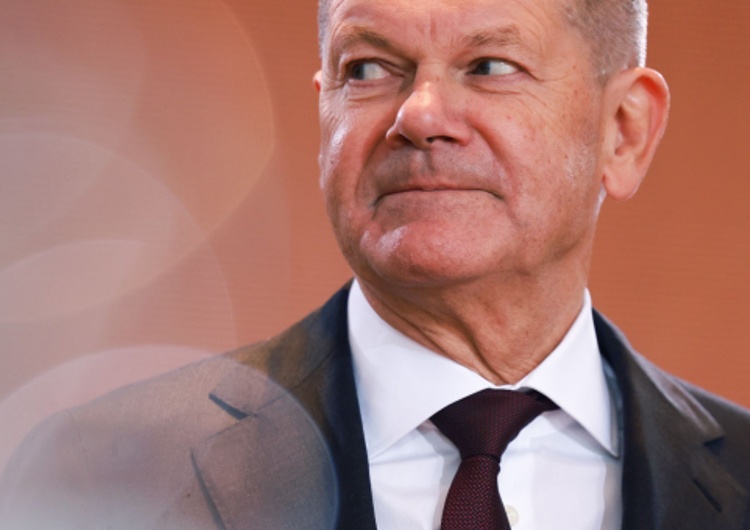
International trade policy, tariffs, free trade agreements, competitiveness, jobs, and electricity prices were the topics Chancellor Scholz addressed in his speech during the 75th anniversary of the German Wholesale and Foreign Trade Association (BGA).
Regarding international trade agreements, Scholz advocated for splitting agreements in the future:
There should be one part for the EU only, and a second part in which member states must be involved. This second part could then enter into force individually for all states that ratify it. This follows from the fact that responsibility for trade policy was transferred to the EU so that more agreements could be concluded. It is also particularly important to rapidly conclude negotiations on the MERCOSUR free trade agreement,
Scholz urged.
Tusk's strange tweet. Wave of comments
Intel will not build a plant in Poland
Ministry of Defense decides on the location of the 8th Home Army Infantry Division headquarters
Buckingham Palace. Incredible reports concerning the prince
Pay adjustment for uniformed services personnel. RDS subgroup on uniformed services votes "YES"
Well-known Polish actor dies
Doda's mysterious appeal. Singer addresses her fans
Announcement for residents of Gorzow Wielkopolski
The chancellor's words were commented on by Aleksandra Fedorska, editor-in-chief of Radio Debata and a specialist in economic and German affairs.
The journalist emphasized that Scholz announced at the meeting with the German Foreign Trade Association (BGA) a breakup of European trade competencies.
Scholz thus wants to split agreements into a "part only for the EU" and a second part that must be approved by the parliaments of member states. Germany is beginning to seriously dismantle the EU,
the editor commented.
At the beginning of October, the European Commission decided that Chinese electric vehicle manufacturers would soon have to pay high tariffs before selling their goods on the EU market. The decision was taken despite strong opposition from Germany, which fears that retaliatory Chinese measures would have catastrophic consequences for its slowing economy. German Chancellor Olaf Scholz indicated that negotiations with China on electric vehicles must continue.
Read more: EU to impose massive tariffs on electric cars from China