The Fehmarnbelt tunnel project is an ambitious infrastructure initiative linking Denmark with Germany via an 18-kilometer immersed tunnel beneath the Fehmarnbelt strait. The tunnel is to streamline road and rail transport between Scandinavia and the European continent, cutting train travel time from Copenhagen to Hamburg from five hours to two and a half, and car crossing time from 45 minutes by ferry to just 10 minutes. The tunnel will consist of a four-lane motorway and a dual-track railway, making it the longest immersed tunnel in the world. The investment is part of the EU's Trans-European Network (TEN-T) program and is of key importance for trade, tourism, and CO2 emission reductions by shifting traffic from roads to rail.
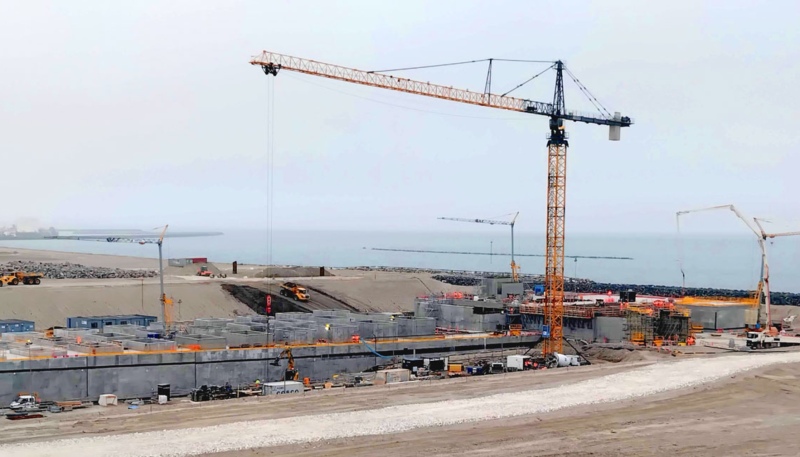
Denmark, as the principal initiator, is responsible for financing and building the tunnel. Construction began in late 2020, and the state-owned company Femern A/S manages the project in cooperation with international consortia. By August 2025, tunnel portals on both sides were completed: the northern one at Rodby Harbor on the island of Lolland and the southern one at Puttgarden on the island of Fehmarn. The tunnel element factory at Rodby Harbor, with an area equivalent to 420 football pitches, is producing 79 standard segments measuring 217 meters each and 10 special segments measuring 40 meters, designed for mechanical, electrical, and ventilation systems. Ventilation is longitudinal, without intermediate shafts, ensuring safety and comfort through advanced exhaust emission modeling. Denmark plans to complete the tunnel by the end of 2029. Project financing is based on user fees, with EU support amounting to approximately 800 million euros. Denmark's goal is to finance the project without burdening Danish taxpayers.
On the German side, the project faces serious delays. Deutsche Bahn announced on July 23, 2025, that the onshore rail connection, including a 2.2-kilometer tunnel through Fehmarnsund, will not be completed by 2029. Construction of this section was to begin in early 2026, but the date is unknown. Experts estimate that the entirety of Germany's infrastructure may not be ready until between 2035 and 2040, due to complicated planning procedures and bureaucracy. The costs of the delays are significant: approximately 45 million euros annually in freight transport, 15 million in passenger transport, plus 7 million in energy consumption and 50,000 tons of CO2 emissions. Economic losses from extended travel times amount to 68 million euros annually in passenger rail and 18 million in freight. The German firm Deges is responsible for new road sections on Fehmarn, and the Federal Railway Authority estimates the construction time for Fehmarnsund at over six years. Criticism focuses on slow approval processes and a lack of cooperation with Danish builders, which could accelerate the work.
Germany argues that the tunnel reaches a depth of more than 40 meters below sea level, with foundations in varied geological layers: Quaternary sediments, Tertiary clays, and chalk. A particular challenge is paleogene clay of high plasticity near the German shore, requiring special foundation solutions. By comparison, the tunnel is nearly five times longer than the one under the Oresund (4 km), which has linked Denmark with Sweden since 2000, and is similar to the Storebaelt Fixed Link from 1998.
The German newspaper Die Welt notes that the tunnel will increase trade exchange by 1.55 billion euros annually. It will facilitate intermodal transport, reducing congestion on federal road 207 and on Scandlines ferries. Regions such as southern Denmark and eastern Holstein will benefit from tourism and business investment. However, the delays are undermining rail competitiveness and impeding environmental goals. The Danish and German sides are in talks on a new timetable, with an emphasis on speeding up procedures. The project underscores the need for innovation in European infrastructure to meet climate and economic challenges.