"Poland is one of the most concrete, most correct, and most efficient states in Europe in this regard: it responds quickly, in compliance, and always favorably," says Olaf Jensen, the head of the German deportation center in Eisenhuttenstadt, speaking to Wirtualna Polska. Should the German official's words about Poles responding "always favorably" concern us?
Brandenburg, which borders Poland, wants to quickly and efficiently deport asylum seekers who arrive there from other EU countries. To this end, it is opening a new deportation center in the border town of Eisenhuttenstadt.
Federal Interior Minister Nancy Faeser and her Brandenburg counterpart Katrin Lange (both SPD) signed an agreement on the so-called Dublin Center, which will be established on the grounds of the central reception facility in Eisenhuttenstadt.
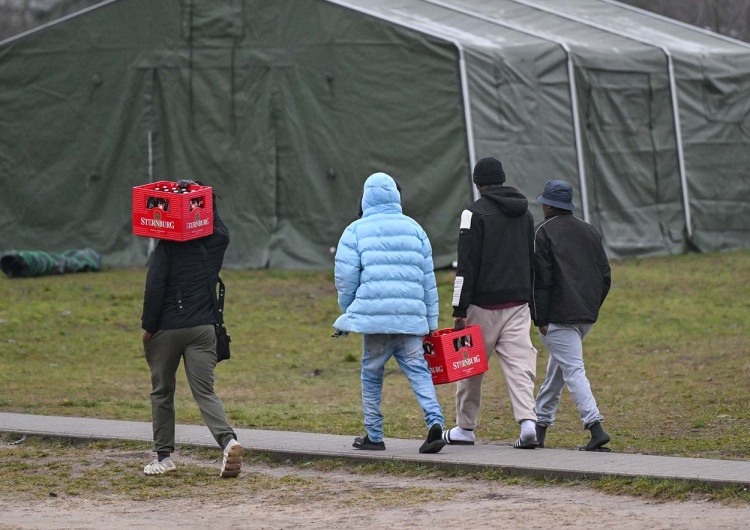
"The center should provide space for 150-250 persons in two buildings; then all refugees will be housed in one central location. Due to the proximity of the Polish border, they can be quickly returned there,"
said Interior Minister Lange to the portal B.Z-Berlin.
Wirtualna Polska journalist Tomasz Walenski visited the German facility in Eisenhuttenstadt and spoke with Olaf Jensen, the head of Brandenburg's Central Office for Foreign Nationals Registration and simultaneously the director of the reception facility in Eisenhuttenstadt.
The facility director told the Polish journalist that the regulations currently in force in Germany are "ineffective" and that the goal is to move away from this management model. At the very outset of the conversation, the German official praised the actions of the Polish government:
"Poland is one of the most concrete, most correct, and most efficient states in Europe in this regard: it responds quickly, in compliance, and always favorably. In short: you can cooperate well with Poland. (...) There is great potential to simplify transfers between Poland and Brandenburg and to make procedures more efficient for both sides."
The Polish journalist noted that Poland, based on official data from the Federal Office for Migration and Refugees (BAMF), had accepted 340 immigrants from Germany. That is markedly more than Italy (10,500 declared, 3 persons accepted) or Greece (15,500 declared, 22 persons accepted).
According to information reported by Wirtualna Polska, approximately 1,000 persons per year may be transferred to our country via Eisenhuttenstadt, but -- as was emphasized -- "none of the German institutions were willing to provide this figure officially."
The journalist stressed that the German official's warm words about Poles responding "always favorably" may be cause for concern.
"Does this mean that Germany expects us to accept any number of migrants and is certain of it? Concern may also be raised by the reluctance to officially disclose the number of deportees,"
writes Tomasz Walenski.