Amid global energy crises, Africa is increasingly betting on nuclear power. Meanwhile, voices of opposition emanating from Germany are striking in their hypocrisy. The Social Democratic Party of Germany (SPD), seen as a champion of development aid, is actively blocking nuclear power plant projects on the African continent.
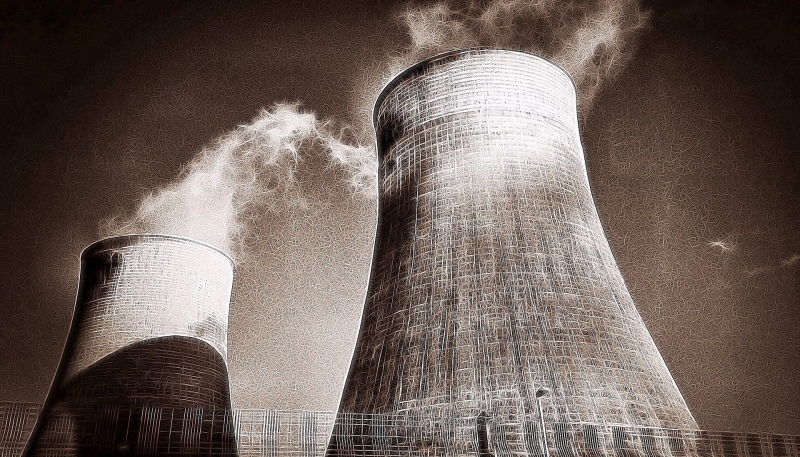
Africa is grappling with a massive energy deficit. Approximately 650 million people — nearly half the continent's population — lack access to reliable electricity. This is not merely a daily inconvenience but a barrier to industrialization and the fight against poverty. Traditional energy sources such as coal and gas are costly and harmful to the climate, while renewables — solar and wind — cannot guarantee stable supply. Nuclear energy, by contrast, is stable and low-emission. Experts worldwide believe that nuclear power could simultaneously help meet the goals of the Paris Agreement and drive GDP growth. South Africa is the atomic pioneer on the continent, operating the Koeberg power station near Cape Town since 1984. Its two reactors with a combined capacity of 1,860 MW cover a significant share of the country's energy needs, and plans to add two new units are well advanced. Egypt is forging ahead with El Dabaa: four state-of-the-art reactors with a combined capacity of 4.8 GW are being built by Rosatom, backed by $30 billion in Russian financing. Construction began in 2022, and the first units are expected to come online by 2030. Nigeria is developing a national program, including a research center in Abuja and plans for mini-reactors. Ghana signed a deal in 2024 with the American firm NuScale for small modular reactors (SMRs), ideal for unstable grids. Kenya is targeting Africa's first power plant in Kilifi County — a conventional or SMR facility of 300–600 MW, with construction slated for 2027. Morocco is building a nuclear science center, and Rwanda is experimenting with SMRs from DualFluid, a German-Canadian company.
The African Commission on Nuclear Energy (AFCONE) is coordinating knowledge exchange, aiming for 10 GW of capacity by 2030 — up from the current 1.2 GW. Global partners such as Rosatom and the United States are offering technologies and funding, following the Asian model. The IAEA supports training for safety. "Nuclear is a clean, reliable option for Africa's challenges," emphasizes the World Nuclear Association.
However, high upfront costs running into billions of dollars weigh heavily on Africa's highly indebted nations. "The main barrier is financing, but international partnerships will overcome it," assesses one expert.
It is against this backdrop that the controversy involving Germany has erupted. In November 2025, Development Minister Svenja Radovan (SPD) blocked an international nuclear project in Africa, co-financed by the World Bank. The initiative was designed to support reactor construction, bringing electricity to millions of impoverished Africans. The SPD cites ecological concerns and risk, but critics see ideology. "This is sheer madness that the SPD has been pursuing for years," thunders commentator Christoph Lemmer in the daily WELT. He accuses the ministry of ideology over real assistance. The SPD, which pushed to phase out nuclear power in Germany, is now blocking Africa from the very technology that once built Europe.
Criticism is mounting. While China and Russia invest billions in African infrastructure, Germany is becoming a brake on development. African governments, fed decades of Western humanitarian aid, are demanding partnerships, not lectures. In Africa, where energy hunger is growing, abandoning nuclear could trap millions of people in poverty for decades to come.