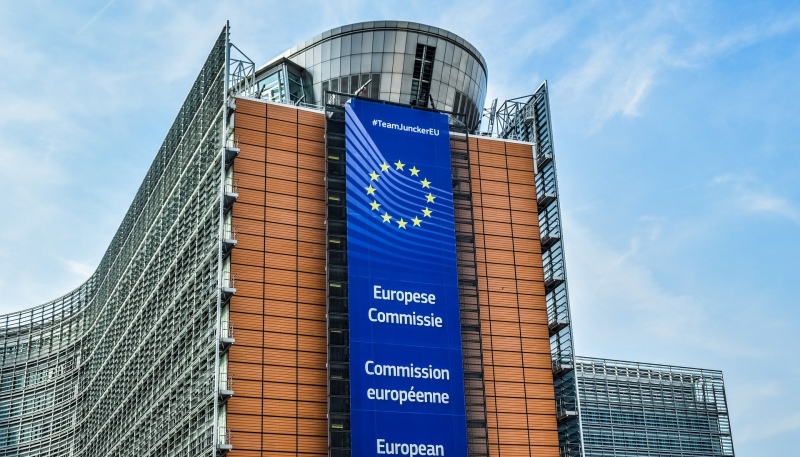
Eighteen agriculture ministers from EU countries, including Poland, have sent a letter to the European Commission calling for the softening and delay of the EU Deforestation Regulation (EUDR), which is due to take effect in December 2025. The regulation requires companies importing products such as soy, cocoa, and timber to prove that they do not contribute to deforestation.
The ministers propose incorporating the EUDR into the European Commission's broader deregulation initiative in order to simplify the rules and take into account the specifics of countries with low deforestation risk. They stress that a more practical and differentiated approach is needed.
The regulation imposes on companies importing products such as soy, beef, palm oil, cocoa, coffee, and timber an obligation to prove that their goods have not contributed to deforestation. The aim of the regulation is to reduce the 10% of global deforestation attributable to EU consumption, since forests play a key role in absorbing CO2 and their destruction accelerates climate change.
The protest underscores growing political opposition to the regulation, stemming from concerns about the balance between environmental goals and economic costs. Deforestation remains one of the key challenges for EU climate policy, but the current debate illustrates the difficulties of reconciling ambitious ecological goals with the economic and administrative realities of member states.
The ministers, representing countries including Austria, Bulgaria, Croatia, Czechia, Estonia, Finland, Hungary, Ireland, Italy, Latvia, Lithuania, Luxembourg, Poland, Portugal, Romania, Slovakia, Slovenia, and Sweden, argue that the current rules are too burdensome, particularly for countries with low deforestation risk.
In the letter, they point out that the regulation disregards existing forest protection standards in some states and imposes "disproportionate bureaucratic burdens." They propose that countries with minimal deforestation risk should be exempt from the stringent due diligence requirements, and that in countries where agriculture does not lead to significant forest loss, "excessive and unnecessary" obligations should be abolished,
reports the portal Euractiv.
Additionally, the ministers draw attention to difficulties associated with full traceability of raw materials on the EU market, which in some cases they consider "extremely difficult, if not impossible." They fear that stringent regulations could harm the competitiveness of EU producers, who may relocate operations outside the EU to avoid the costs of compliance. On the other hand, thanks to the efforts of member states, forest cover in Europe has increased in recent decades.
According to Eurostat data, in 2020, forests in the EU (27 countries) covered approximately 159 million hectares, accounting for 38% of the land area. Since 1990, forest cover in the EU has increased by approximately 10%, and between 2000 and 2022 it grew by approximately 8 million hectares thanks to natural growth and afforestation,
the EU forest strategy and afforestation programs -- for example, the plan to plant 3 billion trees by 2030. In 2023, the European Environment Agency (EEA) noted improvement in the condition of forests in 42% of cases, owing in part to increases in area, biomass, and productivity.
The greatest increase in forest cover was recorded in countries such as Spain, France, and Italy, while Scandinavian countries such as Finland (66%) and Sweden (64%) remain leaders in terms of forest coverage. Poland, with a forest cover of approximately 30.8% in 2020, ranks in the middle of EU statistics, with a forest area of approximately 9.4 million hectares.