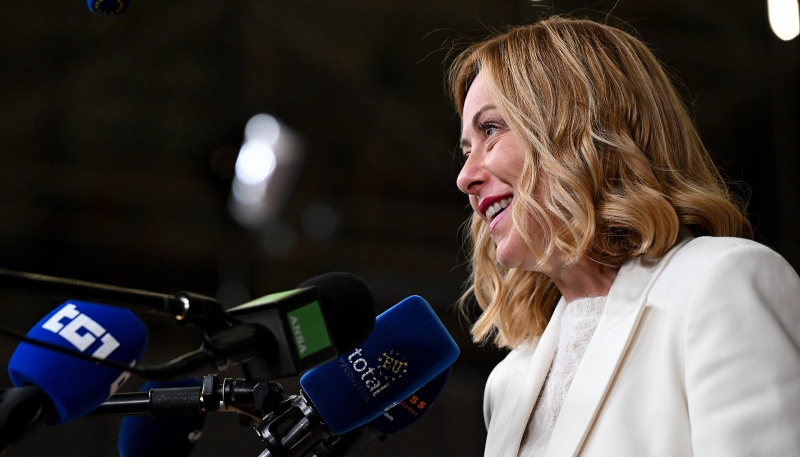
The draft budget for 2026, approved by the Council of Ministers under Giorgia Meloni's government, targets a budget deficit below the 3 percent of GDP threshold. This achievement is becoming a symbol of economic revival for the Italian economy, in contrast to France, where the deficit has reached 5.8 percent and is raising growing concerns. Under the leadership of its right-wing coalition, Italy is striding ever more boldly along the path of stability. "Italy returns with great pride to the first division," Economy Minister Giancarlo Giorgetti declared with satisfaction, commenting on the upgrade of the country's credit rating.
The draft budget allocates additional spending of 18.7 billion euros. Prime Minister Giorgia Meloni stressed: "We are investing in families and demographics, tax cuts, support for businesses, and healthcare." These funds are meant to strengthen the Italian economy and combat chronically low birth rates (1.24 children per woman in 2024).
The financing of these expenditures rests on a clever mechanism through which the state plans to extract approximately 11 billion euros from the banking and insurance sector over the next three years. The solution sparked heated debate among right-wing parties, but the government opted for a paradoxical compromise. Rather than a harsh levy, a reduction in the tax on distributed reserve profits of banks will be introduced — from 40 percent to 27.5 percent. Until now, financial institutions preferred to accumulate reserves, avoiding high tax burdens. The government now expects the lower rate to encourage profit distribution, which in turn will generate additional tax revenue from dividend recipients. "This is not confiscation, but an intelligent incentive," Giorgetti explains.
According to the Italian Ministry of Economy, the deficit this year will close at 3 percent of GDP — better than the previously estimated 3.3 percent. In 2026, it is projected to fall to 2.8 percent, which opens the door for Italy to invoke the European Commission's derogation clause for increased defense spending. This is a strategic asset for the NATO member. Confirmation of the success came in Friday's decision by the rating agency DBRS Morningstar, which upgraded Italy's creditworthiness from BBB to A. "This is the result of three years of consistent work by three governments," Giorgetti stated, underscoring the continuity of reforms initiated before Meloni took office. Italy is posting stable GDP growth (a forecast of 1.2 percent for 2026), low inflation (around 2 percent), and record-low youth unemployment (22 percent, down 5 percentage points year on year).
However, criticism is not in short supply. The banking sector, represented by the Associazione Bancaria Italiana, warns that even a tax cut does not compensate for the planned levy. "This burden inhibits investment," experts contend. The left-wing opposition (the Democratic Party) accuses the government of "fiscal populism," pointing out that the additional 18.7 billion euros is a drop in the ocean against a public debt of 140 percent of GDP. Meanwhile, Meloni's allies in Matteo Salvini's League praise the plan but demand greater emphasis on immigration and security.
In the background, fierce competition with France is playing out, where a budget crisis once again threatens to destabilize the government. "Italy is showing Europe how to reform without drama," comments Italian economist Lorenzo Codogno in Corriere della Sera.
The 2026 budget is not just about numbers; rather, it is a manifestation of the Meloni government's success. After three years in power, the right wing is proving it can deliver fiscal stability while pursuing pro-family policies. The ratings upgrade and a deficit below 3 percent are tickets to the EU's "first division," where Italy can negotiate from a position of strength. Parliament will decide on the budget in the coming weeks, but preliminary polls show support for Meloni rising to 32 percent.