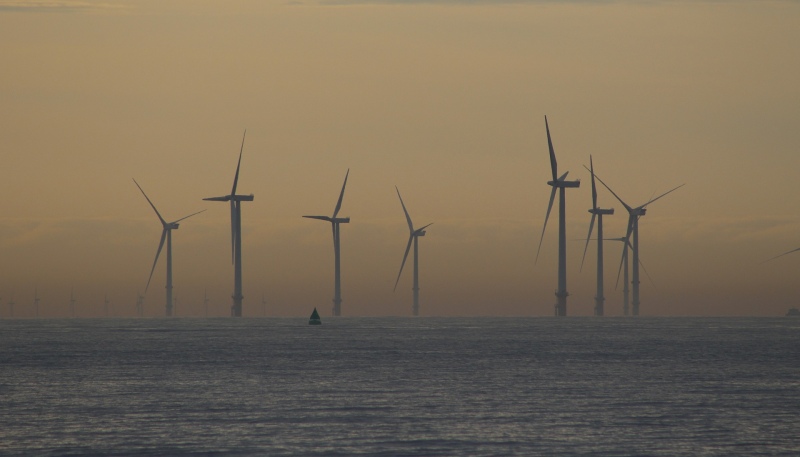
Wind turbines, the symbol of green energy, play a key role in this transformation. In the onshore wind turbine sector, European manufacturers such as Vestas (Denmark), Nordex, and Enercon (Germany) continue to dominate the market. According to the Federal Network Agency's ranking for 2024, these three manufacturers hold the top positions in Germany in terms of actually commissioned installations. Chinese manufacturers such as Goldwind, Mingyang, and Sany Renewable Energy have so far had a very small share of the German market, as European producers are preferred due to their quality, established supply chains, and local service infrastructure.
According to estimates, the share of Chinese onshore turbines in Germany is less than 1% of installed capacity. The problem, however, concerns offshore turbines, where Chinese manufacturers have made extraordinary progress. A breakthrough project is the "Waterkant" offshore wind farm off the coast of Borkum, where German developer Luxcara signed a contract in July 2024 with Chinese manufacturer Mingyang for the supply of 16 offshore wind turbines (18.5 MW each). This is the first time Chinese turbines have been installed in Germany. The turbines are scheduled for installation by 2028. The share of Chinese turbines in the German offshore market is currently still minimal, but experts suggest that Chinese manufacturers could play a larger role in the future due to their low-cost offerings and large production capacities (e.g., Mingyang, Goldwind).
China has been strengthening its position in the global wind industry for years. It is not only the largest producer of wind turbines but also controls a significant portion of the supply chain -- from raw material extraction to component manufacturing. Key materials such as neodymium magnets used in turbine generators largely come from China. It is estimated that approximately 90% of global neodymium production, a rare earth element, is controlled by Chinese firms. This gives China an enormous advantage in the market.
The German portal Energiezukunft notes that even now a large proportion of wind turbines in Germany contain components sourced from China. It is estimated that 60 to 70% of components in European wind turbines, including rotor blades, electronics, and foundations, originate from China. The dependence on rare earth metals (such as neodymium for magnets) is particularly strong, with China controlling approximately 90% of global production. Moreover, Chinese wind turbine manufacturers such as Goldwind and Sinovel are successfully competing with European giants like Vestas and Siemens Gamesa by offering cheaper solutions. While European firms still lead in technological innovation, their dependence on Chinese components such as rotor blades and electronic elements continues to grow.
Dependence on China raises concerns about Europe's energy security. In the event of supply chain disruptions -- whether for political, economic, or logistical reasons -- wind turbine production in Europe could be seriously hampered. German experts point out that the lack of domestic production of key materials such as neodymium and specialty steel puts Europe in a difficult position. In the event of heightened international conflicts or the imposition of export restrictions by China, Europe could face delays in the delivery of wind projects, threatening ambitious climate goals.
To reduce dependence on China, Europe is undertaking various measures. One of them is investing in research and development to find alternative materials for wind turbine production. For example, work is underway on magnets that do not require rare earth elements. In addition, the European Union is promoting the recycling of turbine components, which could reduce the need for new raw materials.
Another step is supporting local production. Germany and other EU countries are encouraging the establishment of new manufacturing facilities in Europe that could produce key wind turbine components. However, such investments are expensive and time-consuming, which in the short term will not solve the problem of dependence on China.
The European Commission is also developing strategies aimed at diversifying supply chains. Cooperation with countries such as Australia and Canada, which also possess rare earth element deposits, could help reduce China's dominance. However, building alternative supply chains requires time and enormous financial investment.
Dependence on China in the wind energy sector is one of the greatest challenges facing Europe's energy transition. While China offers cheap and efficient components, its dominance poses a risk to energy security. Europe, including Germany, must act quickly to diversify supply chains, support local production, and invest in new technologies. Only in this way will the wind sector be able to develop sustainably, supporting ambitious climate goals.