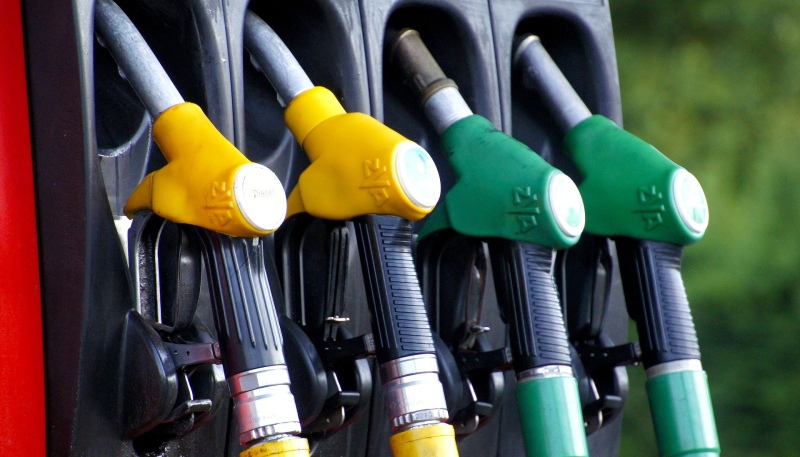
In recent weeks, drivers in Poland and Germany have been staring in disbelief at the numbers on fuel pump displays. Just at the beginning of the month, filling up in Poland was still considered an attractive alternative to German prices, but today that advantage is melting away before our eyes. Data from both the wholesale and retail markets show that the sharp rise in fuel prices is not a local phenomenon. It is the effect of shared global factors hitting both countries, albeit with varying intensity and at different speeds.
In Poland, the situation is developing fastest. Not long ago, the price of diesel at the pump hovered around 7 zlotys per liter and already seemed steep. Today, many station price boards are already displaying figures starting with an eight, and analysts forecast that the average diesel price at the end of March could exceed 8.19 zlotys — roughly 1.90 euros. Gasoline 95 is approaching 7.19 zlotys, and 98-octane is nearing 7.86 zlotys. This means that in just a few weeks, Poland has caught up with — and at times even surpassed — levels that were recently considered records from 2022. The most dramatic movement is in wholesale: the price of diesel jumped by more than 52 percent in a single month, from below 5,000 zlotys net per cubic meter to over 7,200 zlotys. Such a dynamic shift has not been observed in many years.
Behind all of this lies, above all, the tense geopolitical situation in the Middle East. The conflict involving Iran and attacks on oil infrastructure in the Persian Gulf region have curtailed crude supplies, which immediately reverberated across global benchmarks. The price of Brent crude, which not long ago was trading significantly lower, rapidly approached the $100–120 per barrel range. Every new report of disruptions to maritime transport or tanker incidents drives up market expectations, which in turn translate directly into refined product prices. Poland, as a crude oil importer, feels these fluctuations acutely because the domestic fuel market is tightly linked to global commodity prices.
Yet the role of domestic factors cannot be dismissed. The final price a driver pays at the pump is not merely the cost of crude and refining. In Poland, more than half of the amount shown on the dispenser goes to the state budget in the form of VAT, excise duty, the fuel surcharge, and the emissions levy. When today's diesel price is broken down into its components, it turns out that the raw material and production costs account for only about 4.68 zlotys per liter, while taxes and levies add over 2.60 zlotys. The government has tools to soften the blow — from cutting tax rates to releasing strategic reserves — but every such move means lower budget revenues, and the budget is already struggling with a deficit. The transport industry is calling above all for a reduction in the fuel surcharge and emissions levy, because for companies that can deduct VAT, a cut in the tax itself does not bring as much relief as it does for private motorists.
In Germany, the picture is somewhat different, though equally troubling. German drivers have long paid more than their Polish counterparts, which is why filling up across the Oder was a worthwhile trip for years. As recently as early March, the gap was as wide as 70 cents per liter of diesel. Today, that margin has shrunk to about 30 cents for diesel and 40 cents for gasoline. German media, including the portal t-online, state bluntly: filling up in Poland is no longer as cost-effective as it used to be. Meanwhile, prices within Germany itself are also climbing, though not as spectacularly as in neighboring Poland. According to European Commission data, between February 23 and March 9, 2026, Brent crude rose by 27 percent, but diesel at German stations jumped by as much as 44 percent, and gasoline by 29 percent. This disparity between wholesale and retail is raising questions about how the market functions.
The German Institute for Economic Research (DIW Berlin), in its latest weekly bulletin, points out that the rapid pass-through of crude price increases to the pump is driven not only by global factors but also by the structure of the domestic fuel market. In Germany, a handful of large corporations — BP, Shell, TotalEnergies, ExxonMobil, Esso, and Raffinerie — simultaneously operate as refiners and distributors. When global commodity prices rise, these companies quickly pass the costs on to consumers, and competition among them does not always function as it should. DIW experts point to possible coordination of actions, insufficient competitive pressure, and structural problems that cause even modest crude price increases to appear immediately at the pump. Tomaso Duso, the author of the commentary, stresses that the German fuel market is oligopolistic in nature and requires careful monitoring, because excessive margins may stem not only from costs but also from imperfect competition.
Comparing the two countries reveals clear similarities and differences. In Poland, the pace of increase is faster and more visible to the average driver, as the country is only now catching up to higher German levels. In Germany, the mechanism is more mature — prices were already high and are now rising in a predictable, if painful, manner. The common denominator is dependence on the global oil market and taxes that in both countries constitute a significant share of the final price. In Poland, taxes and levies can account for more than half the total; in Germany, the system is similarly constructed, though the refining market structure is more concentrated.
Experts warn that without a swift de-escalation in the Middle East and the restoration of stable crude supplies, prices could remain elevated for months to come. In Poland, the prospect of diesel at 9 zlotys per liter is no longer science fiction, and in Germany, further increases will place additional strain on the economy, the transport sector, and household budgets. The governments of both countries face a difficult choice: intervene through taxes and risk a budget hole, or let market mechanisms run their course and risk public discontent and an economic slowdown. For now, drivers in Poland and Germany are footing the bill for geopolitics and fuel market structure — a bill that grows larger by the day.