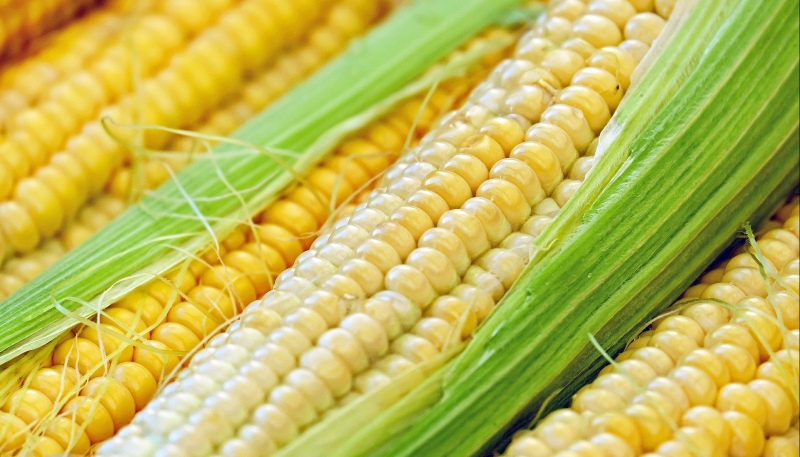
Since 2009, Germany has had a ban on the cultivation of genetically modified organisms (GMOs) such as MON810 corn, and GMO cultivation is restricted to research purposes. Nonetheless, genetically modified crops, particularly soybeans and corn, are imported in significant quantities, mainly as feed for livestock.
It is not always possible to distinguish GMOs from conventional grains. In total, Germany imported approximately 12.3 million tons of grain in 2023, of which 3.1 million tons were corn, primarily from Poland, Ukraine, France, and Hungary. Some of the corn, particularly from Ukraine (2023: 619,000 tons; 2024 through July: 447,000 tons), contained GMOs.
Members of the right-wing party Alternative for Germany (AfD) filed a parliamentary interpellation (Drucksache 21/6544) concerning the control of grain imports from Ukraine to Germany. The federal government's response sheds light on inspection procedures and challenges associated with monitoring genetically modified organisms (GMOs) in grain imports, particularly in the context of the situation in Hungary and Ukraine.
Germany imports significant quantities of grain, including corn, mainly from countries such as Ukraine, France, and Austria. In 2024, cases were reported of grain batches containing GMOs being introduced onto the Hungarian market without proper labeling. The AfD faction posed questions regarding the effectiveness of inspections, the volume of imported GMO grain, and the measures taken by the government to ensure food safety.
As recently as 2023, Poland was not importing significant quantities of corn from Germany, as it is itself a major corn producer and exporter, owing to large-scale agricultural production and previously lower prices.
The German government emphasized that the inspection of grain imports for GMOs falls under the jurisdiction of the federal states, in accordance with the division of competences under the constitution. The Federal Office of Consumer Protection and Food Safety (BVL) serves a coordinating role, collecting inspection data in a dedicated database. In the event that GMOs are detected in a grain shipment, the information is promptly reported to the BVL, and in cases of noncompliance with EU regulations (e.g., Regulation (EC) No. 2017/625), it is entered into the AAC (Administrative Assistance and Cooperation System).
Since January 1, 2024, the BVL database has recorded corn shipments from Ukraine that tested positive for the presence of GMOs. Detailed data include information on the type of plant, country of origin, test results, and the laboratory that conducted the analysis. However, data on the size of the batches sampled or the specific sampling locations are not centrally collected, as this responsibility rests with the federal states.
The inspection of seeds for GMOs is also carried out by the federal states, and results are recorded in a dedicated database. In 2024, however, no violations were reported in the RASFF (Rapid Alert System for Food and Feed) system concerning seeds, indicating that detected GMO shipments were not considered a direct threat.
The government addressed the situation in Hungary, where unlabeled GMOs were introduced onto the market in 2024. It emphasized that the problem is not limited to a single country, such as Ukraine, but is present in many exporting countries, including France and Austria.
The federal government acknowledged that it does not possess complete data on the proportion of inspected grain shipments relative to total imports, making it difficult to accurately assess the scale of the problem. Moreover, the lack of a central reporting obligation for detailed information on sampling locations or batch sizes limits the transparency of the system. Data on seed inspections are partly public and available on the BVL and LAG (Federal-State Joint Health Body) websites, but do not include all details, such as company names or exact quantities of imported grain.
GMO products may be transported and transshipped -- without being processed or sold in Germany -- provided they comply with EU regulations. This is significant because Germany is a major logistics hub for trade in Europe, particularly for goods from non-EU countries such as the United States, Brazil, and Ukraine.
As a transit country for goods arriving in Poland or other Eastern European countries from abroad, Germany enables the transport of GMO products, which may then be forwarded to Poland by truck or train. Ports and logistics centers in Germany (e.g., Hamburg, Rotterdam in the Netherlands with onward transport through Germany) serve as hubs for large-scale trade.
The AfD interpellation highlighted problems with GMO inspection in grain imports, particularly in the context of unlabeled shipments in Hungary. The German government emphasizes the effectiveness of the current inspection system, based on cooperation between the federal states and the BVL, but points to limitations stemming from the decentralization of data. The situation on the international market, including in Ukraine, requires ongoing monitoring to ensure compliance with EU food safety standards.