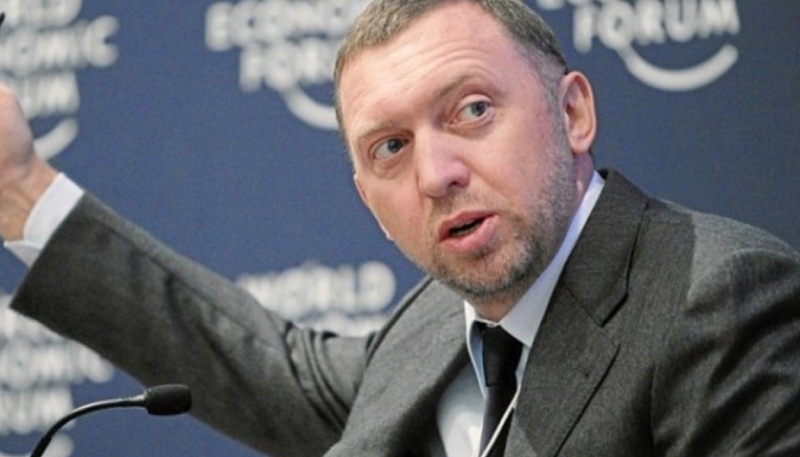
In October 2025, Austrian construction giant Strabag SE found itself at the center of an international legal dispute with Russian billionaire Oleg Deripaska, a sanctioned Kremlin oligarch. The conflict, which has been simmering for years, escalated after a Russian court ordered a payout of more than 2 billion euros to the Russian businessman. The case has now reached the Court of Justice of the EU, which could have implications for the enforcement of EU sanctions against Russian assets. For Strabag, a publicly listed company with annual revenues exceeding 20 billion euros, this is not just a financial battle but also a fight for its reputation.
Oleg Deripaska, the former head of the Rusal conglomerate, indirectly controls approximately 27 percent of Strabag's shares through an entity called Rasperia Trading Limited, registered in Cyprus. After Russia's invasion of Ukraine in 2022, the EU imposed sanctions on Deripaska, freezing his assets and blocking transactions. Strabag, whose largest shareholders are Raiffeisen Bank International (RBI), Uniqa, and the Haselsteiner family, suspended dividend payments to Rasperia. "We would prefer a shareholder without sanctions," says Strabag CEO Stefan Kratochwill.
The culmination came with a September 2025 ruling by the Arbitration Court in Moscow. The Russian court found Strabag and its key shareholders — RBI, Uniqa, and the Haselsteiners — liable for withholding dividends and ordered payment of 2.044 billion euros to Rasperia. The ruling could be enforced against the assets of RBI's Russian subsidiary, AO Raiffeisenbank, whose equity stands at 5.19 billion euros. This is not merely a financial penalty but also a threat of confiscation of 28.5 million Strabag shares worth approximately 1.2 billion euros.
Raiffeisenbank (RBI), the largest bank in Central and Eastern Europe, is responding aggressively.
"The ruling is not binding outside Russia," stresses spokesperson Christof Danz, noting that enforcement in the EU depends on the rule of law and could take years. By February 4, 2026, RBI must submit an expert assessment of damages to its subsidiary to avoid an asset freeze.
The case reached the Court of Justice of the EU after Strabag filed a request for an interpretation of the sanctions directive. The company argues that enforcing the Russian ruling would violate EU law, particularly in the context of freezing sanctioned entities' assets. The Court, which is hearing a similar dispute from 2023 (concerning Deripaska's assets in other companies), may rule on whether dividends blocked due to sanctions are subject to Russian claims. A decision expected in 2026 could also strengthen the EU's position on sanctions enforcement.
For Austrian companies operating in Russia, this serves as a warning. Strabag, despite a record order book (up 10 percent in Poland and Australia), is losing out because of sanctions: asphalt volumes have fallen to 1990s levels and margins are under pressure. RBI, with 4 billion euros of exposure in Russia, is building reserves but avoids a complete exit so as not to lose its clients there.
In Austria, where Strabag is competing for the contract to build Vienna's new central hospital, optimism is tempered by uncertainty. The company projects 21 billion euros in revenue for 2025, but the Russian shadow threatens its successes.