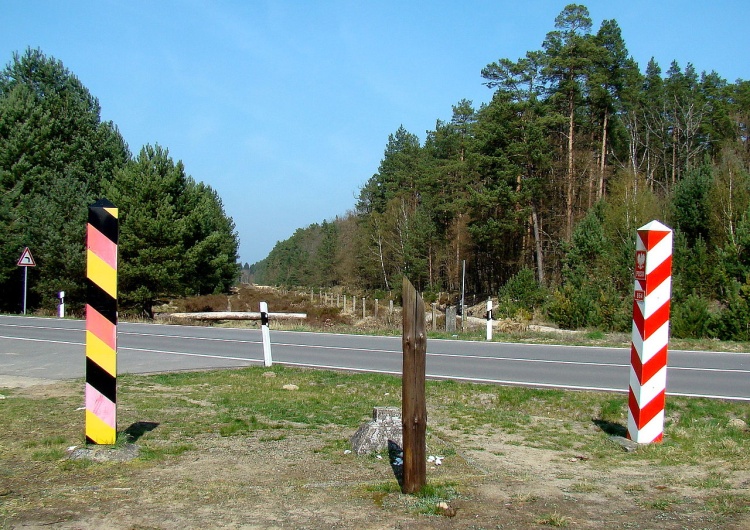
The intra-EU Polish-German border runs mainly along the Oder and Lusatian Neisse rivers. Its total length is nearly 460.4 kilometers, of which 50 km is on land, 389.8 km follows rivers and canals, and approximately 30 km crosses other bodies of water.
Both Poland and Germany belong to the Schengen Area. Citizens of the Schengen Area may cross the common internal borders of EU member states at any point without being subject to identity checks. A Schengen visa entitles its holder to visit the entire Schengen Area for a period of up to 90 days.
The very idea of the European Union, which abolished internal border controls, is appreciated by nearly all citizens of the bloc. For most Europeans, it is even the most important symbol of the European Union and a tangible example that once-hostile states can function without border fortifications. But problems with borders resurfaced when hundreds of thousands of migrants from the Global South began arriving in Europe.
Today Warsaw's Clean Transport Zone Launches. Chaotic Scenes at the Roads Authority
By mid-October 2023, approximately 35,000 people had been arrested at the French-Italian border for illegal entry into France.
"If we catch these people at one of the official border crossings — for example, at a train station — we take them to a border police station, where they are officially refused entry. They are then sent back to Italy,"
border guard representative Philippe Vicente explained the problem at the Italian border last year.
These people were often sent back to Italy without the opportunity to apply for asylum.
The CJEU took up the case of France and Italy in autumn 2023 and ruled unequivocally that sending back third-country nationals at the EU's internal borders is contrary to law. The ruling was handed down on September 21, 2023, under case number C-143/22.
The situation that occurred between France and Italy is now repeating itself on the German-Polish border, only with greater intensity. Germany is not merely arresting people but deporting thousands of individuals from Germany to Poland. When asked about the legal aspects of this practice, the German Federal Police responded that countries from which entry into Germany was made or attempted are, in principle, obliged to take back persons who were refused entry into Germany under the temporarily reinstated internal border controls, without any further conditions or formalities.
This response represents an unprecedented disregard for European law. Germany must have been preparing for this in advance, having analyzed France's situation in its dispute with Italy. That is why they changed the status of the border with Poland. Instead of maintaining its Schengen character, they introduced so-called temporary stationary controls at the border with Poland in mid-October 2023, as well as with the Czech Republic. Intensified checks are being carried out deeper inside the country. People from countries outside the European Union caught without papers entitling them to stay in Germany are being deported to Poland. From the beginning of this year to the end of May, this amounted to 4,605 individuals. The Polish side is not fighting for its rights as Italy did last year, and is allowing this egregious violation of European law in the very heart of our shared continent.