Since spring 2024, I have devoted a large part of my work to collecting information about immigrants expelled from Germany to Poland, in order to expose the scale and details of this practice. My work focuses on gathering data, analyzing documents, and maintaining direct contacts with institutions on both sides of the border.
One of my key achievements during the first phase of the issue's escalation was certainly obtaining concrete data from the German federal police (Bundespolizei). In June 2024, I published information that from January to April 2024, 3,578 persons who had illegally crossed the Polish-German border were returned to Poland, out of 5,621 registered attempts at illegal border crossing. In subsequent months, I established that this number had risen, and over the course of 2024, more than 9,000 migrants were expelled, as confirmed by official German statistics.
In essence, my work consists mainly of questions directed to the German federal police and the Polish Ministry of Interior and Administration (MSWiA). Many readers would undoubtedly expect that working on such a topic is more exciting than poring over parliamentary interpellations and police logs. But that is exactly how it looks -- in this matter, the devil is in the details, and you fight them from behind a desk.
Once I had managed to establish most of the figures and legal issues related to the expulsion of immigrants, I was helped somewhat by luck, as I came into possession of valuable documents, such as the interrogation protocol of a person referred to as "Jammal," expelled from Germany to Poland in May 2024. This document revealed that we were dealing with a lack of evidence in the expulsion decision and the fact that "Jammal" did not sign the documents, which violates legal procedures. On the basis of these documents, Germany's actions took on a different character.
From the outset, it is important to note the differences in communication and the data presented between the Polish and German services. For example, German police stated that between January and April 2024, 3,578 persons were returned, while the Polish Border Guard reported receiving only 188 foreigners during the same period. I then asked the question of where the rest of these people had gone, suggesting possible gaps in procedures or a lack of coordination between the services.
Germany introduced intensified border controls from October 2023, and from September 2024, permanent, random checks on all its borders, which from May 8, 2025, also cover migrants who filed asylum applications in other EU countries but are attempting to enter Germany. These measures, including the expulsion of migrants to neighboring countries such as Poland, Austria, Czechia, the Netherlands, Belgium, Denmark, France, Luxembourg, and Switzerland, have provoked varying reactions in those states.
The Austrian government, including Interior Minister Gerhard Karner, warned that Germany's expulsion of migrants could trigger a "domino effect" in the region, leading to similar actions in other countries. Austria had already maintained controls on its border with Germany since 2015, but the new German measures sharpened tensions. In response, Austria announced the strengthening of its own border checks to limit the influx of migrants sent back from Germany.
The Czech government criticized Germany for its unilateral approach to migration, particularly for sending back migrants under the Dublin III Regulation, which stipulates that the country of first entry into the EU is responsible for processing the asylum application. Czechia, as a transit country, feared an increased burden on its migration services.
Dutch authorities, including Justice and Security Minister Dilan Yesilgoz-Zegerius, also warned that German actions could lead to a "domino effect." In response, the Netherlands announced its own border checks, which began in June 2025 as a reaction to the influx of migrants returned from Germany.
In June 2025, Belgium introduced border checks, accusing Germany of violating Schengen rules. Belgian authorities argued that Germany's expulsion of migrants was increasing pressure on their migration system, particularly in the context of persons sent back from Germany.
In response to German actions, Denmark announced in June 2025 the strengthening of controls on its border with Germany. The Danish government, led by Prime Minister Mette Frederiksen, has long pursued a restrictive migration policy and views German deportations as a potential threat to regional stability.
Luxembourg, as a country strongly supportive of European integration, warned against a "domino effect" resulting from German deportations. In response to Germany's actions, Luxembourg signaled the possibility of introducing its own border checks, albeit on a smaller scale than other countries.
Germany expelled 4,813 persons to Switzerland between January and May 2024, making it one of the primary recipients of migrants sent back from Germany. Over the full year, the figure was close to 14,000.
France, like other countries, feared that German actions could lead to a tightening of migration policy across the entire EU, potentially complicating EU cooperation. In response, France strengthened checks on its borders, particularly in the border region with Germany.
Tygodnik Solidarnosc has from the very beginning been the first media outlet to publish the most important stories I uncover on the subject of expulsions from Germany. This does not mean I do not also cooperate with other reliable media, such as Radio Wnet, TV Republika, BiznesAlert, and Radio Maryja.
I take particular pride and gratification in this year's recognition of the reportage in which I first described the situation of migrants -- for instance, in shelters in Zielona Gora run by Janusz and Bartosz Sulczewski. The Association of Polish Journalists in Greater Poland recognized this piece as especially socially valuable.
This reportage certainly drew attention to the role and fate of immigrants expelled from Germany to Poland from a human, social, legal, and international perspective. I always strive to convey as faithfully as possible the atmosphere of the migrant transfer points and to describe objectively the situation of people sent to Poland against their will.
In the course of working on the reportage in Zielona Gora, however, there were also ambivalent figures. Contact with Roma Mucha, an activist from the "Miejsce na Ziemi" foundation who was helping migrants in Zielona Gora, was very valuable but at the same time pointed to the complications and diversity of worldviews on this subject. Mucha reported that the Border Guard was overwhelmed, sometimes directing migrants to the private homes of activists for lack of other options.
At a later stage, I published information about a young man referred to as "the Moroccan," who was reportedly establishing contacts with migrants from the Maghreb in Poland and Germany. According to witnesses, this person, who spoke fluent Polish, instilled fear among migrants and may have been connected to criminal groups. This particular thread subsequently became the basis for discussions and exchanges with security experts, lawyers, and journalists working on topics strictly related to security.
After more than a year of work in this difficult area, I believe that beyond strictly professional success, one can also point to the fact that much more was achieved at the social and political level.
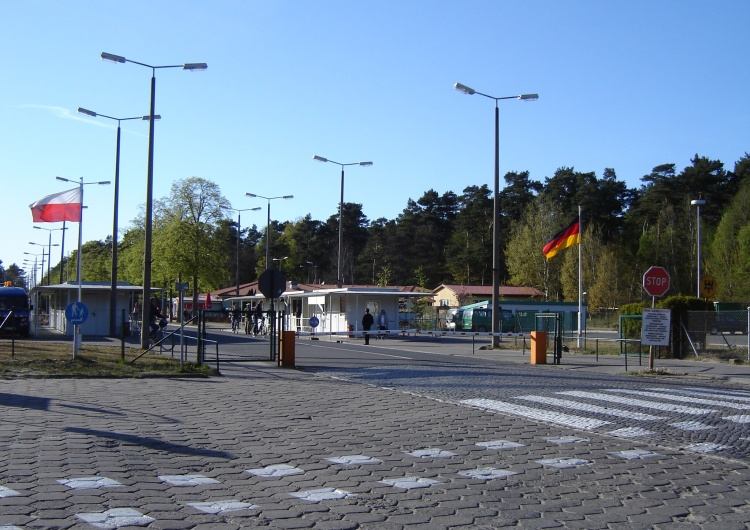
Poland introduced border checks on July 7 of this year as a reaction to Germany's actions, which since October 2023 has applied intensified border controls on the Polish-German border aimed at limiting illegal migration and cross-border crime. According to reports, Germany regularly returns migrants to Polish territory, which our country considers unilateral and problematic. Prime Minister Donald Tusk emphasized that the absence of checks on the Polish side enabled Germany to send migrants back without proper procedures, burdening Polish services and administration.
The ruling coalition cited the existence of a migration route through Belarus and Poland deep into the European Union as one of the main reasons for reinstating checks. Although the Polish Border Guard has effectively sealed the eastern border, Germany continues to extend its controls, arguing that migrants are still attempting to reach Germany through Poland. By introducing its own checks, our country aims to better monitor and control this flow from Germany to Poland.
The Polish government argues that the checks are intended to protect national and citizen security while minimizing negative effects on border region residents. Prime Minister Tusk noted that the Border Guard was tasked with conducting checks in a manner that would not unduly disrupt the lives of residents and travelers.
Poland's decision was also a response to growing social and political pressure within the country, prompted in part by reports on the scale of migrant expulsions from Germany to Poland. The work of journalists, including myself, and criticism from the opposition (e.g., PiS) and border-region residents such as Zgorzelec Mayor Jakub Wolinski, increased pressure on the government to take more decisive steps to curb inappropriate German decisions.